Physical Address
304 North Cardinal St.
Dorchester Center, MA 02124
Physical Address
304 North Cardinal St.
Dorchester Center, MA 02124
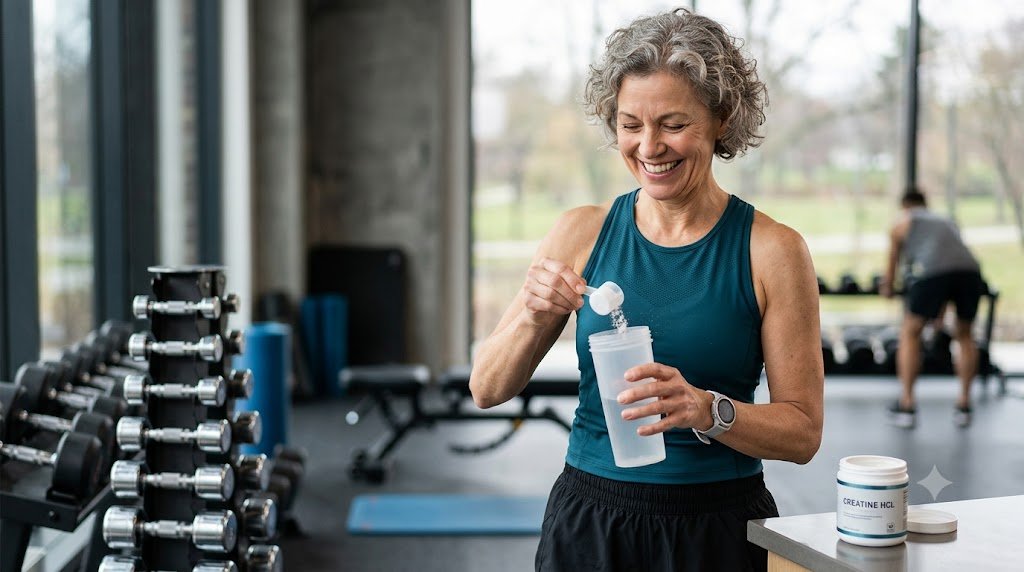
Creatine for healthy aging has become one of the most researched nutritional strategies for preserving muscle strength, supporting physical function, and promoting healthy longevity. Once associated primarily with athletes, creatine is now recognized as a valuable supplement for adults over 50 who want to maintain independence, energy, and overall quality of life.
Research on creatine for healthy aging has expanded beyond athletic performance, showing growing interest in how this supplement may support muscle health, strength, and physical function as people get older.
Among all dietary supplements studied over the last thirty years, creatine monohydrate has consistently demonstrated one of the strongest scientific evidence profiles. Once associated almost exclusively with bodybuilders and elite athletes, creatine is now being recognized as a valuable nutritional strategy for adults over 50 who want to preserve muscle, improve physical function, and support healthy aging.
Researchers are also exploring its potential role in cognitive health, energy metabolism, and resilience during aging.
So, is creatine worth considering if your goal isn’t athletic performance—but healthy longevity?
Let’s look at what the science actually says.
Creatine is a naturally occurring compound produced primarily in the liver, kidneys, and pancreas from three amino acids: glycine, arginine, and methionine.
It is also found naturally in foods such as:
About 95% of the body’s creatine is stored inside skeletal muscle, where it plays a critical role in energy production.
Inside muscle cells, creatine is converted into phosphocreatine, which rapidly regenerates ATP (adenosine triphosphate)—the body’s primary energy currency.
This system becomes especially important during activities requiring short bursts of power, including:
As we age, maintaining efficient energy production becomes increasingly important for preserving mobility and independence.
Understanding creatine for healthy aging starts with recognizing that creatine is not only a sports supplement, but also a naturally occurring compound involved in energy production throughout the body.
The importance of creatine for healthy aging becomes clearer after age 50, when maintaining muscle strength and physical performance becomes increasingly challenging.
Beginning around the age of 40, adults naturally start losing muscle mass and strength.
Without regular resistance exercise, this decline accelerates over time.
Age-related muscle loss contributes to:
Scientists refer to this condition as sarcopenia, one of the major biological processes associated with aging.
Because creatine directly supports cellular energy production inside muscle tissue, researchers have investigated whether supplementation could help slow these age-related changes.
The evidence accumulated over the past two decades has become remarkably encouraging.
One of the strongest scientific findings surrounding creatine is its ability to enhance the benefits of resistance training.
Multiple randomized clinical trials have shown that adults over 50 who combine creatine supplementation with strength training experience greater improvements than exercise alone.
Benefits consistently reported include:
These improvements are particularly meaningful because muscle strength—not just muscle size—is one of the strongest predictors of healthy aging.
People who maintain strength later in life tend to remain independent longer and experience fewer mobility limitations.
Importantly, creatine does not replace exercise.
Instead, it helps muscles respond more effectively to resistance training by improving the availability of cellular energy.
Several studies investigating creatine for healthy aging suggest that supplementation combined with resistance training may help support muscle strength and functional capacity in older adults.
Sarcopenia affects millions of older adults worldwide.
Although creatine is not considered a standalone treatment, it appears to be an effective component of a broader healthy aging strategy.
Current evidence suggests the greatest benefits occur when creatine is combined with:
When these lifestyle factors are present, creatine may help preserve muscle mass and functional capacity over time.
This makes it particularly attractive for adults entering their 50s, 60s, and beyond.
Because sarcopenia involves declining muscle mass and strength, creatine for healthy aging has become an important area of research in strategies designed to preserve independence later in life.
While creatine is best known for supporting muscle performance, scientists have become increasingly interested in its effects on the brain.
The brain consumes approximately 20% of the body’s total energy, despite representing only about 2% of body weight. Because creatine helps regenerate ATP—the primary energy source for cells—it may also support brain function during periods of increased energy demand.
Research has investigated creatine supplementation in situations such as:
Some studies suggest modest improvements in areas such as:
However, the evidence is still evolving.
At this stage, creatine should not be considered a cognitive enhancer or a treatment for dementia or Alzheimer’s disease. Instead, it is viewed as a promising nutritional strategy that may help support normal brain energy metabolism as part of a healthy lifestyle.
More high-quality clinical trials are needed before stronger conclusions can be made.
Emerging research suggests that the benefits of creatine for healthy aging may extend beyond muscles, including potential roles in supporting brain energy metabolism and cognitive function.
Yes.
Creatine monohydrate is among the most extensively researched dietary supplements in the world, with hundreds of clinical studies supporting its safety when used appropriately.
Healthy adults taking the recommended daily dose have not been shown to experience harmful effects on kidney or liver function.
Common myths include:
Current evidence: Clinical research does not support this claim in healthy individuals.
Current evidence: Studies have found no consistent increase in dehydration risk when normal hydration is maintained.
False.
Creatine is a naturally occurring compound found in food and produced by the human body. It is not an anabolic steroid or hormone.
Creatine supplementation should always be discussed with a physician if you have:
For otherwise healthy adults, creatine is widely considered safe when taken as directed.
For healthy aging, the simplest and most evidence-based approach is:
3–5 grams of creatine monohydrate per day
Unlike athletes who sometimes perform a “loading phase,” most adults interested in long-term health benefits do not need one.
Consistency matters far more than timing.
Creatine can be taken:
Daily intake is what allows muscle creatine stores to gradually become saturated.
Despite the growing number of creatine products on the market, creatine monohydrate remains the gold standard.
It offers the strongest combination of:
Many alternative forms—including creatine hydrochloride, buffered creatine, liquid creatine, and creatine ethyl ester—are marketed with claims of superior absorption or performance.
However, current scientific evidence has not demonstrated meaningful advantages over traditional creatine monohydrate.
For most people, there is little reason to pay more for specialty formulations.
Yes. Daily supplementation of 3–5 grams is the protocol most commonly used in scientific research.
Current evidence suggests that creatine for healthy aging is generally safe for healthy adults when used appropriately, although individuals with kidney disease or specific medical conditions should consult a healthcare professional.
Creatine can increase muscle creatine stores on its own, but the greatest benefits occur when it is combined with resistance training.
No.
Current research increasingly supports creatine as a supplement that may benefit healthy aging, mobility, muscle preservation, and overall physical function.
Without a loading phase, muscle creatine stores typically become saturated within three to four weeks of consistent daily supplementation.
Absolutely.
Research shows that creatine is effective and safe for both men and women, including postmenopausal women engaged in resistance training.
Healthy aging is about much more than adding years to life—it’s about adding life to those years.
Maintaining muscle strength, mobility, and independence becomes increasingly important with age, and creatine has emerged as one of the most well-supported nutritional tools available to help achieve those goals.
Current scientific evidence indicates that creatine monohydrate is:
While it is not a miracle supplement, creatine represents a practical, evidence-based addition to a comprehensive longevity strategy that includes regular exercise, quality nutrition, restorative sleep, and healthy lifestyle habits.
For adults committed to aging stronger—not simply older—creatine deserves serious consideration.
Overall, creatine for healthy aging represents one of the most researched nutritional strategies for supporting muscle preservation, strength, and healthy aging when combined with exercise and a balanced lifestyle.

The Live Ever Better Editorial Team is dedicated to publishing evidence-based content that helps adults over 50 achieve healthier aging and greater longevity. Every article is carefully researched using scientific studies, clinical guidelines, and trusted health organizations to ensure accurate, practical, and reliable health information.