7. May Support Brain Health Through the Gut-Brain Axis
Scientists now recognize that the gut and brain communicate continuously through what is known as the gut-brain axis.
This two-way communication network involves:
- the vagus nerve
- the immune system
- hormones
- metabolites produced by gut bacteria
Emerging research suggests that maintaining a healthier gut microbiome may support:
- cognitive function
- mood
- stress resilience
- healthy aging of the brain
Although probiotics are not a treatment for memory loss or dementia, they may contribute to overall brain health as part of a healthy lifestyle.
Learn more in:
8. May Help Reduce Chronic Inflammation
One hallmark of aging is chronic low-grade inflammation, often called inflammaging.
A balanced gut microbiome may help regulate inflammatory pathways by:
- strengthening the intestinal barrier
- producing beneficial short-chain fatty acids
- supporting immune regulation
Although probiotics are only one piece of the puzzle, they may contribute to reducing inflammation when combined with healthy nutrition and regular exercise.
Continue reading:
9. Improve Nutrient Absorption
Healthy intestinal bacteria assist in the digestion and absorption of several nutrients, including:
- calcium
- magnesium
- vitamin K
- certain B vitamins
- short-chain fatty acids produced from dietary fiber
Maintaining a healthy microbiome becomes increasingly important after age 50, when nutrient absorption may naturally decline.
10. Support Overall Healthy Aging
The goal of taking the best probiotics after 50 is not simply improving digestion.
A healthier gut microbiome may support multiple aspects of healthy aging by influencing:
- digestive health
- immune function
- metabolic health
- inflammation
- nutrient absorption
- overall quality of life
While probiotics are not a miracle solution, they can become one valuable component of a comprehensive longevity strategy.
Which Probiotic Strains Actually Work?
One of the biggest mistakes consumers make is assuming that all probiotics are the same.
In reality, benefits depend on the specific strain, not just the bacterial species.
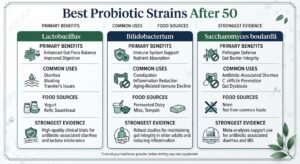
Lactobacillus
This is one of the most extensively studied probiotic groups.
Certain strains may help:
- improve lactose digestion
- reduce mild diarrhea
- support immune function
- improve overall digestive comfort
Common examples include:
- Lactobacillus rhamnosus
- Lactobacillus acidophilus
- Lactobacillus plantarum
Bifidobacterium
Bifidobacteria naturally become less abundant with age.
Supplementation may support:
- bowel regularity
- gut barrier function
- immune health
- microbiome diversity
Common strains include:
- Bifidobacterium lactis
- Bifidobacterium longum
- Bifidobacterium bifidum
Many experts recommend products containing Bifidobacterium when selecting the best probiotics after 50.
Saccharomyces boulardii
Unlike most probiotics, Saccharomyces boulardii is a beneficial yeast.
Research supports its use for:
- antibiotic-associated diarrhea
- traveler’s diarrhea
- certain gastrointestinal infections
It is particularly useful during or shortly after antibiotic therapy.
How to Choose the Best Probiotics After 50
Not every probiotic supplement offers the same quality.
When comparing products, consider:
✔ Clinically studied strains
Look for products that clearly identify the exact probiotic strains rather than listing only the bacterial species.
✔ Adequate CFU Count
CFU stands for Colony Forming Units.
For most healthy adults, products containing approximately 1 to 10 billion CFUs are sufficient for general digestive health.
Extremely high CFU counts are not automatically better.
✔ Third-Party Quality Testing
Choose manufacturers that perform independent quality testing to verify:
- potency
- purity
- label accuracy
✔ Storage Requirements
Some probiotics require refrigeration.
Others remain stable at room temperature.
Always follow the manufacturer’s storage recommendations.
✔ Expiration Date
Live microorganisms gradually lose viability over time.
Choose products with clearly labeled expiration dates and guaranteed live cultures through the end of shelf life.
Foods Naturally Rich in Probiotics
Supplements are not the only source of beneficial bacteria.
Naturally fermented foods include:
- yogurt with live cultures
- kefir
- kimchi
- sauerkraut
- miso
- tempeh
- kombucha (in moderation)
Including fermented foods regularly may help support a healthier microbiome alongside a balanced diet.
Learn more in:
Prebiotics vs Probiotics
People often confuse these two terms.
Probiotics are beneficial live microorganisms.
Prebiotics are fibers that feed those beneficial bacteria.
Excellent prebiotic foods include:
- onions
- garlic
- asparagus
- oats
- bananas
- legumes
- chicory root
The combination of both is often referred to as a synbiotic approach and may provide greater benefits than probiotics alone.
For many adults, pairing a fiber-rich diet with the best probiotics after 50 creates the ideal environment for a healthier gut microbiome.
Frequently Asked Questions
What are the best probiotics after 50?
The best probiotics after 50 depend on your health goals.
For general digestive and immune support, products containing clinically studied strains from Lactobacillus and Bifidobacterium are often the best choice.
If you’re recovering from antibiotics, Saccharomyces boulardii may also be appropriate.
Rather than choosing the supplement with the highest CFU count, prioritize:
- clinically studied strains
- transparent labeling
- third-party quality testing
- proper storage recommendations
Should adults over 50 take probiotics every day?
For many healthy adults, daily probiotic use is safe and may help support digestive and immune health.
However, probiotics are most effective when combined with:
- a fiber-rich diet
- regular physical activity
- adequate sleep
- stress management
Lifestyle remains the foundation of a healthy gut microbiome.
How long does it take for probiotics to work?
Some people notice improvements in digestion within 2–4 weeks.
Other benefits, particularly those involving the gut microbiome, may require 8–12 weeks of consistent use.
The response varies depending on:
- the probiotic strain
- dietary habits
- overall health
- individual microbiome composition
Can probiotics improve constipation?
Certain probiotic strains have shown modest benefits for constipation, particularly when combined with:
- adequate hydration
- increased fiber intake
- regular physical activity
Probiotics should not replace medical evaluation if constipation is severe, persistent, or accompanied by warning signs such as weight loss, bleeding, or severe abdominal pain.
Are probiotics safe?
For most healthy adults, probiotics have an excellent safety profile.
Temporary side effects may include:
- mild bloating
- increased gas
- temporary digestive changes during the first few days
Individuals with severe immune compromise, those receiving chemotherapy, organ transplant recipients, or critically ill patients should consult their physician before using probiotic supplements.
Final Thoughts
Your gut changes throughout life.
After age 50, shifts in the gut microbiome can influence digestion, immune function, metabolism, inflammation, and even aspects of brain health.
That’s why so many adults begin looking for the best probiotics after 50.
Current scientific evidence suggests that probiotics can be a valuable tool for supporting healthy aging—but only when used appropriately.
The best probiotics after 50 are those that contain clinically studied strains matched to your specific health goals, not simply the products with the highest number of bacteria or the most aggressive marketing claims.
At the same time, it’s important to remember that no probiotic supplement can compensate for an unhealthy lifestyle.
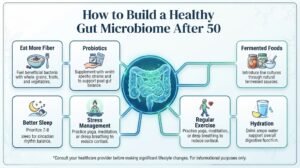
A thriving gut microbiome depends on:
- eating plenty of fiber-rich whole foods
- consuming fermented foods regularly
- staying physically active
- sleeping well
- managing stress
- limiting ultra-processed foods
When these habits work together, probiotics may help maintain digestive balance, strengthen immune function, and support healthier aging for years to come.
Healthy aging starts in many places.
One of the most important may be the trillions of tiny organisms living inside your gut.
References
Medical Disclaimer
The information provided in this article is for educational purposes only and should not be considered medical advice. Always consult a qualified healthcare professional before starting any probiotic supplement, especially if you have a weakened immune system, serious underlying medical conditions, or are taking prescription medications. Dietary supplements should complement—not replace—a balanced diet and healthy lifestyle.