Physical Address
304 North Cardinal St.
Dorchester Center, MA 02124
Physical Address
304 North Cardinal St.
Dorchester Center, MA 02124

Aging well is not about finding a single nutrient that promises longer life. Instead, it involves building daily habits that support the body’s natural ability to remain healthy, active, and resilient over time.
Among the nutrients most frequently studied for healthy aging, omega-3 fatty acids stand out because of their important roles in cardiovascular health, brain function, vision, and normal inflammatory processes.
For adults over 50, maintaining adequate omega-3 intake becomes increasingly important. Changes in metabolism, muscle mass, cardiovascular health, and cognitive function naturally occur with age, and nutrition plays a key role in supporting these physiological changes.
Research suggests that consuming omega-3-rich foods as part of a balanced dietary pattern may contribute to better long-term health. While omega-3 supplements are widely available, understanding when they may be beneficial—and when food sources are sufficient—is essential for making informed decisions.
This guide explains what omega-3 fatty acids are, how they support healthy aging, what current scientific evidence shows, and whether supplementation may be appropriate for some individuals.
The growing scientific evidence surrounding omega-3 for healthy aging highlights the importance of these essential fatty acids as part of a balanced diet and an active lifestyle.
Omega-3 fatty acids are a family of polyunsaturated fats that play essential roles throughout the body.
Unlike some nutrients that the body can produce on its own, certain omega-3 fats must come from the diet.
Omega-3s are incorporated into cell membranes and help support the normal function of:
Because these fats participate in many biological processes, researchers have studied omega-3 for healthy aging extensively over the past several decades.
Although omega-3 is often associated with fish oil supplements, many foods naturally provide these important fats.
Understanding the different types of omega-3 helps explain why some food sources are considered more beneficial than others.
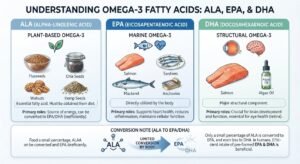
Not all omega-3 fatty acids are the same.
The three primary forms are:
ALA is found mainly in plant foods, including:
ALA is considered an essential fatty acid because the body cannot produce it.
However, the body converts only a small percentage of ALA into the longer-chain omega-3s EPA and DHA.
For this reason, relying exclusively on plant sources may not provide the same levels of EPA and DHA obtained from seafood.
EPA is found primarily in fatty fish and seafood, including:
EPA has been widely studied for its role in supporting cardiovascular health and normal inflammatory responses.
DHA is another long-chain omega-3 found mainly in marine foods.
It is particularly concentrated in:
DHA plays an essential role in maintaining normal brain structure and visual function throughout life.
Many experts consider EPA and DHA the most biologically active forms of omega-3 for healthy aging.
As people age, several physiological changes can influence nutritional needs.
These include:
For this reason, nutrition experts continue to study omega-3 for healthy aging as one of the most important dietary components for adults over 50.
Because omega-3 fatty acids support multiple organ systems simultaneously, maintaining adequate intake becomes increasingly important.
Current evidence suggests that consuming sufficient omega-3 as part of a healthy dietary pattern may help support:
However, omega-3 should always be viewed as one component of an overall healthy lifestyle rather than a standalone solution.
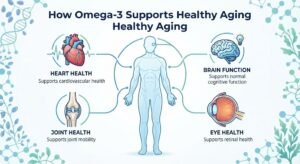
Heart disease remains one of the leading health concerns among older adults.
This is one reason why researchers have extensively studied omega-3 for healthy aging in relation to cardiovascular health.
Omega-3 fatty acids appear to support heart health through several mechanisms.
Research suggests they may contribute to:
Health organizations generally recommend obtaining omega-3 primarily through regular consumption of fatty fish as part of a balanced eating pattern.
People with specific cardiovascular conditions should follow individualized medical advice regarding supplementation.
Maintaining cognitive function is one of the greatest priorities for healthy aging.
Interest in omega-3 for healthy aging has grown considerably because maintaining cognitive function is one of the greatest priorities as people grow older.
The brain contains high concentrations of DHA, making adequate omega-3 intake particularly important throughout adulthood.
Research has investigated the relationship between omega-3 intake and:
Although findings remain mixed regarding supplementation in healthy adults, maintaining sufficient dietary intake supports normal brain structure and function.
Combined with regular physical activity, quality sleep, lifelong learning, and social engagement, omega-3 contributes to a broader strategy for supporting cognitive health during aging.
Learn more in our related articles:
The eyes undergo natural changes with aging, making long-term eye health an important aspect of healthy aging.
DHA is one of the most abundant fatty acids found in the retina, where it contributes to the normal structure and function of retinal cells.
Research has explored whether adequate omega-3 intake may help support:
While omega-3 should not be considered a treatment for eye diseases, maintaining adequate intake through diet is considered an important part of overall nutritional health.
Joint comfort and mobility become increasingly important with age. While normal aging affects cartilage, muscles, and connective tissues, lifestyle habits—including nutrition—can help support long-term joint health.
Researchers have studied omega-3 for healthy aging because EPA and DHA are involved in the body’s normal inflammatory response. This has led to interest in their potential role in supporting joint comfort and physical function.
Current evidence suggests that maintaining adequate omega-3 intake as part of a balanced diet may help support:
Although omega-3 is not a cure for arthritis or other joint disorders, it may complement other healthy habits such as regular exercise, strength training, maintaining a healthy body weight, and following a nutrient-rich diet.
One of the most common questions surrounding omega-3 for healthy aging is whether these fatty acids can actually increase lifespan.
The answer is more nuanced than many headlines suggest.
Current research does not show that omega-3 supplements alone guarantee a longer life.
However, numerous observational studies have found that people who regularly consume fish and follow dietary patterns naturally rich in omega-3—such as the Mediterranean diet—often experience lower rates of cardiovascular disease and better overall health outcomes.
Scientists believe these associations likely result from the combination of multiple healthy behaviors rather than omega-3 alone.
In other words, omega-3 should be viewed as one important piece of a healthy aging strategy that also includes:
The relationship between omega-3 for healthy aging and longevity is best understood as part of a comprehensive lifestyle rather than a single nutritional intervention.
Obtaining nutrients from whole foods should be the first goal whenever possible.
Whole foods remain the preferred way to obtain omega-3 for healthy aging because they also provide high-quality protein, vitamins, minerals, and other beneficial nutrients.
Excellent dietary sources of EPA and DHA include:
Plant-based foods rich in ALA include:
Many dietary guidelines recommend eating fatty fish at least twice per week as part of a balanced eating pattern.
For individuals following vegetarian or vegan diets, algae-based foods and supplements provide a direct source of DHA and, in some cases, EPA.
Not everyone needs an omega-3 supplement.
Although supplements can be helpful in certain situations, obtaining omega-3 for healthy aging through food should remain the primary goal whenever possible.
For many healthy adults, regularly consuming fatty fish provides sufficient amounts of EPA and DHA.
However, supplementation may be appropriate in certain situations, including:
When choosing a supplement, look for products that:
Fish oil is the most common source of supplemental EPA and DHA.
Algae oil offers an excellent plant-based alternative, particularly for individuals who avoid seafood.
If you take blood-thinning medications or have a medical condition, consult a qualified healthcare professional before starting any omega-3 supplement.
There is no single recommendation that applies to everyone.
Many health organizations emphasize obtaining omega-3 through food rather than relying solely on supplements.
For healthy adults, regularly eating fatty fish is generally considered the preferred approach.
When supplements are used, the appropriate amount depends on factors such as:
Rather than focusing on very high doses, consistency and overall dietary quality remain the most important factors supporting omega-3 for healthy aging.
For most people, obtaining omega-3 from whole foods such as fatty fish is the preferred option. Supplements may be useful for individuals who cannot meet their needs through diet.
Fish oil is a source of omega-3 fatty acids, primarily EPA and DHA. Omega-3 refers to the nutrient itself, while fish oil is one way to obtain it.
Yes. Plant foods provide ALA, while algae-based supplements offer a direct source of DHA and, in some cases, EPA.
Daily supplementation is not necessary for everyone. The decision should depend on dietary intake, overall health, and guidance from a healthcare professional.
No.
Omega-3 is only one component of a healthy eating pattern. A balanced diet rich in vegetables, fruits, whole grains, lean proteins, healthy fats, and regular physical activity remains the foundation of healthy aging.
Omega-3 for healthy aging has become one of the most extensively researched topics in nutrition because these essential fatty acids support multiple body systems throughout life.
Current evidence suggests that omega-3 for healthy aging supports cardiovascular health, brain function, vision, and overall well-being when consumed as part of a balanced lifestyle.
Rather than searching for a single supplement to promote longevity, focus on building sustainable habits that include nutritious foods, regular exercise, strength training, restorative sleep, and preventive healthcare.
Whether you obtain omega-3 from salmon, sardines, walnuts, flaxseeds, or a high-quality supplement recommended by your healthcare provider, consistency matters far more than quick fixes.
Healthy aging is built through daily choices—and omega-3 can be one valuable part of that journey.
• Abdelhamid AS, et al. Omega-3 fatty acids for the primary and secondary prevention of cardiovascular disease. Cochrane Database of Systematic Reviews. Read the study → https://pubmed.ncbi.nlm.nih.gov/30019766/
• Swanson D, Block R, Mousa SA. Omega-3 Fatty Acids EPA and DHA: Health Benefits Throughout Life. Advances in Nutrition. Read the study → https://pubmed.ncbi.nlm.nih.gov/22332096/
• National Institutes of Health. Omega-3 Fatty Acids – Fact Sheet for Health Professionals. Read the resource → https://ods.od.nih.gov/factsheets/Omega3FattyAcids-HealthProfessional/
• Calder PC. Omega-3 fatty acids and inflammatory processes. Nutrients. Read the study → https://pubmed.ncbi.nlm.nih.gov/29642415/
This article is intended for educational purposes only and should not be considered medical advice, diagnosis, or treatment. The information provided is based on current scientific evidence available at the time of publication but may not apply to every individual. Always consult a qualified healthcare professional before making decisions about your health, starting a new exercise program, or using supplements or medications.

The Live Ever Better Editorial Team is dedicated to publishing evidence-based content that helps adults over 50 achieve healthier aging and greater longevity. Every article is carefully researched using scientific studies, clinical guidelines, and trusted health organizations to ensure accurate, practical, and reliable health information.