Physical Address
304 North Cardinal St.
Dorchester Center, MA 02124
Physical Address
304 North Cardinal St.
Dorchester Center, MA 02124
Protein after 50 becomes increasingly important because maintaining muscle mass, strength, and physical function is one of the greatest challenges of healthy aging.
Research on protein after 50 shows that adequate protein intake becomes increasingly important as the body becomes less efficient at building and maintaining muscle tissue.
After the age of 50, the body gradually becomes less efficient at building and repairing muscle tissue. This process, known as anabolic resistance, contributes to age-related muscle loss and increases the risk of sarcopenia.
The good news is that adequate protein intake, combined with resistance training and an active lifestyle, can help preserve muscle health and support healthy aging.
For adults over 50, protein is not just about building muscle — it is about protecting quality of life.
As we get older, several changes affect how the body uses protein.
One of the most important changes is a reduced sensitivity of muscle tissue to dietary protein. This means older adults often need a stronger nutritional stimulus to achieve the same muscle-building response they experienced when they were younger.
This process is called anabolic resistance.
Factors that contribute to reduced muscle protein response include:
Over time, these factors can contribute to a gradual decline in muscle mass and strength.
This is one of the main reasons why maintaining adequate protein intake after 50 is an essential part of healthy aging.

The general Recommended Dietary Allowance (RDA) for protein is:
0.8 grams of protein per kilogram of body weight per day
However, many researchers and experts in aging nutrition suggest that older adults may benefit from higher protein intake, especially those who are physically active.
A commonly recommended range for healthy older adults is:
1.2–1.6 grams of protein per kilogram of body weight per day
For example:
A 75 kg adult may benefit from approximately:
90–120 grams of protein per day
The ideal amount depends on several factors:
Adults who regularly perform strength training may require more protein to support muscle repair and adaptation.
Muscle tissue is constantly being broken down and rebuilt through a process called muscle protein synthesis.
Protein provides amino acids — the building blocks needed for muscle repair and maintenance.
One amino acid in particular, leucine, plays an important role in activating pathways involved in muscle protein synthesis.
Adequate protein intake helps support:
Protein provides the nutrients needed to preserve lean muscle mass.
Maintaining muscle helps support:
Protein supports muscle repair after resistance training and physical activity.
For adults over 50, combining sufficient protein with strength training is one of the most effective strategies for maintaining muscle throughout aging.
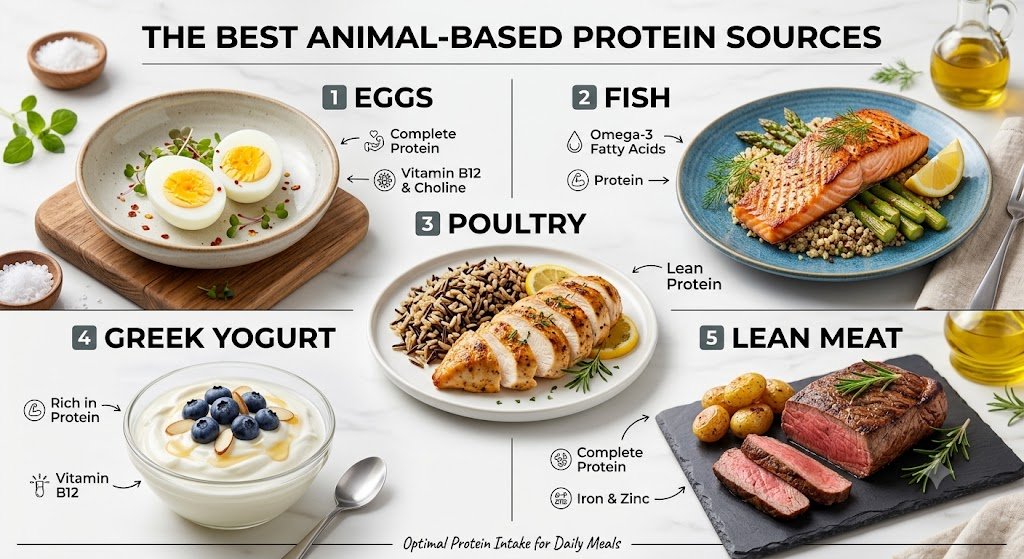
The best protein sources provide high-quality amino acids and are easy to include in daily meals.
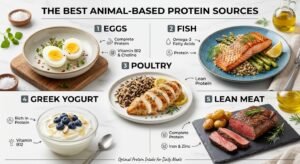
Examples include:
Eggs provide complete protein and important nutrients such as vitamin B12 and choline.
Fish provides protein along with beneficial omega-3 fatty acids.
Chicken and turkey are lean protein sources that support muscle maintenance.
Greek yogurt is rich in protein and can be an easy option for breakfast or snacks.
Lean beef and other meats provide complete protein and important minerals such as iron and zinc.
Plant proteins can also contribute significantly to daily protein intake.
Examples include:
Combining different plant protein sources throughout the day can help provide a broader amino acid profile.
Protein supplements are not required for everyone, but they can be useful in certain situations.
A protein supplement may help adults who:
Common options include:
Whole foods should remain the foundation of nutrition, but supplements can be a practical tool when needed.
While total daily protein intake is the most important factor, how protein is distributed throughout the day may also influence muscle health.
Instead of consuming most protein at one meal, many experts recommend spreading intake across:
A balanced approach may provide multiple opportunities to stimulate muscle protein synthesis throughout the day.
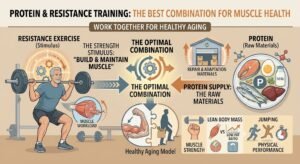
Protein works best when combined with resistance exercise.
Strength training creates the stimulus that tells the body:
“Build and maintain muscle.”
Protein provides the raw materials needed for repair and adaptation.
Together, they help support:
Learn more about the relationship between muscle loss and prevention in our guide:
[Sarcopenia: Symptoms, Causes, Prevention, and the Best Ways to Preserve Muscle After 50]
Protein alone cannot completely prevent sarcopenia, but adequate protein intake is an important part of a comprehensive prevention strategy.
The strongest approach combines:
For adults over 50, protecting muscle is one of the most important investments in long-term health.
Increasing protein after 50 intake, combined with resistance training, is one of the most effective strategies for preserving muscle quality during aging.
Many healthy adults over 60 may benefit from approximately 1.2–1.6 grams of protein per kilogram of body weight daily, depending on activity level and health goals.
For many active adults, 100 grams of protein per day can be an appropriate amount. Protein needs depend on body weight, activity, and individual health factors.
Yes. Adequate protein supports muscle maintenance, especially when combined with resistance training.
For most healthy adults, whey protein is considered safe and can be a convenient way to increase protein intake.
Whole foods should be the foundation of nutrition, but supplements can help fill gaps when daily protein needs are difficult to reach.
Protein becomes increasingly important as we age because maintaining muscle is essential for mobility, independence, and quality of life.
Adults over 50 do not need to focus only on living longer — they need to focus on staying strong, active, and capable.
A longevity-focused nutrition strategy should include:
Building muscle and protecting strength after 50 is one of the most effective ways to support healthy aging.
Prioritizing protein after 50 is not about consuming excessive amounts of food, but about providing the body with the nutrients needed to maintain strength, mobility, and independence.
• Bauer J, et al. Evidence-based recommendations for optimal dietary protein intake in older people: a position paper from the PROT-AGE Study Group. Journal of the American Medical Directors Association. 2013.
Read the study → https://pubmed.ncbi.nlm.nih.gov/23867520/
• Phillips SM, Chevalier S, Leidy HJ. Protein “requirements” beyond the RDA: implications for optimizing health in older adults. Applied Physiology, Nutrition, and Metabolism. 2016.
Read the study → https://pubmed.ncbi.nlm.nih.gov/26960445/
• Deutz NEP, et al. Protein intake and exercise for optimal muscle function with aging: recommendations from the ESPEN Expert Group. Clinical Nutrition. 2014.
Read the study → https://pubmed.ncbi.nlm.nih.gov/24814383/
• Robinson SM, et al. Nutrition and physical activity in the prevention and treatment of sarcopenia: systematic review and meta-analysis. Clinical Nutrition. 2018.
Read the study → https://pubmed.ncbi.nlm.nih.gov/29576348/

The Live Ever Better Editorial Team is dedicated to publishing evidence-based content that helps adults over 50 achieve healthier aging and greater longevity. Every article is carefully researched using scientific studies, clinical guidelines, and trusted health organizations to ensure accurate, practical, and reliable health information.