Physical Address
304 North Cardinal St.
Dorchester Center, MA 02124
Physical Address
304 North Cardinal St.
Dorchester Center, MA 02124

Finding the best breakfast to lower morning blood sugar after 50 is one of the simplest and most effective ways to support healthy aging. Morning blood sugar levels are often the first sign that your body is becoming less efficient at managing glucose. Many adults over 50 notice higher fasting blood sugar even if they eat relatively well and maintain an active lifestyle.
This phenomenon, sometimes called the “dawn effect,” is influenced by natural hormonal changes that occur before waking. During the early morning hours, hormones such as cortisol and growth hormone stimulate the liver to release glucose into the bloodstream. As we age, insulin sensitivity may decline, making it harder for the body to keep fasting glucose within a healthy range.
The encouraging news is that breakfast can make a significant difference.
Choosing foods that combine protein, fiber, healthy fats, and minimally processed carbohydrates can help reduce glucose spikes, improve satiety, support metabolic health, and contribute to healthier aging.
This guide explains which breakfast foods have the strongest scientific evidence for supporting stable morning blood sugar after age 50 and how to build a meal that keeps you energized throughout the day.
Understanding the best breakfast to lower morning blood sugar after 50 begins with understanding why fasting glucose naturally changes with age.
Higher fasting blood sugar is common with aging and does not necessarily mean someone has diabetes.
Several physiological changes contribute to this effect, including:
The liver naturally releases glucose before you wake up to prepare your body for the day. When insulin becomes less effective, that glucose remains in circulation longer, resulting in higher fasting blood sugar.
For this reason, breakfast is an important opportunity to help regulate blood sugar rather than worsen glucose fluctuations.
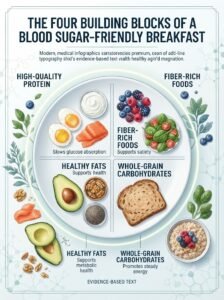
The best breakfast to lower morning blood sugar after 50 combines protein, fiber, healthy fats, and minimally processed carbohydrates.Contrary to popular belief, there is no single “superfood” that controls blood sugar.
Instead, the overall composition of the meal matters most.
An ideal breakfast should include:
This combination slows digestion, reduces glucose spikes, supports fullness, and provides more sustained energy.
High-quality protein plays a central role in blood sugar regulation. Learn how much protein you need in our complete guide to Protein After 50.
Plain Greek yogurt is one of the best breakfast choices for adults over 50.
It provides:
Protein slows gastric emptying, while probiotics may support gut health, which is increasingly linked to metabolic function.
Choose plain varieties and add fresh berries instead of flavored yogurts with added sugar.
Eggs remain one of the most nutrient-dense breakfast foods.
They provide:
Egg-based breakfasts have been associated with greater satiety and may reduce calorie intake later in the day.
Pair eggs with vegetables instead of refined toast for an even better metabolic response.
Despite containing carbohydrates, oats can be an excellent choice.
Their secret is beta-glucan, a soluble fiber that slows glucose absorption.
Choose:
Limit:
Adding nuts, seeds, or Greek yogurt further improves the meal’s nutritional profile.
Blueberries, strawberries, raspberries, and blackberries are naturally lower in sugar than many other fruits.
They are rich in:
Fiber helps moderate blood sugar while polyphenols may support insulin sensitivity.
Fresh or frozen berries are both excellent choices.
Walnuts, almonds, pistachios, chia seeds, and flaxseeds provide:
These nutrients help slow digestion and increase meal satisfaction.
Even one or two tablespoons of seeds can substantially increase fiber intake.
Avocados are naturally low in carbohydrates and rich in heart-healthy monounsaturated fats.
They also provide:
Because healthy fats slow digestion, adding avocado to breakfast may help reduce rapid increases in blood sugar while promoting longer-lasting satiety.
Try avocado on whole-grain toast, paired with eggs, or added to a vegetable omelet.
Not all bread is created equal.
Many commercial breads are made with refined flour, which can lead to rapid glucose spikes.
Instead, choose breads made with:
Look for products that contain at least 3–5 grams of fiber per serving and minimal added sugar.
Pair whole-grain bread with protein-rich foods rather than sweet spreads.
Chia seeds absorb water and form a gel-like consistency that slows digestion.
They are excellent sources of:
Even one tablespoon added to yogurt or oatmeal can increase fiber intake significantly.
Peanut butter and almond butter without added sugar provide:
Spread a thin layer on whole-grain toast or combine with sliced apples for a balanced breakfast.
Choose products containing only nuts and, ideally, a small amount of salt.
Breakfast doesn’t have to be sweet.
Adding vegetables to your morning meal increases fiber while providing vitamins, minerals, and antioxidants.
Excellent options include:
Vegetables pair well with eggs and can help increase meal volume without significantly increasing calories or blood sugar.
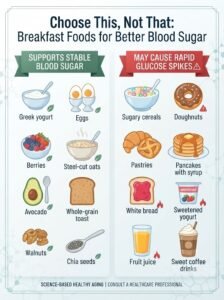
Some popular breakfast foods can cause rapid glucose spikes because they are high in refined carbohydrates and added sugars.
Examples include:
These foods are often digested quickly, leading to sharp increases in blood glucose followed by a rapid drop that may increase hunger later in the morning.
Whenever possible, replace refined carbohydrates with whole foods that contain protein and fiber.
Many of these foods are staples of the Mediterranean Diet for Healthy Aging, one of the most researched eating patterns for supporting metabolic and cardiovascular health.
Building a balanced breakfast is easier than many people think.
An example meal could include:
Or:
These meals combine protein, healthy fats, and fiber to support more stable blood sugar throughout the morning.
These examples illustrate what the best breakfast to lower morning blood sugar after 50 can look like in everyday life.
The quality of breakfast is generally more important than the exact time you eat it.
However, some research suggests that eating a balanced breakfast within a few hours of waking may help regulate appetite and support healthier glucose metabolism throughout the day.
Skipping breakfast may be appropriate for some individuals, particularly those following medically supervised time-restricted eating plans, but it is not automatically beneficial for everyone.
Adults with diabetes or those taking glucose-lowering medications should consult their healthcare provider before making significant changes to meal timing.
Even the best breakfast to lower morning blood sugar after 50 works best when combined with healthy daily habits.Breakfast is only one part of the equation.
Several daily habits have consistently been associated with better glucose regulation.
Regular exercise increases insulin sensitivity.
Both aerobic exercise and resistance training improve the body’s ability to use glucose efficiently.
Even a short walk after meals may help reduce post-meal glucose levels.
Even a daily walk can improve glucose regulation. Learn more in Walking and Longevity.
Poor sleep has been linked to insulin resistance and elevated fasting blood sugar.
Aim for seven to nine hours of quality sleep whenever possible.
Muscle tissue is one of the body’s primary sites for glucose uptake.
Strength training helps preserve muscle mass, supports metabolic health, and becomes increasingly important with age.
Chronic stress increases cortisol levels, which can contribute to higher blood sugar.
Relaxation techniques such as meditation, deep breathing, or yoga may support overall metabolic health.
Coffee alone is not the best breakfast to lower morning blood sugar after 50, but it can fit into a balanced breakfast when consumed without added sugar.Coffee is one of the most debated breakfast beverages when it comes to blood sugar.
Research suggests that the effect varies from person to person.
For many healthy adults, black coffee has little impact on blood glucose. However, adding sugar, flavored syrups, whipped cream, or sweetened creamers can significantly increase the carbohydrate content of the drink.
Some individuals may also experience a temporary rise in blood sugar after consuming caffeine due to increased adrenaline release.
If you enjoy coffee, the healthiest options include:
Monitoring your personal response, especially if you have diabetes or prediabetes, is often the best approach.
The best breakfast to lower morning blood sugar after 50 includes lean protein, fiber, healthy fats, and minimally processed carbohydrates. Examples include Greek yogurt with berries and chia seeds, eggs with vegetables, or steel-cut oats topped with walnuts.
Yes. Steel-cut oats and old-fashioned rolled oats contain beta-glucan, a soluble fiber that helps slow carbohydrate absorption and supports healthier blood sugar control. Avoid flavored instant oatmeal varieties with added sugar.
Yes. Eggs are rich in high-quality protein and contain virtually no carbohydrates. When combined with vegetables and other whole foods, they can be part of a balanced breakfast for people with prediabetes.
Berries are among the best choices because they are relatively low in sugar and rich in fiber, vitamins, and polyphenols. Apples and pears are also excellent options when eaten whole rather than as juice.
Not necessarily.
The goal is to choose high-quality carbohydrates that are naturally rich in fiber and nutrients instead of refined carbohydrates. Whole grains, fruits, legumes, and vegetables can all be part of a healthy breakfast.
For some individuals, time-restricted eating may improve metabolic health. However, skipping breakfast is not universally beneficial and may not be appropriate for everyone, particularly people with diabetes or those taking medications that affect blood glucose.
Choosing the best breakfast to lower morning blood sugar after 50 is one of the simplest lifestyle changes that supports healthy aging.
The best breakfast to lower morning blood sugar after 50 is not built around a single “superfood.” Instead, it is the result of combining nutrient-dense whole foods that provide protein, fiber, healthy fats, and minimally processed carbohydrates.
Simple choices such as Greek yogurt with berries, eggs with vegetables, steel-cut oats, chia seeds, walnuts, and avocado can help create a breakfast that supports steadier blood sugar, greater satiety, and healthier aging.
Breakfast is only one part of a healthy lifestyle. Regular exercise, quality sleep, stress management, and maintaining muscle mass all play essential roles in supporting long-term metabolic health.
Small, consistent improvements in your morning routine can have meaningful benefits for your overall health as you age.
Making the best breakfast to lower morning blood sugar after 50 part of your daily routine may help improve metabolic health, increase energy, and support healthy aging over the long term.
Many blood sugar-friendly foods also help reduce chronic inflammation. Explore our guide to Anti-Inflammatory Foods After 50.
• American Diabetes Association. Standards of Care in Diabetes—2025. Diabetes Care.
Read the guideline → https://diabetesjournals.org/care
• Evert AB, et al. Nutrition Therapy for Adults With Diabetes or Prediabetes: A Consensus Report. Diabetes Care.
Read the study → https://pubmed.ncbi.nlm.nih.gov/31862756/
• Reynolds A, et al. Carbohydrate quality and human health: a series of systematic reviews and meta-analyses. The Lancet.
Read the study → https://pubmed.ncbi.nlm.nih.gov/30638909/
• Jenkins DJA, et al. Glycemic index: overview of implications in health and disease. American Journal of Clinical Nutrition.
Read the study → https://pubmed.ncbi.nlm.nih.gov/24898250/
• National Institute on Aging. Healthy eating as you age.
Read the guide → https://www.nia.nih.gov/health/healthy-eating
This article is intended for educational purposes only and should not be considered medical advice, diagnosis, or treatment. The information provided is based on current scientific evidence available at the time of publication but may not apply to every individual. Always consult a qualified healthcare professional before making decisions about your health, starting a new exercise program, or using supplements or medications.

The Live Ever Better Editorial Team is dedicated to publishing evidence-based content that helps adults over 50 achieve healthier aging and greater longevity. Every article is carefully researched using scientific studies, clinical guidelines, and trusted health organizations to ensure accurate, practical, and reliable health information.