Physical Address
304 North Cardinal St.
Dorchester Center, MA 02124
Physical Address
304 North Cardinal St.
Dorchester Center, MA 02124
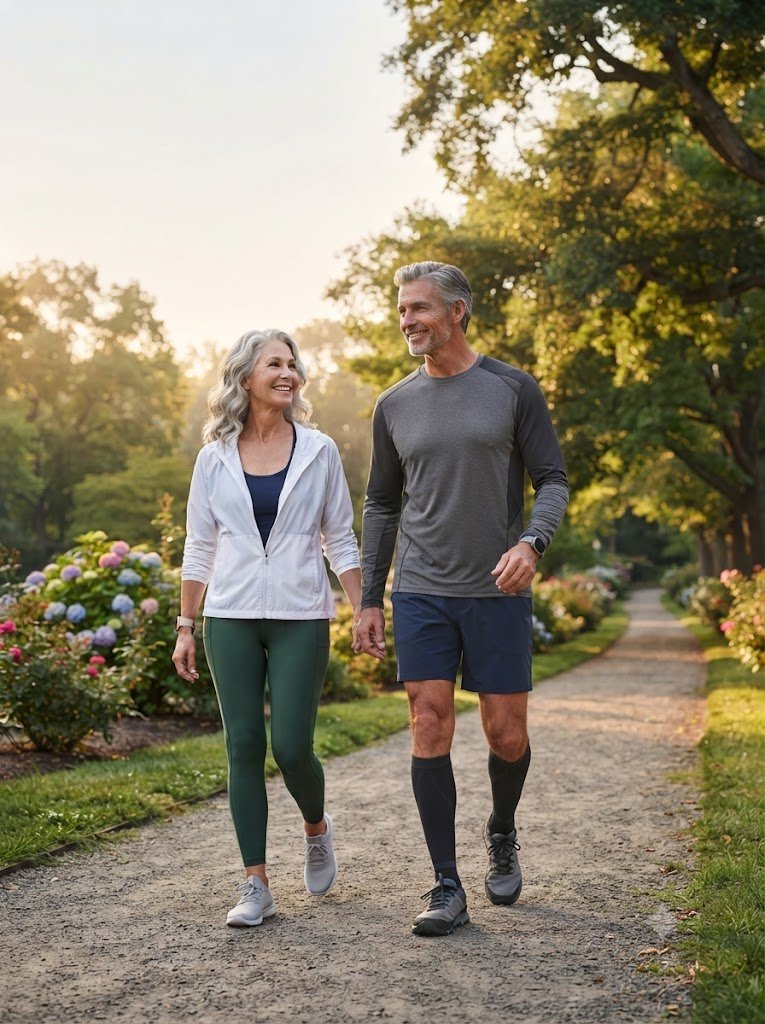
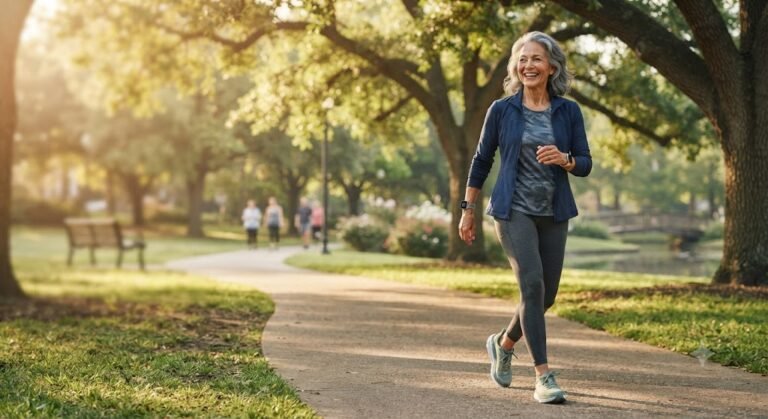
Walking and longevity are closely connected. Among all forms of physical activity, walking is one of the simplest, safest, and most accessible ways to support healthy aging.
Unlike many fitness trends that require expensive equipment or intense workouts, walking is available to almost everyone. Whether it’s a brisk walk through your neighborhood, a stroll in a local park, or a walk along the beach, this everyday activity provides meaningful health benefits backed by decades of scientific research.
Regular walking supports cardiovascular fitness, helps preserve mobility, improves metabolic health, strengthens muscles and bones, and contributes to better mental well-being. Research also suggests that physically active adults, including those who walk regularly, tend to experience a lower risk of many chronic diseases and premature mortality.
The relationship between walking and longevity is not about taking a certain number of steps to guarantee a longer life. Instead, walking is one of the healthy lifestyle habits consistently associated with better physical function, greater independence, and improved quality of life as we age.
The growing body of research on walking and longevity shows that this simple daily habit can play an important role in maintaining health, mobility, and independence throughout the aging process.
As people grow older, maintaining physical function becomes just as important as preventing disease.
Understanding the connection between walking and longevity helps explain why healthcare professionals consistently recommend walking as one of the safest forms of physical activity for older adults.
Age-related changes such as muscle loss, reduced cardiovascular fitness, declining balance, and decreased bone density can gradually affect independence and quality of life.
Walking provides a practical way to counter many of these changes.
Unlike high-impact activities, walking places relatively little stress on the joints while still challenging the cardiovascular system and encouraging regular movement.
For many adults over 50, it represents an ideal starting point for building lifelong exercise habits.
Most importantly, walking is sustainable.
The best exercise program is not necessarily the most intense—it is the one you can continue doing consistently for years.
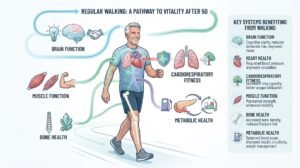
Researchers have studied walking and longevity for decades.
Although individual studies differ in their design, a consistent pattern has emerged: people who engage in regular physical activity, including walking, generally experience lower risks of cardiovascular disease, type 2 diabetes, certain cancers, cognitive decline, and premature death.
Walking contributes to these outcomes because it positively influences multiple body systems simultaneously.
Regular walking supports:
Rather than acting through one single mechanism, walking produces small improvements across many physiological systems that together contribute to healthier aging.
Your heart is a muscle.
One reason researchers continue studying walking and longevity is the positive effect that regular walking has on cardiovascular health across the lifespan.
Like every other muscle in the body, it responds positively to regular exercise.
These neurological benefits further strengthen the scientific relationship between walking and longevity, particularly as maintaining cognitive health becomes increasingly important with age.
Walking increases heart rate moderately, improving cardiovascular efficiency over time.
Regular walking has been associated with:
For many adults, brisk walking represents an effective way to accumulate moderate-intensity physical activity without excessive physical strain.
Cardiorespiratory fitness reflects how efficiently the heart, lungs, blood vessels, and muscles work together during exercise.
Walking—particularly at a brisk pace—can improve aerobic fitness, especially in previously sedentary individuals.
Improving cardiorespiratory fitness contributes to:
Learn more in our complete guide:
VO₂ Max and Longevity: Why Cardiorespiratory Fitness Matters After 50
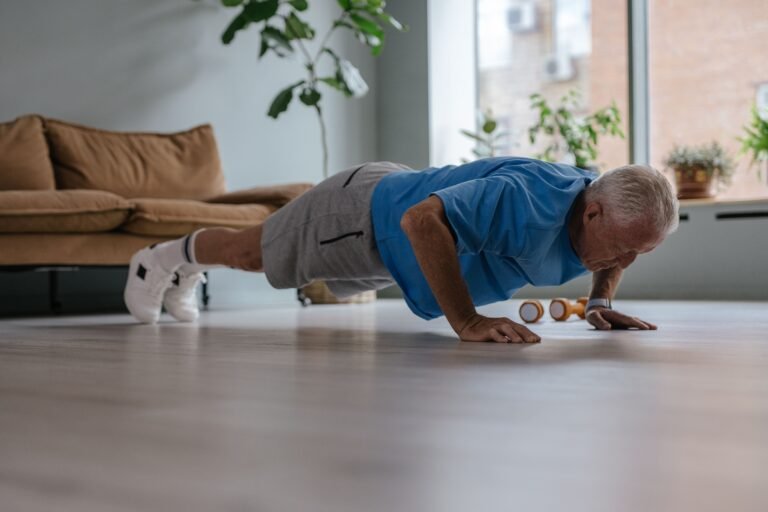
Although walking is not a substitute for resistance training, it plays an important role in maintaining muscle function throughout aging.
Walking activates the muscles of the:
Regular movement also helps reduce the prolonged periods of inactivity that contribute to muscle deconditioning.
For optimal healthy aging, walking should ideally be combined with strength training and adequate protein intake.
Read our related guides:
Physical activity benefits not only the body but also the brain.
Walking increases blood flow to the brain and supports healthy vascular function.
Research suggests that regular physical activity is associated with:
While walking cannot prevent every neurological condition, remaining physically active is considered one of the most important lifestyle habits for supporting long-term brain health.
Weight management becomes more challenging with age due to changes in metabolism, hormone levels, and muscle mass.
Walking increases daily energy expenditure and complements healthy eating habits.
Rather than focusing solely on weight loss, walking helps maintain:
Small amounts of daily movement accumulated consistently often produce greater long-term benefits than occasional intense exercise.
Walking is considered a weight-bearing exercise.
Every step places gentle stress on the skeleton, helping stimulate normal bone remodeling.
Regular walking may contribute to:
Walking alone cannot fully prevent osteoporosis, but it remains an important component of a comprehensive bone health strategy.
Learn more in:
Vitamin D for Healthy Aging: Benefits for Bones, Muscles, Immunity, and Longevity
Walking improves the body’s ability to regulate blood sugar and use insulin effectively.
Even short walks after meals may help reduce post-meal blood glucose spikes in some individuals.
Regular walking is associated with:
Improved metabolic health is another important reason why walking and longevity are frequently discussed together in healthy aging research.
These metabolic benefits contribute to healthier aging over time.
Many adults report sleeping better when they remain physically active.
Regular walking helps regulate the body’s natural sleep-wake cycle and may reduce stress levels that interfere with restorative sleep.
Although walking is not a treatment for sleep disorders, maintaining an active lifestyle supports healthy sleep as part of an overall wellness routine.
Good sleep also plays an important role in muscle recovery, cognitive function, and immune health.
Healthy aging is about much more than physical health.
Emotional well-being plays a major role in maintaining independence, quality of life, and overall health as we age.
Walking has been consistently associated with improvements in mental well-being because physical activity stimulates the release of neurotransmitters involved in mood regulation.
Regular walking may help support:
Walking outdoors may provide additional psychological benefits, particularly in natural environments such as parks, forests, or coastal areas.
Although walking should not replace professional treatment for mental health conditions, it remains one of the simplest lifestyle habits that supports both physical and emotional well-being.
One of the greatest goals of healthy aging is maintaining independence for as long as possible.
The ability to perform everyday activities—such as shopping, climbing stairs, traveling, carrying groceries, or playing with grandchildren—depends largely on maintaining physical function.
Walking contributes to this goal by helping preserve:
The relationship between walking and longevity is ultimately about preserving the ability to live well—not simply living longer.
Remaining active allows older adults to continue participating in the activities that give life purpose and enjoyment.
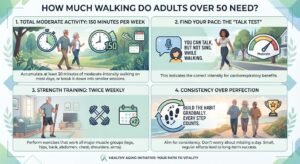
One of the most common questions about walking and longevity is how much walking is actually necessary to support healthy aging.
Current physical activity guidelines recommend that adults aim for:
Walking can easily contribute to these recommendations.
When discussing walking and longevity, experts emphasize that regular movement is more important than occasional intense exercise sessions.
Rather than focusing on a single long walk, many people find it easier to accumulate activity throughout the day.
For example:
These smaller sessions can provide meaningful health benefits when practiced consistently.
The goal of walking 10,000 steps per day has become widely recognized, but it did not originate from scientific guidelines.
Research suggests that health benefits begin well below this number.
For many adults over 50, gradually increasing daily movement is more important than reaching an arbitrary step target.
The ideal number of daily steps depends on factors such as:
The key message from research on walking and longevity is simple:
Moving more is generally better than moving less.
Consistency matters far more than achieving a perfect number every day.
Beginning a walking routine does not require expensive equipment or athletic experience.
A few simple strategies can help reduce injury risk and make walking more enjoyable.
Choose supportive footwear that fits well and provides adequate cushioning.
If you have been inactive, begin with shorter walks at a comfortable pace.
Gradually increase your duration before increasing your speed.
A simple guideline is the talk test.
You should be able to carry on a conversation while walking, although singing would likely feel difficult.
Changing your route or walking in parks, beaches, or nature trails can make walking more enjoyable and help maintain motivation.
Walking is excellent for cardiovascular health, but preserving muscle mass also requires resistance exercise.
Combining walking with strength training creates one of the most effective strategies for healthy aging.
Read more in:
Regular walking is associated with a lower risk of premature mortality in observational studies. While walking alone cannot guarantee a longer life, it supports many factors linked to healthy aging.
A brisk pace that slightly increases your breathing and heart rate is generally considered moderate-intensity exercise for most adults.
Walking provides many health benefits, but it should ideally be combined with strength training, flexibility exercises, and balance training to support healthy aging.
For most healthy adults, daily walking is safe and beneficial. Individuals with medical conditions or mobility limitations should seek guidance from their healthcare provider before beginning a new exercise program.
Both activities offer important health benefits.
Walking places less stress on the joints and is easier to maintain for many adults, while running generally produces greater improvements in aerobic fitness.
The best exercise is the one you can perform safely and consistently.
Walking may be one of the simplest forms of exercise, but its impact on healthy aging is remarkably powerful.
Scientific research consistently demonstrates that walking and longevity are closely connected through improvements in cardiovascular fitness, metabolic health, mobility, muscle function, brain health, and emotional well-being.
You do not need to become a marathon runner to experience these benefits.
A regular walking habit—combined with strength training, balanced nutrition, quality sleep, and preventive healthcare—can help you remain active, independent, and resilient throughout the aging process.
Healthy aging is built one step at a time.
• Saint-Maurice PF, et al. Association of Daily Step Count and Step Intensity With Mortality Among US Adults. JAMA. 2020.
Read the study → https://pubmed.ncbi.nlm.nih.gov/32207799/
• Lee IM, Shiroma EJ, et al. Effect of Physical Inactivity on Major Non-Communicable Diseases Worldwide. The Lancet. 2012.
Read the study → https://pubmed.ncbi.nlm.nih.gov/22818936/
• Ekelund U, et al. Dose-response associations between accelerometry measured physical activity and sedentary time and all cause mortality. BMJ. 2019.
Read the study → https://pubmed.ncbi.nlm.nih.gov/31434697/
• Physical Activity Guidelines for Americans, 2nd Edition. U.S. Department of Health and Human Services.
Read the guidelines → https://health.gov/our-work/nutrition-physical-activity/physical-activity-guidelines

The Live Ever Better Editorial Team is dedicated to publishing evidence-based content that helps adults over 50 achieve healthier aging and greater longevity. Every article is carefully researched using scientific studies, clinical guidelines, and trusted health organizations to ensure accurate, practical, and reliable health information.