Physical Address
304 North Cardinal St.
Dorchester Center, MA 02124
Physical Address
304 North Cardinal St.
Dorchester Center, MA 02124
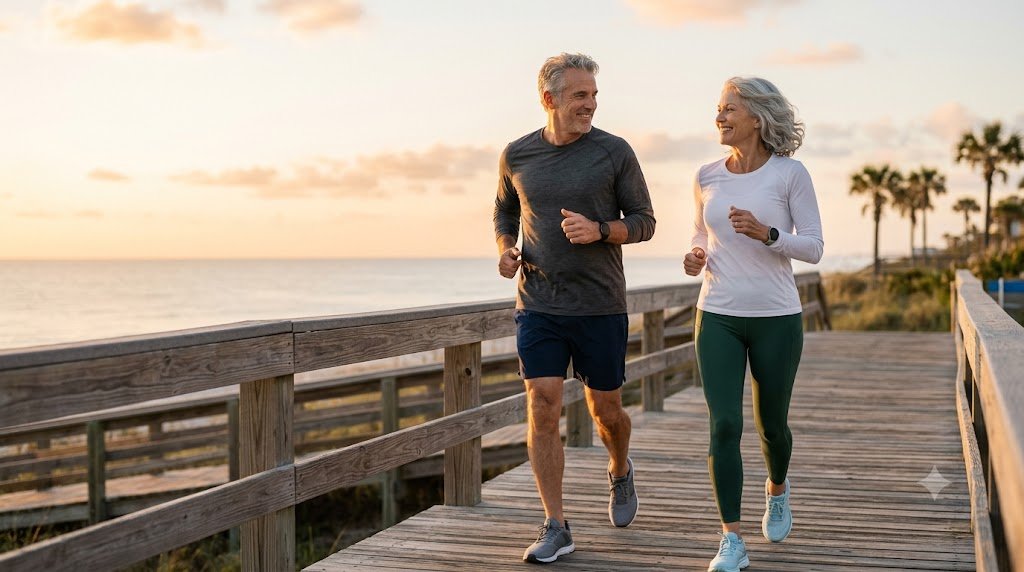
VO₂ max and longevity have become closely linked topics in modern preventive medicine. Over the past two decades, researchers have consistently found that cardiorespiratory fitness is one of the strongest indicators of long-term health and physical function.
Unlike many health measurements that focus on a single organ or disease, VO₂ max reflects how efficiently the heart, lungs, blood vessels, and muscles work together to deliver and use oxygen during physical activity.
As we age, maintaining good cardiorespiratory fitness becomes increasingly important. A higher VO₂ max is associated with better physical performance, greater independence, and a lower risk of developing many chronic diseases. While it is not a guarantee of a longer life, it is one of the most informative measures of overall fitness and healthy aging.
The encouraging news is that VO₂ max is not fixed. Adults can improve their cardiorespiratory fitness at virtually any age through regular physical activity and appropriate training. Understanding the relationship between VO₂ max and longevity can help you make informed decisions that support healthy aging for years to come.
The growing scientific interest in VO₂ max and longevity reflects the important role that cardiorespiratory fitness plays in maintaining physical function and reducing health risks as we age.
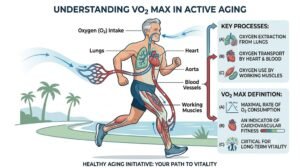
VO₂ max—short for maximal oxygen uptake—is the maximum amount of oxygen your body can use during intense exercise.
It is usually expressed as:
milliliters of oxygen per kilogram of body weight per minute (mL/kg/min)
Although the measurement may sound technical, the concept is straightforward.
When you exercise, your muscles need oxygen to produce energy.
Your body must:
VO₂ max reflects how effectively this entire system works together.
The higher your VO₂ max, the greater your body’s capacity to perform sustained physical activity.
Many health measurements focus on disease after it develops.
VO₂ max is different.
It measures physical capacity before serious health problems appear.
Maintaining good cardiorespiratory fitness supports several aspects of healthy aging, including:
For adults over 50, these benefits become increasingly important because physical fitness strongly influences independence and quality of life.
Maintaining the ability to climb stairs, carry groceries, walk long distances, or travel comfortably depends largely on preserving both muscle strength and aerobic fitness.
Researchers have studied the relationship between cardiorespiratory fitness and long-term health for decades.
One of the most consistent findings is that individuals with higher levels of cardiorespiratory fitness generally experience lower rates of all-cause mortality and cardiovascular disease in large observational studies.
Importantly, this does not mean that a high VO₂ max guarantees a longer life.
Instead, cardiorespiratory fitness appears to be a powerful indicator of overall health because it reflects the combined function of multiple body systems.
A higher VO₂ max is often associated with:
In other words, VO₂ max provides valuable insight into how well the body is functioning as a whole.
For this reason, many experts consider cardiorespiratory fitness one of the most informative measurements available when evaluating healthy aging.
Overall, current evidence suggests that VO₂ max and longevity are closely connected because cardiorespiratory fitness reflects the health of multiple body systems rather than a single organ or function.
Like muscle mass and bone density, VO₂ max gradually declines as part of the aging process.
Several physiological changes contribute to this decline, including:
As people age, the heart cannot beat as fast during intense exercise, reducing the amount of oxygen-rich blood delivered to working muscles.
Age-related muscle loss reduces the amount of active tissue capable of using oxygen efficiently.
Maintaining muscle through strength training can help slow this process.
Read more in our guide:
Strength Training After 50: The Best Routine for Healthy Aging
Many adults become less active over time.
Reduced activity leads to deconditioning, which accelerates declines in aerobic fitness.
The good news is that much of this decline is related to lifestyle rather than aging alone.
Normal aging may reduce the efficiency of oxygen transport throughout the body.
Regular aerobic exercise helps maintain cardiovascular function and improve exercise capacity.
There is no single “ideal” VO₂ max.
Values vary depending on:
However, maintaining a VO₂ max above average for your age group is generally associated with better physical function.
A simplified guide looks like this:
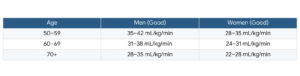
These values are approximate and should be interpreted alongside overall health, medical history, and physical function rather than viewed as strict targets.
For many adults, improving VO₂ max by even a small amount can translate into meaningful improvements in daily life.
The most accurate way to measure VO₂ max is through a cardiopulmonary exercise test (CPET) performed in a laboratory.
During the test, participants exercise on a treadmill or stationary bicycle while wearing a mask that measures oxygen consumption and carbon dioxide production.
Although CPET is considered the gold standard, it is not necessary for everyone.
Many smartwatches and fitness trackers now provide VO₂ max estimates using heart rate, pace, and activity data.
While these estimates are less precise than laboratory testing, they can be useful for monitoring trends over time rather than focusing on a single number.
Another practical way to evaluate aerobic fitness is by observing improvements in everyday performance, such as walking farther, climbing stairs more comfortably, or recovering more quickly after exercise.
VO₂ max is an excellent measure of aerobic fitness, but it does not capture every aspect of healthy aging.
A comprehensive approach also includes:
For example, someone with a good VO₂ max but poor muscle strength may still struggle with daily activities.
Likewise, preserving muscle mass requires adequate protein intake and regular resistance training.
Learn more in our related guides:
Healthy aging is built on the interaction of many lifestyle factors—not a single fitness measurement.
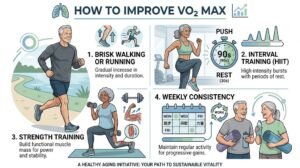
The encouraging news is that improving VO₂ max and longevity outcomes often begins with the same healthy habits. VO₂ max can improve at almost any age through regular physical activity and progressive training.
Although genetics influence your starting point, regular exercise remains the most effective way to increase cardiorespiratory fitness.
Even modest improvements in VO₂ max are associated with meaningful gains in physical function and exercise capacity.
The key is consistency rather than perfection.
Aerobic activities challenge the heart, lungs, and muscles to deliver and use oxygen more efficiently.
Excellent options include:
Choose activities you enjoy, as long-term consistency is more important than any single exercise.
Once a solid fitness base has been established, adding higher-intensity intervals can stimulate further improvements in VO₂ max.
For example:
This type of interval training should be introduced gradually and may not be appropriate for everyone.
Older adults or individuals with medical conditions should seek professional guidance before beginning vigorous exercise.
VO₂ max responds best to regular activity.
General recommendations include:
Building fitness is a long-term process rather than a short-term goal.
Strength training and aerobic exercise serve different but complementary purposes.
Resistance training primarily improves:
Aerobic exercise primarily improves:
Strength training alone typically produces only modest improvements in VO₂ max.
However, combining resistance training with aerobic exercise creates one of the most effective strategies for healthy aging.
Together, they help preserve muscle while improving cardiovascular fitness.
Read our complete guide:
Strength Training After 50: The Best Routine for Healthy Aging
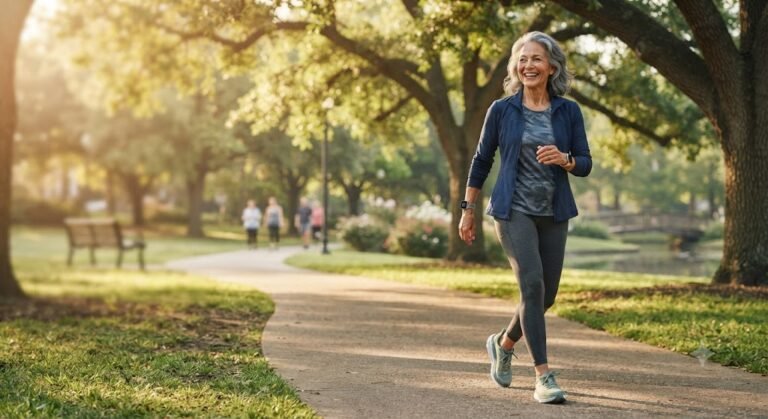
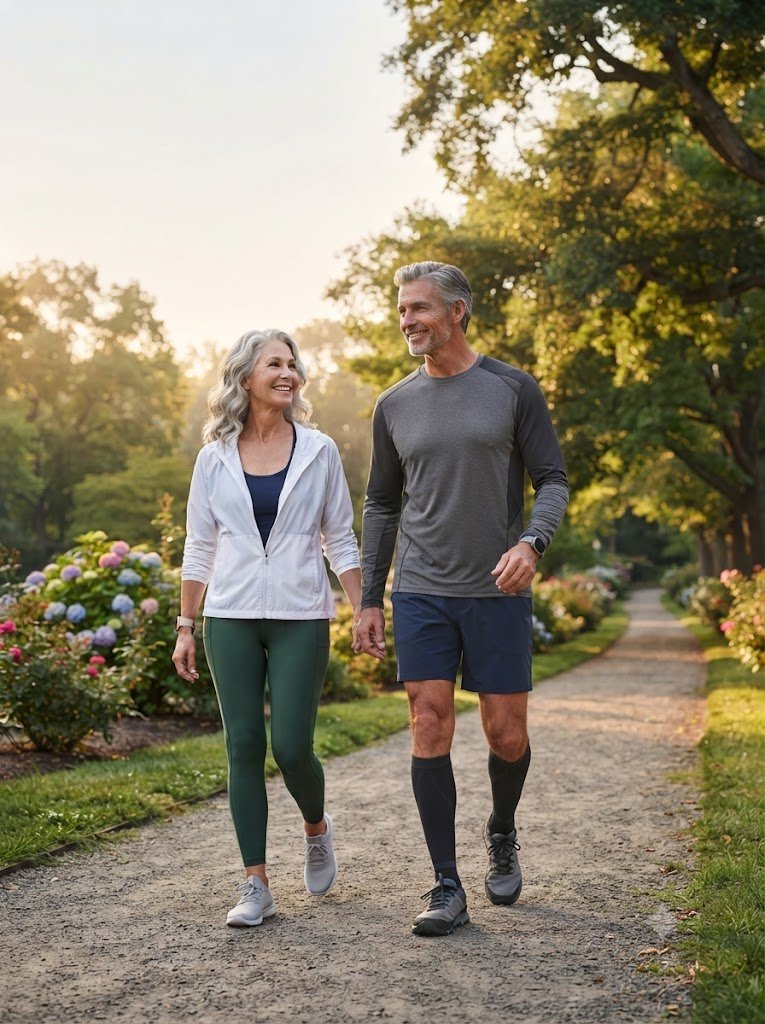
Walking is one of the safest and most accessible forms of exercise for adults over 50.
For sedentary individuals, beginning a regular walking program can significantly improve aerobic fitness.
As fitness increases, progressively increasing:
can continue challenging the cardiovascular system.
For highly trained individuals, however, more vigorous exercise may be necessary to produce substantial increases in VO₂ max.
The most effective exercise is often the one you can maintain consistently over many years.
Absolutely.
Although improvements may occur more gradually than in younger adults, research consistently shows that older adults can meaningfully improve cardiorespiratory fitness through structured exercise.
Studies involving adults in their 60s, 70s, and even 80s demonstrate that regular aerobic training can improve:
Age does not eliminate the body’s ability to adapt.
It simply changes the rate at which those adaptations occur.
These findings reinforce why VO₂ max and longevity continue to be major topics in healthy aging research, demonstrating that meaningful improvements remain possible well beyond midlife.
Many people unknowingly slow their progress by making avoidable mistakes.
Common examples include:
Fitness improves through regular, consistent activity—not occasional intense workouts.
Muscle health supports aerobic performance.
Preserving muscle mass helps maintain movement efficiency and overall physical function.
Sleep, nutrition, hydration, and recovery are essential for long-term fitness improvements.
Learn more in our guide:
Magnesium for Healthy Aging: Benefits for Sleep, Muscles, Heart Health, and Longevity
Increasing training volume or intensity too rapidly raises the risk of injury and burnout.
Gradual progression produces more sustainable results.
VO₂ max is the maximum amount of oxygen your body can use during intense exercise. It reflects the combined efficiency of your heart, lungs, blood vessels, and muscles.
Not necessarily. A higher VO₂ max is associated with lower mortality risk and better overall health in observational studies, but it does not guarantee a longer lifespan.
Yes. Regular aerobic exercise combined with strength training can improve cardiorespiratory fitness at almost any age.
For many beginners, yes. As fitness improves, increasing intensity or adding other aerobic activities may produce greater gains.
Most adults benefit from at least 150 minutes of moderate aerobic activity each week, along with strength training on two or more days.
VO₂ max and longevity have become central topics in healthy aging because cardiorespiratory fitness reflects how efficiently the body’s major systems work together. VO₂ max is far more than a performance metric used by endurance athletes.
It is one of the most informative indicators of cardiorespiratory fitness and an important measure of how well the body’s major systems work together.
Although aging naturally affects aerobic capacity, regular physical activity can slow this decline and improve functional fitness at virtually any age.
The goal is not to achieve the VO₂ max of a competitive athlete.
The goal is to maintain enough cardiovascular fitness to enjoy an active, independent, and healthy life for decades to come.
Combined with strength training, balanced nutrition, quality sleep, and preventive healthcare, improving VO₂ max becomes a powerful investment in healthy aging.
• Kodama S, et al. Cardiorespiratory Fitness as a Quantitative Predictor of All-Cause Mortality and Cardiovascular Events. JAMA. 2009.
Read the study → https://pubmed.ncbi.nlm.nih.gov/19841330/
• Ross R, et al. Importance of Assessing Cardiorespiratory Fitness in Clinical Practice. Circulation. 2016.
Read the study → https://pubmed.ncbi.nlm.nih.gov/27881567/
• Blair SN, et al. Physical Fitness and All-Cause Mortality. JAMA. 1989.
Read the study → https://pubmed.ncbi.nlm.nih.gov/2795824/
• American College of Sports Medicine. ACSM’s Guidelines for Exercise Testing and Prescription.
Reference → https://www.acsm.org

The Live Ever Better Editorial Team is dedicated to publishing evidence-based content that helps adults over 50 achieve healthier aging and greater longevity. Every article is carefully researched using scientific studies, clinical guidelines, and trusted health organizations to ensure accurate, practical, and reliable health information.