Physical Address
304 North Cardinal St.
Dorchester Center, MA 02124
Physical Address
304 North Cardinal St.
Dorchester Center, MA 02124
ging is often associated with losing strength, slowing down, and becoming less physically capable. However, significant muscle loss is not simply an unavoidable part of getting older.
A condition known as sarcopenia describes the progressive loss of muscle mass, strength, and physical performance that commonly occurs with aging. It can affect independence, mobility, metabolism, and overall quality of life.
The good news is that muscle decline can often be slowed — and in many cases improved — through targeted lifestyle strategies such as resistance training, adequate protein intake, and maintaining an active lifestyle.
Understanding sarcopenia is one of the most important steps toward protecting muscle health and supporting healthy aging.
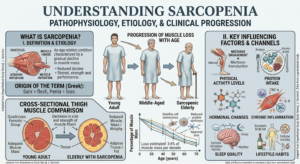
Sarcopenia is an age-related condition characterized by a gradual decline in:
The word comes from Greek: sarx, meaning flesh, and penia, meaning loss.
Although muscle loss can begin as early as the fourth decade of life, the process often accelerates after age 50.
Research suggests that adults may lose approximately 3–8% of muscle mass per decade after age 30, with the rate increasing as people get older.
However, muscle aging is influenced by many factors, including:
Sarcopenia is not only about appearance. Muscle is a vital metabolic organ that supports movement, glucose regulation, bone health, and resilience against illness.
Several biological changes contribute to age-related muscle loss.
Muscle tissue is constantly being broken down and rebuilt through a process called muscle protein turnover.
As we age, the body becomes less responsive to anabolic signals such as exercise and dietary protein. This phenomenon is sometimes called anabolic resistance.
The result is that older adults may need higher-quality protein intake and stronger exercise stimulus to maintain muscle.
Aging is associated with gradual changes in hormones involved in muscle maintenance, including:
These hormones help regulate muscle repair and growth.
Many adults become less active over time due to:
Reduced movement creates a cycle where muscles receive less stimulation and progressively weaken.
Persistent low-grade inflammation, sometimes called inflammaging, may contribute to muscle breakdown.
Certain conditions can increase risk, including:
Sarcopenia often develops slowly, making early detection important.
Common signs include:
Difficulty performing tasks that were previously easy, such as:
Possible indicators include:
Visible changes may include:
Weak muscles reduce balance and stability, increasing the likelihood of falls and injuries.
Although sarcopenia becomes more common with age, several factors increase risk.
Higher-risk groups include:
Importantly, sarcopenia is not limited to older adults. Poor lifestyle habits earlier in life can accelerate muscle decline.
Maintaining muscle is one of the most important components of healthy aging.
Strong muscles support:
Muscle strength allows older adults to continue performing daily activities without assistance.
Muscle tissue helps regulate:
Resistance training stimulates both muscle and bone adaptation, helping reduce age-related bone loss.
People with greater muscle reserves often recover better from medical challenges.
For longevity, the goal is not simply living longer — it is maintaining the ability to live independently and actively.
While aging cannot be stopped, muscle decline can often be significantly reduced.
The most effective strategies include:
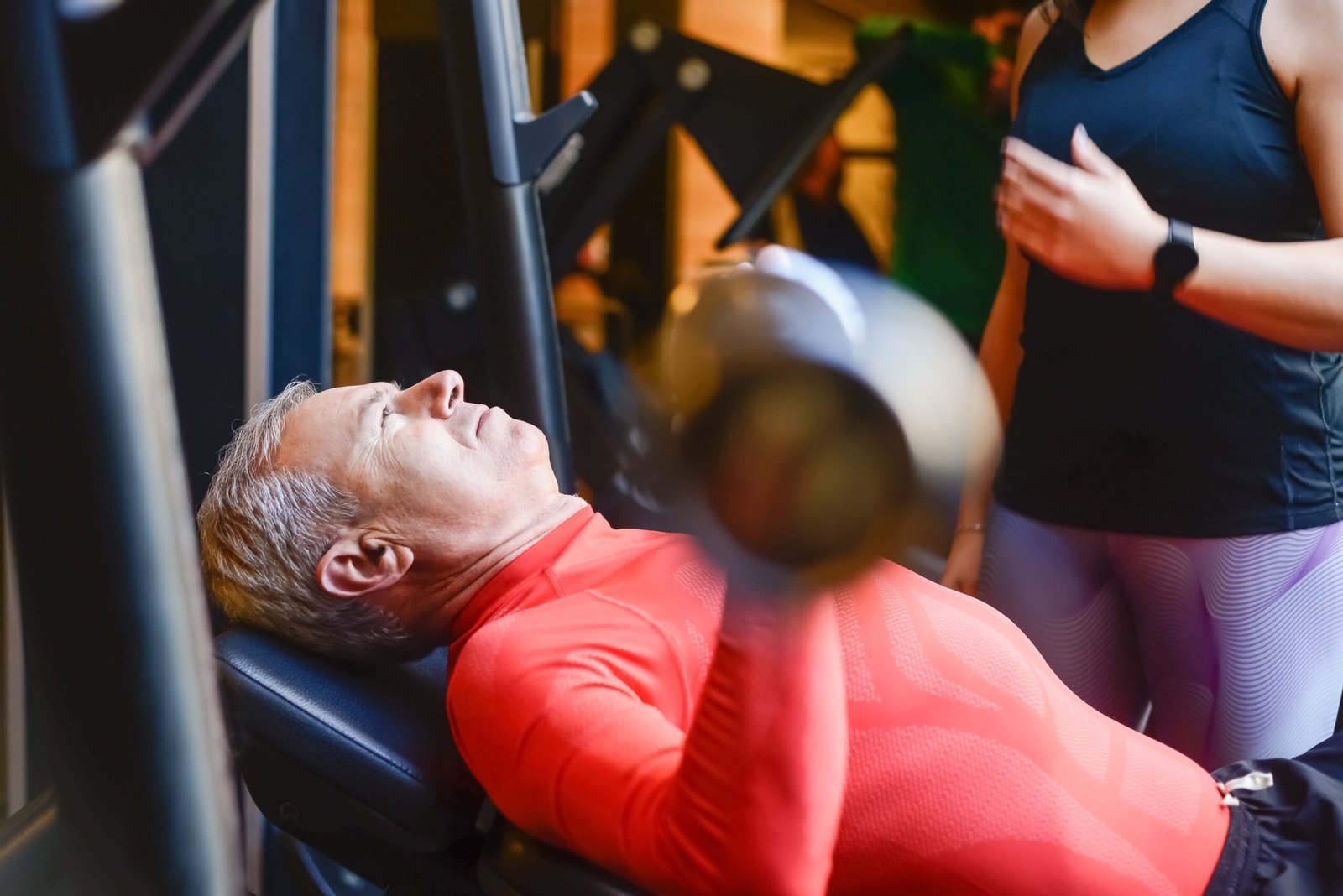
Strength training is considered one of the most powerful interventions for preserving muscle as we age.
Benefits include:
Effective exercises include:
Adults over 50 do not need bodybuilding-style workouts. Consistent progressive resistance training is what matters most.
A practical weekly approach may include:
Focus on major movement patterns:
Progressive overload — gradually increasing resistance or repetitions — is essential for continued adaptation.
Protein becomes increasingly important after age 50.
Many experts recommend that healthy older adults consume approximately:
1.2–1.6 grams of protein per kilogram of body weight per day
depending on activity level and health status.
For example, someone weighing 75 kg may benefit from approximately:
90–120 grams of protein daily
High-quality protein sources include:
Distributing protein across meals may also help maximize muscle protein synthesis.
Creatine is one of the most researched supplements for supporting muscle performance.
Studies suggest that creatine supplementation combined with resistance training may help older adults improve:
Creatine works by increasing the availability of phosphocreatine, which helps muscles produce energy during high-intensity activity.
For adults interested in preserving muscle during aging, creatine may be a useful addition to a comprehensive lifestyle approach.
Learn more in our complete guide: [Creatine for Healthy Aging]
Muscle health depends on more than exercise alone.
Important habits include:
Poor sleep can negatively affect muscle recovery and hormonal balance.
Aim for:
7–9 hours of quality sleep per night
Extreme dieting and rapid weight loss can accelerate muscle loss.
When losing fat, preserving muscle should be a priority.
Daily movement matters.
Activities such as:
help maintain overall function.
Chronic stress may contribute to inflammation and negatively influence recovery.
Muscle decline can begin around age 30–40, but it often becomes more noticeable after age 50.
Yes. Older adults can gain strength and muscle through consistent resistance training and adequate nutrition.
Walking is excellent for cardiovascular health and mobility, but resistance training is more effective for maintaining and increasing muscle strength.
Adequate protein supports muscle maintenance, especially when combined with resistance exercise.
Early-stage muscle loss can often be improved through lifestyle interventions, particularly strength training and nutrition.
Sarcopenia is one of the biggest challenges of healthy aging, but it is not an inevitable consequence of getting older.
Muscle is one of the strongest predictors of independence, mobility, and quality of life later in life.
The most effective strategy is simple:
Building and preserving muscle after 50 is not just about looking stronger — it is about protecting your future health and longevity.
• Cruz-Jentoft AJ, et al. Sarcopenia: revised European consensus on definition and diagnosis. Age and Ageing. 2019.
Read the study → https://pubmed.ncbi.nlm.nih.gov/31081853/
• Bauer J, et al. Evidence-based recommendations for optimal dietary protein intake in older people: a position paper from the PROT-AGE Study Group. Journal of the American Medical Directors Association. 2013.
Read the study → https://pubmed.ncbi.nlm.nih.gov/23867520/
• Fragala MS, et al. Resistance Training for Older Adults: Position Statement From the National Strength and Conditioning Association. Journal of Strength and Conditioning Research. 2019.
Read the study → https://pubmed.ncbi.nlm.nih.gov/30694380/
• Robinson SM, et al. Nutrition and physical activity in the prevention and treatment of sarcopenia: systematic review and meta-analysis. Clinical Nutrition. 2018.
Read the study → https://pubmed.ncbi.nlm.nih.gov/29576348/
• Candow DG, Chilibeck PD, Forbes SC. Creatine supplementation and aging musculoskeletal health. Endocrine. 2014.
Read the study → https://pubmed.ncbi.nlm.nih.gov/24190049/

The Live Ever Better Editorial Team is dedicated to publishing evidence-based content that helps adults over 50 achieve healthier aging and greater longevity. Every article is carefully researched using scientific studies, clinical guidelines, and trusted health organizations to ensure accurate, practical, and reliable health information.