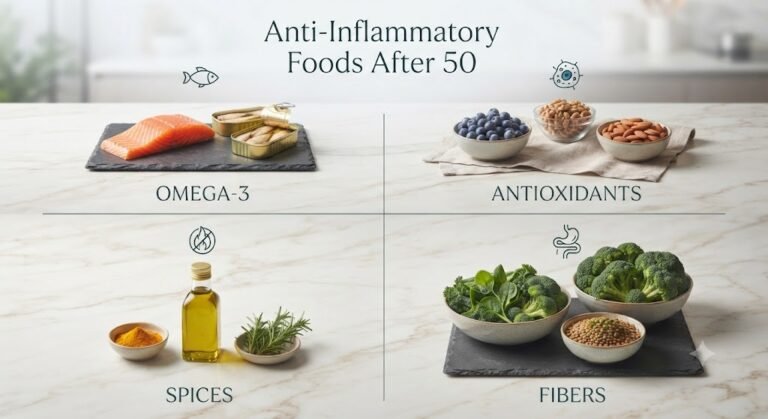
Physical Address
304 North Cardinal St.
Dorchester Center, MA 02124
Physical Address
304 North Cardinal St.
Dorchester Center, MA 02124

The Mediterranean diet for healthy aging is one of the most scientifically studied eating patterns for supporting longevity, brain health, heart health, and overall well-being.
Among all dietary patterns studied by researchers, the Mediterranean diet consistently ranks as one of the healthiest for promoting longevity and reducing the risk of chronic disease.
Learning how the Mediterranean diet for healthy aging works is not about following a restrictive meal plan. Instead, it is about adopting a sustainable way of eating that emphasizes whole, minimally processed foods rich in nutrients and healthy fats.
Decades of scientific research suggest that this dietary pattern supports healthy aging by helping protect the brain, maintaining cardiovascular health, reducing chronic inflammation, and promoting physical function throughout later life.
Whether your goal is preserving independence, supporting cognitive performance, or improving overall well-being, the Mediterranean diet offers one of the strongest evidence-based approaches available today.
Adopting the Mediterranean diet for healthy aging is one of the most sustainable lifestyle changes you can make to support both longevity and quality of life.
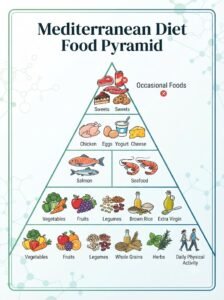
The Mediterranean diet is based on the traditional eating habits of countries bordering the Mediterranean Sea, including Greece, Southern Italy, and parts of Spain.
Rather than focusing on calorie restriction or eliminating entire food groups, it emphasizes eating a wide variety of nutrient-dense whole foods.
The Mediterranean diet for healthy aging encourages balance, moderation, and enjoyment of meals, making it one of the easiest healthy eating patterns to maintain over time.
Unlike many fad diets, it has been extensively studied in large clinical trials and consistently associated with better health outcomes.
Unlike restrictive eating plans, the Mediterranean diet for healthy aging focuses on lifelong habits that can be maintained for decades rather than weeks.
The foundation of the Mediterranean diet includes foods naturally rich in fiber, antioxidants, healthy fats, vitamins, and minerals.
Daily staples include:
Together, these foods form the nutritional foundation of the Mediterranean diet for healthy aging, providing essential nutrients that support multiple body systems.
Fish and seafood are eaten regularly, while poultry, eggs, and dairy products are consumed in moderation.
Water is the primary beverage, and meals are often enjoyed slowly and socially.
The Mediterranean diet does not completely eliminate foods.
Instead, it recommends limiting:
The emphasis is on replacing highly processed foods with minimally processed alternatives whenever possible.
Unlike diets designed for rapid weight loss, the Mediterranean diet supports overall health across multiple body systems.
Researchers believe its benefits come from the combined effects of:
These components work together to support cardiovascular function, metabolic health, immune function, and healthy aging.
This holistic approach is one of the main reasons the Mediterranean diet for healthy aging continues to receive strong support from scientists and healthcare organizations worldwide.
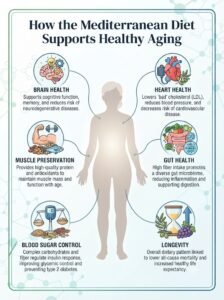
Rather than providing a single health benefit, the Mediterranean diet supports nearly every major body system involved in healthy aging.
The brain requires a constant supply of nutrients and healthy fats to function efficiently.
The Mediterranean diet provides omega-3 fatty acids, antioxidants, B vitamins, and polyphenols that help protect neurons from oxidative stress and inflammation.
Research has associated greater adherence to this eating pattern with better cognitive performance during aging.
Individuals interested in improving long-term cognitive resilience often adopt the Mediterranean diet for healthy aging as part of a broader brain health strategy.
Learn more about protecting cognitive function in our complete guide to Brain Health After 50.
Several large observational studies have found that people who closely follow a Mediterranean dietary pattern tend to experience lower rates of cognitive decline.
While no diet can completely prevent dementia, combining healthy nutrition with exercise, quality sleep, and cardiovascular risk management may reduce overall risk.
The Mediterranean diet is frequently included in recommendations for supporting long-term cognitive health.
Discover additional evidence-based strategies in our guide to Prevent Dementia.
Cardiovascular disease remains one of the leading causes of death worldwide.
The Mediterranean diet supports heart health by helping improve:
Extra virgin olive oil, fatty fish, nuts, and legumes all contribute to these protective effects.
Following the Mediterranean diet for healthy aging consistently has been associated with improved cardiovascular health in numerous long-term studies.
Unlike restrictive diets, the Mediterranean diet encourages satisfying meals built around nutrient-rich foods.
Its high fiber content promotes fullness while reducing reliance on highly processed snacks.
Maintaining a healthy body weight contributes to better mobility, cardiovascular health, metabolic function, and healthy aging.
Healthy aging is not only about preventing disease—it also involves maintaining strength and independence.
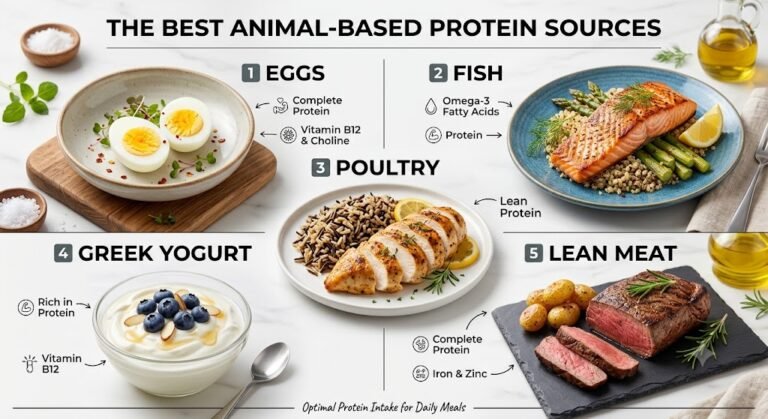
The Mediterranean diet naturally includes protein-rich foods such as fish, legumes, dairy products, eggs, and nuts that help support muscle maintenance.
When combined with regular resistance exercise, this dietary pattern may contribute to healthier muscle aging and reduce the risk of sarcopenia.
Adequate protein intake is equally important for preserving muscle. Read Protein After 50 to learn how much older adults need.
Low-grade chronic inflammation is associated with many age-related conditions, including cardiovascular disease, type 2 diabetes, cognitive decline, and frailty.
The Mediterranean diet for healthy aging naturally includes foods with anti-inflammatory properties, such as:
These foods provide antioxidants and polyphenols that help protect cells from oxidative stress and support healthy immune function.
A healthy gut microbiome plays an important role in digestion, immunity, metabolism, and even brain health.
Because the Mediterranean diet is naturally rich in dietary fiber, it helps nourish beneficial gut bacteria.
Foods that support the microbiome include:
Emerging research suggests that a healthier gut microbiome may also contribute to reduced inflammation and improved cognitive health.
This growing body of evidence further supports the Mediterranean diet for healthy aging as a comprehensive approach to overall wellness.
Maintaining stable blood sugar becomes increasingly important with age.
The Mediterranean diet emphasizes high-fiber carbohydrates, healthy fats, and lean protein, which help slow glucose absorption after meals.
Better blood sugar control supports:
For adults with prediabetes or type 2 diabetes, this eating pattern is widely recommended as part of a comprehensive lifestyle approach.
One of the most compelling reasons to adopt the Mediterranean diet is its consistent association with longer life expectancy.
Large population studies have shown that greater adherence to this dietary pattern is associated with lower rates of:
While longevity depends on many factors, nutrition remains one of the most powerful lifestyle choices within our control.
The Mediterranean diet for healthy aging supports not only a longer lifespan but also a healthier one.
Unlike restrictive diets that eliminate entire food groups, the Mediterranean diet is flexible and enjoyable.
It encourages:
This sustainability is one reason why healthcare professionals often recommend it over short-term dieting approaches.
Healthy eating should be viewed as a lifelong habit rather than a temporary program.
To illustrate how simple this eating pattern can be, here’s an example of a balanced Mediterranean-style day.
Breakfast
Morning Snack
Lunch
Afternoon Snack
Dinner
Dessert
This meal pattern demonstrates that the Mediterranean diet for healthy aging is practical, flavorful, and easy to adapt to individual preferences.
Yes. Research consistently associates the Mediterranean diet with healthier aging, improved cardiovascular health, better cognitive function, and reduced risk of several chronic diseases.
No diet can completely prevent dementia. However, the Mediterranean diet is associated with better brain health and may help reduce cognitive decline when combined with other healthy lifestyle habits.
It provides moderate amounts of high-quality protein from fish, legumes, dairy products, poultry, eggs, and nuts, making it compatible with healthy aging goals.
Extra virgin olive oil is rich in monounsaturated fats and polyphenols and has been consistently associated with cardiovascular benefits when used as part of a balanced diet.
No. Most Mediterranean dietary patterns recommend eating fish two to three times per week while obtaining protein from a variety of other whole-food sources.
The Mediterranean diet for healthy aging is far more than a popular nutrition trend—it is one of the most extensively researched dietary patterns in the world.
Its emphasis on vegetables, fruits, legumes, whole grains, healthy fats, fish, and minimally processed foods supports multiple aspects of healthy aging, including brain function, cardiovascular health, metabolic health, muscle preservation, and longevity.
Rather than focusing on strict rules, the Mediterranean diet encourages sustainable habits that can be maintained throughout life.
Combined with regular physical activity, quality sleep, stress management, and social engagement, it provides a powerful foundation for aging with greater health, independence, and vitality.
Choosing the Mediterranean diet for healthy aging is not about following strict rules—it is about building lifelong eating habits that support a healthier body, a sharper mind, and greater longevity.
This article is intended for educational purposes only and should not be considered medical advice, diagnosis, or treatment. The information provided is based on current scientific evidence available at the time of publication but may not apply to every individual. Always consult a qualified healthcare professional before making decisions about your health, starting a new exercise program, or using supplements or medications.

The Live Ever Better Editorial Team is dedicated to publishing evidence-based content that helps adults over 50 achieve healthier aging and greater longevity. Every article is carefully researched using scientific studies, clinical guidelines, and trusted health organizations to ensure accurate, practical, and reliable health information.