Physical Address
304 North Cardinal St.
Dorchester Center, MA 02124
Physical Address
304 North Cardinal St.
Dorchester Center, MA 02124

Learning how to improve memory after 50 is a common goal for adults who want to maintain cognitive function, independence, and quality of life as they age.
Many adults notice subtle changes in memory after turning 50. Forgetting a name temporarily, taking longer to remember a word, or misplacing everyday objects can become more common with age. While these experiences may feel concerning, they are often part of the normal aging process rather than signs of serious cognitive disease.
The encouraging news is that research shows the brain remains adaptable throughout adulthood. Thanks to neuroplasticity—the brain’s ability to form new neural connections—healthy lifestyle habits can continue supporting learning, memory, and cognitive performance well into later life.
Learning how to improve memory after 50 is not about finding a miracle supplement or a single brain-training exercise. Instead, it involves combining evidence-based habits that support brain function every day.
Whether your goal is maintaining mental sharpness, supporting long-term cognitive health, or simply feeling more confident in everyday life, understanding the foundations of Brain Health After 50 can help you build lifelong cognitive resilience.
Understanding how to improve memory after 50 starts with recognizing that daily habits have a greater long-term impact than any single supplement or quick solution.
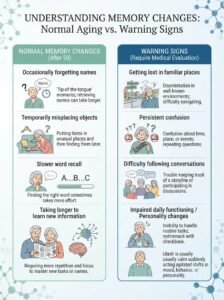
Memory depends on a complex network of brain regions working together to process, store, and retrieve information.
As we age, some biological changes naturally occur.
These include:
These changes are usually gradual and do not necessarily indicate dementia or another neurological disorder.
Several lifestyle factors also influence memory performance, including:
Understanding these factors is essential because many are modifiable. Making healthier daily choices can significantly improve memory after 50 while supporting overall brain health.
Yes—in many cases.
Although aging cannot be stopped, research consistently shows that lifestyle interventions can help maintain or even improve aspects of memory and cognitive performance.
The brain continuously forms new neural pathways throughout life.
This process is supported by:
Rather than searching for a single solution, experts recommend adopting a comprehensive lifestyle approach that supports long-term brain health.
Small daily habits can have a profound cumulative effect on cognitive function.
The following evidence-based strategies work together to improve memory after 50, promote healthy brain aging, and support long-term cognitive resilience.
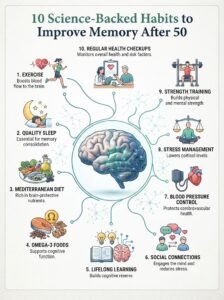
Exercise is one of the most effective ways to support brain function.
Physical activity increases blood flow to the brain and stimulates the production of Brain-Derived Neurotrophic Factor (BDNF), a protein that supports neuron survival and the formation of new neural connections.
Research suggests that regular aerobic exercise may improve:
Strength training also contributes by improving metabolic health and preserving muscle mass, both of which are associated with healthy aging.
Learn more in our complete guide to Strength Training After 50 and discover how resistance exercise supports both muscle and brain health.
Aim for at least 150 minutes of moderate physical activity each week, along with two or more strength-training sessions.
Memory consolidation occurs primarily during sleep.
While sleeping, the brain organizes new information, strengthens neural connections, and removes metabolic waste products through the glymphatic system.
Poor sleep has been associated with:
Establishing consistent sleep routines is one of the simplest ways to improve memory after 50 and protect long-term cognitive health.
Read our complete guide to Sleep and Healthy Aging to learn practical strategies for improving sleep quality.
Nutrition provides the fuel the brain needs to function efficiently.
The Mediterranean diet consistently ranks among the healthiest dietary patterns for supporting cognitive function.
It emphasizes:
These foods supply antioxidants, healthy fats, vitamins, minerals, and anti-inflammatory compounds that help protect brain cells from oxidative stress.
Omega-3 fatty acids, particularly DHA, are major structural components of brain cell membranes.
Research suggests that adequate omega-3 intake supports:
Excellent food sources include:
Plant-based options such as flaxseeds, chia seeds, and walnuts provide ALA, which the body converts only minimally into DHA and EPA.
Learn more about the benefits of Omega-3 for Healthy Aging and how EPA and DHA support brain function throughout life.
The brain thrives on challenge.
Learning new information stimulates neuroplasticity and encourages the development of new neural networks.
Activities that support lifelong learning include:
Remaining intellectually curious is one of the most rewarding ways to improve memory after 50 while maintaining cognitive flexibility.
Meaningful social interaction stimulates multiple cognitive processes simultaneously.
Conversations require memory, language, attention, emotional processing, and problem-solving.
Studies have shown that maintaining strong social relationships is associated with better cognitive performance and may reduce the risk of cognitive decline.
Ways to stay socially engaged include:
Social engagement benefits both emotional well-being and brain health.
The brain depends on a healthy cardiovascular system to receive a continuous supply of oxygen and nutrients.
High blood pressure, diabetes, obesity, and metabolic syndrome can damage blood vessels throughout the body, including those that nourish the brain.
Over time, poor vascular health may contribute to reduced cognitive performance and memory difficulties.
To help improve memory after 50, prioritize habits that support cardiovascular health, including:
Protecting your heart is also one of the best ways to protect your brain.
Short-term stress is a normal part of life, but chronic stress may negatively affect memory and cognitive performance.
Persistently elevated cortisol levels have been associated with reduced hippocampal function—the brain region responsible for forming new memories.
Healthy stress-management techniques include:
Reducing chronic stress supports emotional well-being while helping improve memory after 50.
Muscle health and brain health are more closely connected than many people realize.
Strength training not only preserves muscle mass and physical independence but also supports metabolic health, reduces inflammation, and promotes the release of beneficial signaling molecules known as myokines, which may positively influence brain function.
Maintaining strength also reduces the risk of falls and helps preserve confidence in everyday activities.
Adequate protein intake is also essential for preserving muscle and supporting healthy aging. Read our guide on Protein After 50 to learn how much protein older adults really need.
Including resistance training at least two days per week is an important strategy to improve memory after 50 while supporting overall healthy aging.
Some medical conditions can contribute to memory problems if left untreated.
Examples include:
Maintaining adequate vitamin D levels is another important aspect of healthy aging. Learn more in our guide to Vitamin D for Healthy Aging.
Regular preventive care allows these issues to be identified and managed early.
If you notice persistent or worsening memory changes, consult a qualified healthcare professional for a comprehensive evaluation.
Although no single food can prevent cognitive decline, a nutrient-rich dietary pattern supports healthy brain function.
Foods associated with better cognitive health include:
These foods provide nutrients involved in brain energy production, antioxidant protection, and healthy blood circulation.
Choosing these foods consistently is another practical way to improve memory after 50.
Combined with regular exercise and quality sleep, these dietary choices create a strong foundation to improve memory after 50 and support lifelong cognitive performance.
Certain lifestyle habits can negatively affect cognitive performance over time.
These include:
Avoiding these habits is just as important as adopting healthy ones when your goal is to improve memory after 50 and preserve cognitive function over time.
Fortunately, many of these factors are modifiable.
Replacing unhealthy habits with healthier daily routines can significantly support long-term brain health.
Mild forgetfulness, such as occasionally misplacing items or taking longer to recall names, is often considered part of normal aging. However, memory problems that interfere with daily life should always be evaluated by a healthcare professional.
A combination of aerobic exercise and resistance training provides the strongest evidence for supporting memory and overall cognitive health.
Fatty fish, leafy greens, berries, nuts, seeds, olive oil, legumes, and whole grains are among the foods most consistently associated with healthy brain function.
Omega-3 fatty acids, particularly DHA, play an important role in normal brain structure and function. Research continues to explore their role in supporting cognitive health during aging.
Yes. Sleep is essential for memory consolidation, learning, and brain recovery. Consistently poor sleep may negatively affect attention, concentration, and memory performance.
Learning how to improve memory after 50 begins with understanding that brain health is shaped by everyday choices.
Although aging naturally brings some changes in cognitive function, the brain remains remarkably adaptable throughout life.
Regular exercise, restorative sleep, nutritious food, lifelong learning, social engagement, stress management, and preventive healthcare all contribute to maintaining cognitive resilience.
Rather than relying on a single solution, focus on building sustainable habits that support both brain and body.
Investing in these evidence-based strategies today can help preserve memory, maintain independence, and improve quality of life for years to come.
While no single habit guarantees perfect cognitive health, consistently applying these recommendations can help improve memory after 50 and support healthier brain aging for decades.
• Erickson KI, et al. Exercise training increases size of hippocampus and improves memory. Proceedings of the National Academy of Sciences.
Read the study → https://pubmed.ncbi.nlm.nih.gov/21282661/
• Livingston G, et al. Dementia prevention, intervention, and care: 2020 report of the Lancet Commission. The Lancet.
Read the study → https://pubmed.ncbi.nlm.nih.gov/32738937/
• Ngandu T, et al. A 2-year multidomain intervention of diet, exercise, cognitive training, and vascular risk monitoring to prevent cognitive decline in at-risk older people (FINGER trial). The Lancet.
Read the study → https://pubmed.ncbi.nlm.nih.gov/25771249/
• Voss MW, et al. Exercise, brain, and cognition across the lifespan. Journal of Applied Physiology.
Read the study → https://pubmed.ncbi.nlm.nih.gov/21636673/
This article is intended for educational purposes only and should not be considered medical advice, diagnosis, or treatment. The information provided is based on current scientific evidence available at the time of publication but may not apply to every individual. Always consult a qualified healthcare professional before making decisions about your health, starting a new exercise program, or using supplements or medications.

The Live Ever Better Editorial Team is dedicated to publishing evidence-based content that helps adults over 50 achieve healthier aging and greater longevity. Every article is carefully researched using scientific studies, clinical guidelines, and trusted health organizations to ensure accurate, practical, and reliable health information.