Physical Address
304 North Cardinal St.
Dorchester Center, MA 02124
Physical Address
304 North Cardinal St.
Dorchester Center, MA 02124

If you’re looking for a morning routine after 50 for more energy, you’re not alone. Many adults notice that mornings become more challenging with age, often feeling stiff, tired, or mentally sluggish even after a full night’s sleep. While aging naturally brings physiological changes, research shows that the way you begin your day can significantly influence your energy levels, metabolism, brain function, and overall health.
The good news is that you don’t need an extreme wellness routine or expensive supplements. Small, consistent habits performed within the first hour after waking can help regulate your biological clock, support healthy blood sugar levels, improve circulation, and prepare both your body and mind for the day ahead.
A well-designed morning routine after 50 for more energy also supports healthy aging by promoting better sleep quality, preserving muscle mass, enhancing mood, and encouraging long-term cardiovascular and cognitive health. Rather than focusing on quick fixes, this article explores practical, science-based habits that are easy to incorporate into everyday life.
Whether your goal is to feel more energetic at work, stay active during retirement, or simply enjoy healthier aging, building the right morning routine can become one of the most valuable investments you make in your future well-being.
Feeling less energetic isn’t simply a consequence of getting older. Multiple biological factors contribute to this change, including reduced muscle mass, hormonal shifts, altered sleep patterns, decreased mitochondrial efficiency, and changes in circadian rhythm.
These natural processes can affect how efficiently your body produces and uses energy throughout the day. Poor sleep, dehydration, sedentary behavior, and irregular meal timing may further amplify fatigue.
Fortunately, many of these factors respond well to healthy lifestyle habits. Establishing a morning routine after 50 for more energy creates positive signals that help synchronize your body’s internal clock and optimize daily physiological functions.
Understanding these biological changes makes it easier to appreciate why a morning routine after 50 for more energy can produce meaningful long-term benefits.
After several hours of sleep, mild dehydration is common. Even a small fluid deficit may affect concentration, mood, and physical performance.
Drinking one or two glasses of water shortly after waking helps replace overnight fluid losses and supports:
Adequate hydration improves blood flow and oxygen delivery throughout the body.
Water supports concentration, attention, and mental clarity.
Proper hydration contributes to normal metabolic processes and may improve feelings of alertness.
If desired, coffee can certainly remain part of your morning—but allowing water to come first helps establish a healthier foundation for the day.
Exposure to natural daylight within the first hour after waking is one of the most effective ways to reinforce your circadian rhythm.
Morning sunlight helps regulate:
Just 10–20 minutes outdoors can help your body distinguish between day and night, making it easier to feel energized during the day and sleepy in the evening.
For adults following a morning routine after 50 for more energy, this simple habit often produces noticeable improvements in both mood and sleep quality.
Morning sunlight also supports healthy vitamin D status. Learn more in Vitamin D for Healthy Aging.
Many people spend the first part of the morning sitting at the breakfast table, driving, or working at a computer.
Instead, begin the day with gentle movement.
Activities may include:
Morning movement helps increase circulation, lubricate joints, activate muscles, and improve balance.
It also prepares the body for more structured exercise later in the day.
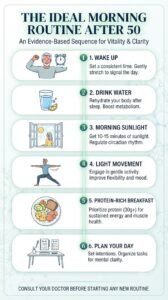
After age 50, preserving muscle becomes increasingly important. A protein-rich breakfast provides amino acids that stimulate muscle protein synthesis and may help maintain strength, improve satiety, and support metabolic health.
Many traditional breakfasts are high in refined carbohydrates but low in protein, which can contribute to rapid spikes and drops in blood sugar, leaving you hungry and tired before lunchtime.
A balanced breakfast should include approximately 25–30 grams of high-quality protein whenever possible.
Excellent options include:
Following a morning routine after 50 for more energy that includes adequate protein may also help preserve lean muscle mass, especially when combined with resistance training.
If you’re unsure how much protein you need as you get older, read our guide on Protein After 50.
Many people reach for their phones within seconds of waking.
While this has become a common habit, it may increase stress before the day has even started.
Constant notifications, emails, and social media activate the brain’s stress response and may contribute to mental fatigue.
Instead, consider spending the first 20–30 minutes of your morning focusing on yourself.
Simple alternatives include:
Creating intentional space before engaging with technology helps improve focus and reduces unnecessary mental overload.
Walking is one of the safest and most effective forms of exercise for adults over 50.
Even a 10–20-minute walk shortly after waking can:
If possible, combine your walk with natural sunlight exposure to maximize circadian rhythm benefits.
This simple habit complements an effective morning routine after 50 for more energy while supporting long-term healthy aging.
Joint stiffness often becomes more noticeable with age, particularly after several hours of sleep.
A brief mobility routine can help restore comfortable movement before the day begins.
Focus on gentle movements involving:
Unlike static stretching, mobility exercises encourage joints to move through their full range of motion while activating surrounding muscles.
Five minutes each morning can make everyday activities feel significantly easier.
Mental energy is just as important as physical energy.
Taking a few minutes to organize your day reduces decision fatigue and helps you focus on meaningful priorities.
Many productivity experts recommend identifying three important tasks before beginning work.
This habit can:
Planning ahead also makes it easier to schedule exercise, prepare nutritious meals, and maintain consistency with other healthy habits.
Quality sleep makes it much easier to wake up energized. Read our complete guide on Sleep and Healthy Aging.
One of the biggest mistakes people make is trying to transform their lifestyle overnight.
Healthy aging is built through repetition rather than perfection.
You don’t need to complete every habit every morning.
Instead, begin with two or three habits that fit naturally into your routine.
As those become automatic, gradually introduce additional behaviors.
Consistency over months—and years—produces far greater benefits than occasional bursts of motivation.
Research consistently shows that sustainable habits are more likely to improve long-term health outcomes than short-term intensive programs.
There is no universal timeline.
Some habits may feel natural within a few weeks, while others require several months of consistent practice.
Rather than focusing on perfection, aim for gradual improvement.
Tracking your habits with a simple checklist or journal can help reinforce consistency and highlight your progress over time.
The goal is not to create a perfect morning—it is to create a routine that supports your health, energy, and quality of life for years to come.
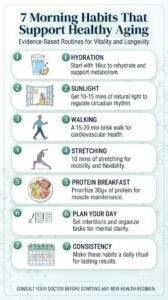
A simple morning routine doesn’t need to be complicated. Consider following this sequence:
These habits require very little equipment or expense, yet they can produce meaningful improvements in physical and mental well-being over time.
Yes. A consistent morning routine helps regulate your circadian rhythm, supports metabolic health, improves energy levels, and encourages healthy behaviors that can positively affect long-term health and longevity.
There isn’t a single ideal time for everyone. The most important factor is maintaining a consistent sleep schedule that allows for 7–9 hours of quality sleep and aligns with your natural circadian rhythm.
Both approaches can be healthy depending on your goals, medical conditions, and personal preferences. Many adults benefit from light walking or mobility exercises before breakfast, while more intense workouts may feel better after eating a balanced meal.
Coffee can be part of a healthy lifestyle. However, drinking water first and avoiding excessive caffeine intake may help improve hydration and reduce digestive discomfort in some individuals.
Absolutely. Healthy daily habits such as hydration, regular movement, nutritious meals, sunlight exposure, and stress management work together to support cardiovascular health, brain function, muscle preservation, and overall well-being as you age.
Building a morning routine after 50 for more energy isn’t about following a rigid schedule or chasing perfection. It’s about creating a series of small, intentional habits that work together to support your body and mind every day.
Hydrating after waking, exposing yourself to natural sunlight, moving your body, eating enough protein, and planning your day are simple actions backed by growing scientific evidence. While each habit may seem modest on its own, their cumulative effect can improve energy, physical function, metabolic health, and overall quality of life over time.
Perhaps the greatest advantage of a consistent morning routine is that it creates momentum. Starting the day with healthy choices often makes it easier to continue making healthier decisions throughout the afternoon and evening.
Remember that healthy aging is not determined by a single supplement, workout, or meal. It is shaped by the routines you repeat consistently over months and years. Begin with one or two habits that feel achievable, build from there, and allow your morning routine to evolve as your needs change.
Small improvements practiced every day can become powerful investments in your future health.
• American Heart Association. Life’s Essential 8™ for improving and maintaining cardiovascular health.
Read the guideline → https://www.heart.org/en/healthy-living/healthy-lifestyle/lifes-essential-8
• Centers for Disease Control and Prevention. Healthy Aging.
Read the resource → https://www.cdc.gov/aging/
• World Health Organization. Decade of Healthy Ageing (2021–2030).
Read the report → https://www.who.int/initiatives/decade-of-healthy-ageing
• National Institute on Aging. A Good Night’s Sleep.
Read the resource → https://www.nia.nih.gov/health/sleep
• St-Onge MP, et al. Meal Timing and Frequency: Implications for Cardiovascular Disease Prevention. Circulation.
Read the study → https://pubmed.ncbi.nlm.nih.gov/29954738/
• American College of Sports Medicine. ACSM Position Stand: Exercise and Physical Activity for Older Adults.
Read the publication → https://pubmed.ncbi.nlm.nih.gov/27304504/
The information provided in this article is for educational purposes only and should not be considered medical advice. Always consult a qualified healthcare professional before making changes to your diet, exercise routine, medications, or supplement use. Never disregard professional medical advice or delay seeking it because of something you have read on this website.

The Live Ever Better Editorial Team is dedicated to publishing evidence-based content that helps adults over 50 achieve healthier aging and greater longevity. Every article is carefully researched using scientific studies, clinical guidelines, and trusted health organizations to ensure accurate, practical, and reliable health information.