Physical Address
304 North Cardinal St.
Dorchester Center, MA 02124
Physical Address
304 North Cardinal St.
Dorchester Center, MA 02124

Silent health problems after 50 are one of the biggest challenges of healthy aging.
Many of the most serious health conditions that develop after age 50 don’t begin with dramatic symptoms. Instead, they progress silently over months—or even years—before becoming noticeable.
High blood pressure, type 2 diabetes, osteoporosis, chronic kidney disease, hearing loss, glaucoma, and chronic inflammation are just a few examples of conditions that may cause little or no discomfort in their early stages while gradually damaging the body.
The good news is that many of these silent health problems can be detected early through regular preventive care and healthy lifestyle habits. Early diagnosis often allows treatment to begin before permanent damage occurs, improving quality of life and reducing the risk of serious complications.
In this guide, you’ll discover 10 silent health problems after 50 that deserve attention, why they often go unnoticed, and the evidence-based strategies that can help reduce your risk.
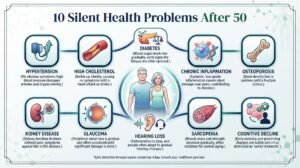
Growing older doesn’t automatically mean becoming unhealthy.
However, aging naturally brings physiological changes that increase the likelihood of developing chronic diseases.
These changes include:
Lifestyle factors accumulated over decades—including diet, physical activity, smoking, alcohol use, sleep quality, and stress—also influence disease risk.
Because many chronic diseases develop gradually, symptoms may not appear until significant damage has already occurred.
That’s why prevention and early detection become increasingly important after age 50.
Often called the “silent killer,” high blood pressure (hypertension) rarely causes noticeable symptoms until serious complications develop.
Many adults discover they have hypertension only during a routine medical appointment.
Untreated high blood pressure gradually damages:
Over time, it substantially increases the risk of:
Most people experience no symptoms.
Occasionally, extremely high blood pressure may cause:
However, waiting for symptoms is dangerous because significant damage may already be present.
Learn more in How to Lower Blood Pressure Naturally After 50.
Like hypertension, high cholesterol typically develops without obvious symptoms.
Excess LDL cholesterol contributes to plaque formation inside arteries, gradually narrowing blood vessels and reducing blood flow.
This process, known as atherosclerosis, may continue silently for decades before causing:
Routine blood testing remains the only reliable way to detect abnormal cholesterol levels early.
Our complete guide How to Lower Cholesterol Naturally After 50 explains the most effective evidence-based strategies.
Millions of adults live with prediabetes without knowing it.
Blood sugar may remain elevated for years before symptoms become noticeable.
Meanwhile, excessive glucose gradually damages:
Many people have none.
When symptoms do occur, they may include:
Routine blood tests—including fasting glucose and HbA1c—are essential for early detection.
Learn more in How to Improve Insulin Sensitivity After 50 Naturally.
Unlike the temporary inflammation that helps the body heal after injury, chronic low-grade inflammation can persist silently for years.
Researchers often refer to this age-related process as inflammaging.
Persistent inflammation has been associated with increased risks of:
Most people are unaware that chronic inflammation is developing because it rarely causes pain or obvious symptoms in its early stages.
Healthy lifestyle habits remain the most effective way to reduce chronic inflammation.
These include:
Read our complete guide Chronic Inflammation: Causes, Symptoms & How to Reduce It Naturally.
Osteoporosis is often called a silent disease because bone loss occurs gradually without causing pain or noticeable symptoms.
Many people don’t realize they have osteoporosis until they experience a fracture after a minor fall or even a simple movement.
After age 50, bone density naturally declines, particularly in women after menopause due to reduced estrogen levels. However, men are also at increased risk as they age.
Common fracture sites include:
Hip fractures, in particular, are associated with a significant loss of independence in older adults.
Maintaining strong bones requires lifelong healthy habits.
Evidence supports:
Resistance exercise is one of the most effective lifestyle strategies for preserving bone density. Learn more in Strength Training After 50.
Your kidneys can gradually lose function over many years without producing obvious symptoms.
By the time fatigue, swelling, or changes in urination appear, kidney damage may already be advanced.
Chronic kidney disease is particularly common among people with:
The kidneys perform essential functions, including:
Often none.
As kidney function declines, symptoms may include:
Routine blood and urine tests are the most reliable way to detect chronic kidney disease early.
Healthy kidneys benefit from the same habits that protect the heart.
Focus on:
Improving blood pressure and metabolic health can significantly reduce kidney disease risk. See How to Lower Blood Pressure Naturally After 50 and How to Improve Insulin Sensitivity After 50 Naturally.
Glaucoma is one of the leading causes of irreversible blindness worldwide.
The condition damages the optic nerve slowly and painlessly, often without affecting vision until permanent damage has occurred.
Peripheral vision is usually affected first, making early detection especially difficult.
Because vision loss cannot be reversed, routine eye examinations become increasingly important after age 50.
Although glaucoma cannot always be prevented, early diagnosis can dramatically slow disease progression.
Experts recommend:
Protecting your overall cardiovascular health also supports healthy circulation to the eyes.
Age-related hearing loss develops so gradually that many people don’t notice the changes themselves.
Often, family members recognize the problem first.
Untreated hearing loss has been associated with:
People frequently compensate by:
Although some hearing loss is related to aging, lifestyle still matters.
Reduce risk by:
Growing evidence suggests that maintaining heart health also helps preserve hearing by supporting healthy blood flow to the inner ear.
Unlike many other conditions, sarcopenia often develops so gradually that people assume losing strength is simply a normal part of getting older.
In reality, significant muscle loss is not inevitable.
Beginning around age 30, adults naturally lose muscle mass each decade, but the rate accelerates after age 50—especially in people who are physically inactive.
Left unchecked, sarcopenia can lead to:
Many people notice subtle changes before realizing what’s happening.
Common signs include:
These changes often develop gradually over several years.
Fortunately, sarcopenia is one of the most preventable age-related conditions.
Research consistently supports:
Resistance exercise remains the most effective intervention.
Learn more in Strength Training After 50.
Good nutrition also plays a critical role. Read Nutrition for Longevity for practical dietary guidance.
Not every episode of forgetfulness indicates dementia.
However, gradual cognitive decline deserves attention because early intervention may help preserve brain function.
Brain aging can occur silently for years before noticeable memory problems develop.
Healthy lifestyle habits have been shown to reduce the risk of cognitive decline by improving vascular health, reducing chronic inflammation, and supporting neuroplasticity.
Possible early changes include:
Occasional forgetfulness is common, but persistent or progressive changes should always be evaluated by a healthcare professional.
Evidence supports several lifestyle strategies for protecting cognitive health:
Healthy brain aging begins with protecting your cardiovascular system.
Read Brain & Cognitive Health for additional evidence-based resources.
Many silent diseases become serious only because they remain undetected.
Do not wait for symptoms to appear if you:
Routine preventive care remains one of the most effective investments you can make in your long-term health.
Early diagnosis often allows lifestyle changes and treatment to prevent serious complications.
High blood pressure is among the most common silent health conditions after age 50 because it often causes no symptoms while increasing the risk of heart attack, stroke, kidney disease, and dementia.
Yes. Numerous large studies show that healthy nutrition, regular exercise, quality sleep, maintaining a healthy weight, and avoiding smoking significantly reduce the risk of many chronic diseases.
The frequency depends on age, personal risk factors, family history, and existing medical conditions. Most adults should have regular blood pressure checks, cholesterol testing, diabetes screening, eye examinations, and age-appropriate cancer screenings based on their healthcare provider’s recommendations.
No. Although aging naturally affects muscle mass, progressive resistance training and adequate protein intake can substantially slow—or even reverse—age-related muscle loss.
Many chronic diseases develop gradually. The body often compensates for early changes, allowing damage to progress silently until it becomes more advanced.
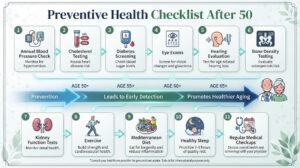
Healthy aging is not simply about living longer—it’s about preserving independence, vitality, and quality of life.
The greatest danger of many chronic diseases after age 50 is not that they are untreatable, but that they often go unnoticed for years.
Regular health screenings, routine medical care, and consistent healthy lifestyle habits provide the best opportunity to detect problems early and reduce long-term health risks.
Small daily choices—staying active, eating nutritious foods, sleeping well, managing stress, and monitoring key health indicators—can have a profound impact on your future health.
The earlier these habits become part of your routine, the greater their long-term benefits.
Understanding silent health problems after 50 is one of the most effective ways to protect your long-term health. Most silent health problems after 50 can be detected early through regular screenings and healthy lifestyle habits, allowing treatment to begin before serious complications develop.
• National Institute on Aging. AgePage: Healthy Aging.
Read the resource → https://www.nia.nih.gov/health
• Centers for Disease Control and Prevention. Healthy Aging.
Read the guide → https://www.cdc.gov/healthy-aging/
• World Health Organization. Ageing and Health.
Read the publication → https://www.who.int/news-room/fact-sheets/detail/ageing-and-health
• U.S. Preventive Services Task Force. Recommendation Statements.
Read the recommendations → https://www.uspreventiveservicestaskforce.org/
• National Institute on Aging. High Blood Pressure and Older Adults.
Read the guide → https://www.nia.nih.gov/health/high-blood-pressure
• National Institute on Aging. Sarcopenia and Muscle Health.
Read the resource → https://www.nia.nih.gov/health
• American Diabetes Association. Standards of Care in Diabetes.
Read the publication → https://diabetesjournals.org/care
The information provided in this article is for educational purposes only and should not be considered medical advice. Always consult a qualified healthcare professional before making changes to your diet, exercise routine, medications, or supplement use. Never disregard professional medical advice or delay seeking it because of something you have read on this website.

The Live Ever Better Editorial Team is dedicated to publishing evidence-based content that helps adults over 50 achieve healthier aging and greater longevity. Every article is carefully researched using scientific studies, clinical guidelines, and trusted health organizations to ensure accurate, practical, and reliable health information.