Physical Address
304 North Cardinal St.
Dorchester Center, MA 02124
Physical Address
304 North Cardinal St.
Dorchester Center, MA 02124
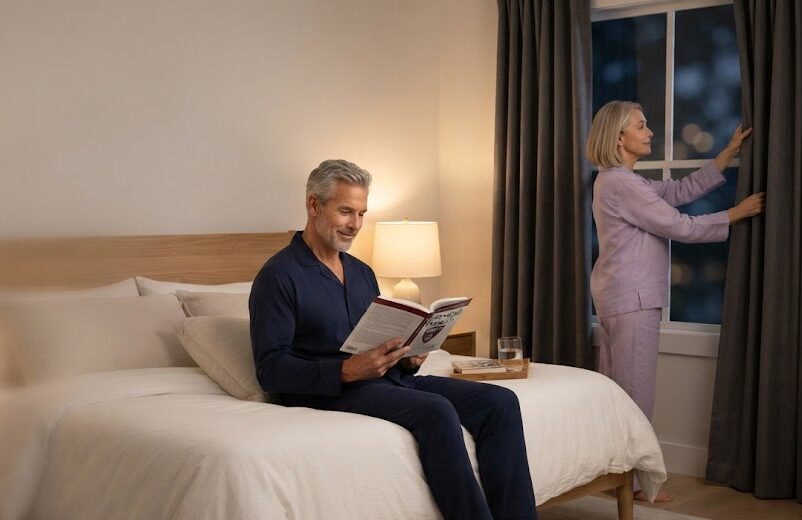
Learning how to sleep better after 50 naturally can transform nearly every aspect of your health. Sleep isn’t simply a time when your body rests—it’s when your brain consolidates memories, your immune system repairs tissues, your hormones rebalance, and your cardiovascular system recovers from the day.
Unfortunately, many adults notice that sleep becomes more difficult with age. You may find yourself waking up several times during the night, struggling to fall asleep, or waking long before your alarm feeling far from refreshed. These changes are common, but they are not an inevitable part of healthy aging.
The good news is that research shows many sleep problems improve significantly through simple lifestyle adjustments. Understanding how to sleep better after 50 naturally doesn’t require expensive gadgets or medications—it starts with building habits that support your body’s natural sleep-wake cycle.
In this guide, you’ll discover the most effective, science-backed strategies for how to sleep better after 50 naturally, helping you enjoy deeper sleep, better energy, improved brain health, and healthier aging.
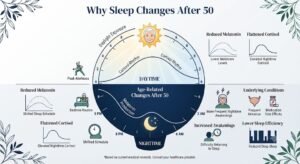
Many adults notice that sleep becomes lighter as they age.
Several factors contribute to this:
These changes may lead to:
Understanding how to sleep better after 50 naturally begins with recognizing that many of these factors can be improved through healthy daily habits.
Sleep affects virtually every major system in your body.
Quality sleep supports:
Poor sleep has been associated with increased risk of:
Learning how to sleep better after 50 naturally isn’t only about feeling rested tomorrow morning—it’s about protecting your long-term health.
To understand why sleep plays such a central role in healthy aging, read Sleep and Healthy Aging.
Your body follows an internal biological clock known as the circadian rhythm.
Going to bed and waking up at approximately the same time—even on weekends—helps strengthen this rhythm.
Consistency makes it easier to:
One of the simplest ways of how to sleep better after 50 naturally is maintaining a predictable sleep schedule.
Natural light is one of the strongest regulators of your circadian rhythm.
Aim to spend at least 20–30 minutes outdoors within the first hour after waking.
Morning sunlight:
Daily light exposure is one of the most overlooked strategies for how to sleep better after 50 naturally.
Regular physical activity improves both sleep quality and sleep duration.
Exercise helps:
Aim for:
Most adults sleep better when vigorous workouts are completed at least 2–3 hours before bedtime.
Exercise is one of the most effective habits for how to sleep better after 50 naturally because it also improves cardiovascular and metabolic health.
Learn more in:
Caffeine can remain in the bloodstream for six hours or longer.
For sensitive individuals, afternoon coffee may interfere with nighttime sleep even if they don’t feel stimulated.
If you’re trying to improve how to sleep better after 50 naturally, consider avoiding:
after early afternoon.
Many people notice significant improvements simply by moving their last caffeinated beverage earlier in the day.
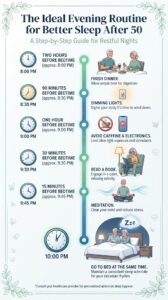
Your brain needs signals that it’s time to transition from activity to rest.
An effective bedtime routine might include:
Avoid checking work emails or engaging in stressful discussions before bed.
Creating a calming routine is one of the easiest ways to support how to sleep better after 50 naturally because it helps reduce mental stimulation before bedtime.
Your sleep environment plays a bigger role than many people realize.
A bedroom that is too warm, too bright, or too noisy can interrupt deep sleep multiple times during the night—even if you don’t fully wake up.
For better sleep:
Optimizing your sleep environment is one of the simplest ways of how to sleep better after 50 naturally, often producing noticeable improvements within just a few nights.
Large evening meals can interfere with digestion and make it more difficult to fall asleep.
Heavy meals may increase:
Instead, choose a balanced dinner that includes:
If you feel hungry later in the evening, a small snack containing protein and complex carbohydrates is usually a better option than sugary foods.
Healthy nutrition supports how to sleep better after 50 naturally while also improving metabolic health.
For more nutrition strategies, read Mediterranean Diet for Healthy Aging.
Phones, tablets, and computers emit blue light that can delay melatonin production.
Late-night scrolling also keeps the brain mentally stimulated.
Try to avoid screens for 30–60 minutes before bedtime.
Instead, consider:
Reducing evening screen exposure is one of the most practical habits for how to sleep better after 50 naturally.
Many adults don’t struggle with sleep because of physical discomfort—they struggle because their minds won’t slow down.
Stress and anxiety increase cortisol, making it difficult to transition into restful sleep.
Helpful strategies include:
Managing stress consistently strengthens every strategy for how to sleep better after 50 naturally, while also supporting heart health and emotional well-being.
Alcohol may make you feel sleepy initially, but it often disrupts the second half of the night.
It can:
Limiting alcohol—especially close to bedtime—is an important step in how to sleep better after 50 naturally.
Certain prescription and over-the-counter medications may interfere with sleep.
Examples include some:
Never stop medication on your own, but discuss persistent sleep problems with your healthcare provider.
Sometimes adjusting the timing of a medication is enough to improve sleep quality.
This is another important aspect of how to sleep better after 50 naturally.
Occasional poor sleep is normal.
However, persistent insomnia should not be ignored.
Speak with your healthcare provider if you experience:
Conditions such as obstructive sleep apnea become more common after age 50 and often require professional evaluation.
Addressing these conditions is essential for anyone serious about how to sleep better after 50 naturally.
Many adults unknowingly sabotage their own sleep.
Common mistakes include:
Avoiding these habits makes how to sleep better after 50 naturally much easier and more sustainable.
One reason sleep deserves special attention is that it influences nearly every other aspect of healthy aging.
Better sleep makes it easier to:
In fact, many of the healthy habits discussed throughout Live Ever Better become even more effective when combined with quality sleep.
Continue exploring:
Natural changes in melatonin production, hormones, physical activity, and circadian rhythm all contribute to lighter sleep as we age. Medical conditions and certain medications may also play a role.
The most effective approach combines several healthy habits: maintaining a regular sleep schedule, getting morning sunlight, exercising consistently, limiting caffeine, creating a relaxing bedtime routine, and optimizing your sleep environment. These strategies work together to improve how to sleep better after 50 naturally without relying on medication.
Yes. Regular aerobic exercise and strength training both improve sleep quality, reduce the time it takes to fall asleep, and increase deep sleep. Exercise is one of the strongest evidence-based strategies for how to sleep better after 50 naturally.
Melatonin may be helpful for some individuals, but it isn’t necessary for everyone and should not replace healthy sleep habits. Discuss long-term use with your healthcare provider.
Most adults still benefit from 7–9 hours of quality sleep each night, although individual needs vary. The quality of sleep is just as important as the total number of hours.
Learning how to sleep better after 50 naturally is one of the most valuable investments you can make for your long-term health. Sleep isn’t simply a period of inactivity—it’s when your brain processes memories, your muscles recover, your immune system strengthens, your hormones rebalance, and your cardiovascular system repairs itself.
While sleep changes become more common with age, chronic poor sleep should never be accepted as “just part of getting older.” Many of the factors that interfere with sleep—including irregular schedules, stress, excessive screen time, inactivity, and poor sleep environments—can be improved through consistent lifestyle habits.
The most effective strategy for how to sleep better after 50 naturally isn’t finding a miracle supplement or relying on sleeping pills. It’s creating a routine that supports your body’s natural circadian rhythm every single day.
Start with one or two changes:
Over time, these simple habits reinforce one another, leading to deeper sleep, greater energy, sharper thinking, healthier metabolism, and improved quality of life.
Ultimately, mastering how to sleep better after 50 naturally doesn’t just help you sleep well tonight—it supports a healthier brain, a stronger heart, better physical performance, and a longer, more vibrant life.
• National Institute on Aging. A Good Night’s Sleep.
Read the guide → https://www.nia.nih.gov/health/sleep
• American Academy of Sleep Medicine. Healthy Sleep Habits.
Read the resource → https://sleepeducation.org/healthy-sleep/
• Centers for Disease Control and Prevention. Sleep and Sleep Disorders.
Read the resource → https://www.cdc.gov/sleep
• Watson NF, et al. Recommended Amount of Sleep for a Healthy Adult. Sleep.
Read the guideline → https://pubmed.ncbi.nlm.nih.gov/29073398/
• Walker MP. Why We Sleep: Unlocking the Power of Sleep and Dreams. Scribner.
• World Health Organization. Healthy Ageing.
Read the resource → https://www.who.int/initiatives/decade-of-healthy-ageing
The information provided in this article is for educational purposes only and should not be considered medical advice. Always consult a qualified healthcare professional before making changes to your diet, exercise routine, medications, or supplement use. Never disregard professional medical advice or delay seeking it because of something you have read on this website.

The Live Ever Better Editorial Team is dedicated to publishing evidence-based content that helps adults over 50 achieve healthier aging and greater longevity. Every article is carefully researched using scientific studies, clinical guidelines, and trusted health organizations to ensure accurate, practical, and reliable health information.