Physical Address
304 North Cardinal St.
Dorchester Center, MA 02124
Physical Address
304 North Cardinal St.
Dorchester Center, MA 02124
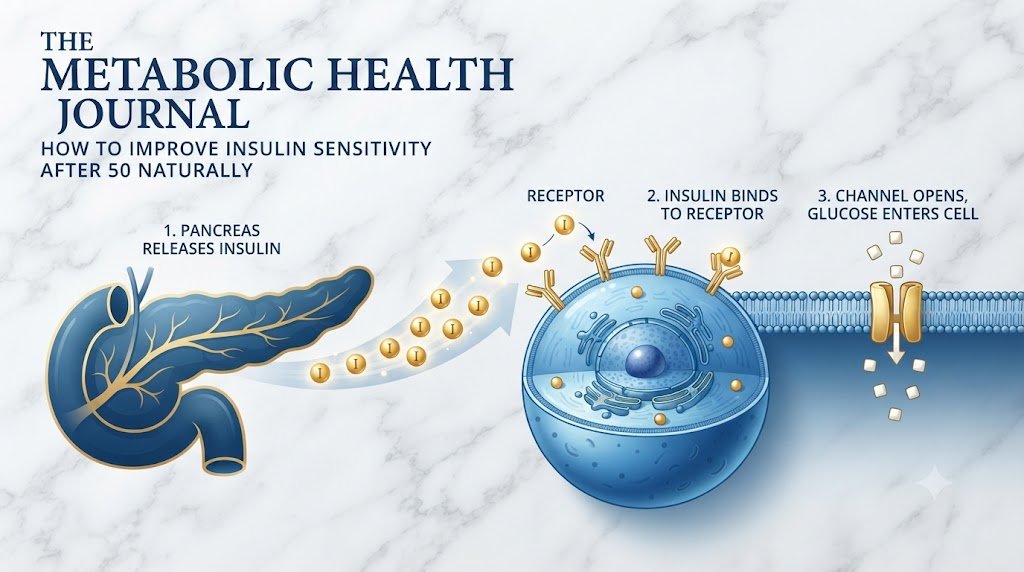
If you’re wondering how to improve insulin sensitivity after 50 naturally, you’re asking one of the most important questions for protecting your long-term health. As we age, our bodies become less efficient at responding to insulin, increasing the risk of weight gain, prediabetes, type 2 diabetes, cardiovascular disease, and even cognitive decline.
The good news is that insulin resistance is not an inevitable part of aging. Scientific research consistently shows that everyday lifestyle choices can dramatically influence how your cells respond to insulin. In many cases, relatively small improvements in nutrition, physical activity, sleep, and body composition can significantly improve metabolic health.
Understanding how to improve insulin sensitivity after 50 naturally isn’t about following restrictive diets or eliminating entire food groups. Instead, it’s about creating sustainable habits that help your body regulate blood sugar more efficiently while supporting healthy aging.
In this guide, you’ll learn why insulin sensitivity declines with age, how it affects nearly every organ in your body, and the evidence-based lifestyle strategies that can help improve metabolic health naturally.
Understanding how to improve insulin sensitivity after 50 naturally starts with recognizing that small daily habits, practiced consistently, can produce meaningful improvements in metabolic health over time.
Insulin is a hormone produced by the pancreas that allows glucose to move from the bloodstream into your cells, where it is used as energy.
When your cells respond efficiently to insulin, you are said to have good insulin sensitivity.
When they become less responsive, your pancreas must produce more insulin to achieve the same effect. This condition is known as insulin resistance.
Over time, persistent insulin resistance can contribute to:
Learning how to improve insulin sensitivity after 50 naturally helps interrupt this process before serious complications develop.
Several age-related changes influence glucose metabolism.
These include:
Because muscle is one of the body’s largest consumers of glucose, losing muscle significantly reduces your ability to regulate blood sugar efficiently.
Likewise, excess visceral fat releases inflammatory compounds that interfere with insulin signaling.
Fortunately, most of these factors are modifiable through lifestyle.
Understanding how to improve insulin sensitivity after 50 naturally means addressing these root causes rather than simply treating high blood sugar after it develops.
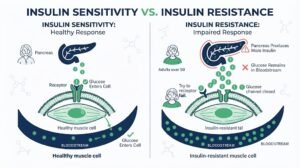
Healthy insulin sensitivity affects far more than diabetes risk.
Research links better metabolic health to:
Insulin resistance is increasingly viewed as one of the central drivers of accelerated biological aging.
Improving metabolic flexibility supports virtually every system involved in healthy aging.
Healthy metabolic health also contributes to healthier biological aging. Read our complete guide to How to Reduce Your Biological Age Naturally.
Scientists increasingly consider how to improve insulin sensitivity after 50 naturally one of the cornerstones of healthy longevity because metabolic health influences nearly every organ system.
One of the fastest ways to improve insulin sensitivity is increasing lean muscle mass.
Muscle acts as a major storage site for glucose.
The more healthy muscle you maintain, the more efficiently your body clears glucose from the bloodstream.
Resistance training improves:
Adults over 50 benefit from performing strength training at least two or three times each week.
Learn how to begin safely in our guide to Strength Training After 50.
Building lean muscle remains one of the most effective ways of how to improve insulin sensitivity after 50 naturally, since muscle tissue is the body’s largest site for glucose disposal.
One of the simplest strategies supported by research is taking a short walk after eating.
Even 10–20 minutes of walking after meals can:
Walking activates large muscle groups that immediately begin using circulating glucose.
This simple habit is one of the easiest ways to practice how to improve insulin sensitivity after 50 naturally without changing your entire routine.
Discover why walking is considered one of the best longevity habits in Walking and Longevity.
Protein slows digestion, increases satiety, and helps preserve muscle mass.
Older adults frequently consume too little protein, especially at breakfast.
Aim to include high-quality protein sources such as:
Balanced meals that combine protein, healthy fats, and fiber produce a steadier blood sugar response than meals dominated by refined carbohydrates.
Learn how much protein you actually need after age 50 in Protein After 50.
Not all carbohydrates affect blood sugar equally.
Foods rich in fiber slow glucose absorption and help improve insulin sensitivity.
Excellent choices include:
Replacing refined grains with minimally processed whole foods is one of the most sustainable strategies for how to improve insulin sensitivity after 50 naturally.
The Mediterranean diet consistently ranks among the healthiest dietary patterns for metabolic health.
Its emphasis on:
helps reduce inflammation while improving insulin sensitivity.
Instead of focusing on calorie restriction alone, prioritize food quality.
Learn how Mediterranean eating supports healthy aging in Mediterranean Diet for Healthy Aging.
Sleep plays a much larger role in metabolic health than many people realize.
Even a few nights of poor sleep can temporarily reduce insulin sensitivity, increase hunger hormones, elevate cortisol, and make blood sugar more difficult to control.
Chronic sleep deprivation has been associated with:
Most adults over 50 should aim for 7–9 hours of quality sleep each night while maintaining a consistent sleep schedule.
If you’re serious about how to improve insulin sensitivity after 50 naturally, protecting your sleep should become a non-negotiable habit rather than an afterthought.
Quality sleep also supports hormone regulation, recovery after exercise, and healthy cardiovascular function. Learn more in our guide to Sleep and Healthy Aging.
Body weight alone doesn’t tell the whole story.
Where fat is stored matters even more.
Excess visceral fat—the fat surrounding internal organs—is strongly associated with insulin resistance because it releases inflammatory compounds that interfere with normal insulin signaling.
The goal shouldn’t simply be to lose weight.
Instead, focus on:
Even losing 5–10% of body weight can significantly improve insulin sensitivity in many individuals.
Strength training combined with adequate protein intake is one of the best ways to reduce fat while protecting muscle. Our articles on Strength Training After 50 and Protein After 50 explain how these two strategies work together.
Scientists now recognize chronic low-grade inflammation as one of the driving forces behind insulin resistance.
Inflammation interferes with insulin receptors, making it harder for cells to absorb glucose efficiently.
Several lifestyle habits help lower inflammation naturally:
An anti-inflammatory lifestyle supports both metabolic health and healthy aging.
Lowering chronic inflammation supports how to improve insulin sensitivity after 50 naturally by helping insulin receptors function more efficiently.
If you’d like to learn more, read Anti-Inflammatory Foods After 50, where we explain which foods have the strongest scientific evidence for reducing chronic inflammation.
Several nutrients play an important role in insulin signaling.
Among the most studied are:
Magnesium participates in hundreds of enzymatic reactions, including those involved in glucose metabolism.
Omega-3 fatty acids may help reduce inflammation and improve overall cardiovascular health, which often accompanies better metabolic function.
Rather than relying immediately on supplements, prioritize foods naturally rich in these nutrients whenever possible.
To learn more, explore:
These nutrients support multiple aspects of healthy aging beyond blood sugar control.
One workout each day is beneficial.
Remaining sedentary for the other twenty-three hours is not.
Extended sitting reduces muscle activity, lowers energy expenditure, and impairs glucose metabolism.
Simple habits that increase daily movement include:
These small activities improve circulation and help muscles continuously utilize glucose.
Daily movement reinforces virtually every strategy discussed in this guide on how to improve insulin sensitivity after 50 naturally.
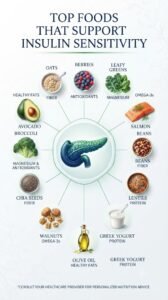
No single “superfood” can cure insulin resistance.
However, diets consistently associated with better insulin sensitivity include foods such as:
These foods provide fiber, healthy fats, antioxidants, vitamins, and minerals that support glucose metabolism while reducing inflammation.
A Mediterranean-style eating pattern remains one of the most evidence-based dietary approaches for improving insulin sensitivity.
Learn how to build this eating pattern in Mediterranean Diet for Healthy Aging.
Although occasional treats can fit into a balanced lifestyle, regularly consuming highly processed foods may contribute to poorer insulin sensitivity.
Try to limit:
Rather than aiming for perfection, focus on gradually replacing processed foods with minimally processed whole foods.
This sustainable approach is far more effective than restrictive fad diets for improving long-term metabolic health.
Exercise is one of the most powerful interventions available.
However, it works best when combined with:
Think of insulin sensitivity as the result of multiple healthy systems working together.
Regular physical activity improves glucose uptake almost immediately, while long-term exercise helps build muscle, reduce visceral fat, and improve mitochondrial function.
Understanding how to improve insulin sensitivity after 50 naturally means recognizing that no single habit works in isolation.
Instead, lasting improvements come from combining consistent exercise with a healthy lifestyle as a whole.
Insulin sensitivity refers to how effectively your body’s cells respond to insulin. When insulin sensitivity is high, your cells efficiently absorb glucose from the bloodstream to use as energy. When insulin sensitivity declines, your pancreas must produce more insulin to maintain normal blood sugar levels, increasing the risk of insulin resistance and type 2 diabetes.
Yes. Research consistently shows that adults over 50 can significantly improve insulin sensitivity through healthy lifestyle changes. Resistance training, regular walking, a Mediterranean-style diet, quality sleep, and maintaining a healthy body weight are among the most effective evidence-based strategies.
Foods that support insulin sensitivity include:
These foods help stabilize blood sugar while reducing chronic inflammation.
Walking is one of the simplest and most effective ways to improve insulin sensitivity, especially after meals. However, combining walking with resistance training, healthy nutrition, quality sleep, and weight management generally produces the greatest metabolic benefits.
Our article on Walking and Longevity explains why daily walking is considered one of the strongest predictors of healthy aging.
Some improvements can occur within just a few weeks of adopting healthier habits, particularly when increasing physical activity and improving nutrition. Long-term improvements in metabolic health develop gradually as healthy behaviors become consistent parts of daily life.
Understanding how to improve insulin sensitivity after 50 naturally is one of the smartest investments you can make for your future health. Healthy insulin sensitivity doesn’t simply reduce the risk of diabetes—it supports heart health, brain function, healthy body composition, energy levels, and overall longevity.
While age-related metabolic changes are common, they are far from inevitable. The scientific evidence clearly shows that regular movement, resistance training, a nutrient-rich diet, quality sleep, and stress management can substantially improve the way your body regulates blood sugar.
Rather than searching for quick fixes or restrictive diets, focus on building sustainable habits that you can maintain for years. Every healthy meal, every strength-training session, every walk after dinner, and every good night’s sleep contributes to healthier insulin signaling.
Learning how to improve insulin sensitivity after 50 naturally isn’t about perfection—it’s about consistency. Small improvements repeated every day create powerful long-term results that extend far beyond blood sugar control.
As your metabolic health improves, you’ll also be supporting healthier aging, reducing chronic inflammation, protecting your cardiovascular system, and improving your overall quality of life.
Ultimately, how to improve insulin sensitivity after 50 naturally is not about following a temporary diet or searching for a miracle supplement. It’s about building sustainable habits that improve the way your body processes glucose, protect your heart and brain, preserve muscle, reduce inflammation, and help you enjoy a longer, healthier, and more active life.
• American Diabetes Association. Standards of Care in Diabetes—2025. Diabetes Care.
Read the guideline → https://diabetesjournals.org/care
• Taylor R. Type 2 Diabetes: Etiology and Reversibility. Diabetes Care.
Read the study → https://pubmed.ncbi.nlm.nih.gov/17827353/
• Knowler WC, et al. Reduction in the Incidence of Type 2 Diabetes with Lifestyle Intervention. New England Journal of Medicine.
Read the study → https://pubmed.ncbi.nlm.nih.gov/11832527/
• Colberg SR, et al. Exercise and Type 2 Diabetes: American College of Sports Medicine and American Diabetes Association Joint Position Statement.
Read the study → https://pubmed.ncbi.nlm.nih.gov/21115758/
• Esposito K, et al. Mediterranean Diet and Prevention of Type 2 Diabetes. Annals of Internal Medicine.
Read the study → https://pubmed.ncbi.nlm.nih.gov/17577012/
• National Institute on Aging. Healthy Eating As You Age.
Read the resource → https://www.nia.nih.gov/health/healthy-eating
The information provided in this article is for educational purposes only and should not be considered medical advice. Always consult a qualified healthcare professional before making changes to your diet, exercise routine, medications, or supplement use. Never disregard professional medical advice or delay seeking it because of something you have read on this website.

The Live Ever Better Editorial Team is dedicated to publishing evidence-based content that helps adults over 50 achieve healthier aging and greater longevity. Every article is carefully researched using scientific studies, clinical guidelines, and trusted health organizations to ensure accurate, practical, and reliable health information.