Physical Address
304 North Cardinal St.
Dorchester Center, MA 02124
Physical Address
304 North Cardinal St.
Dorchester Center, MA 02124

Inflammation is one of the body’s most powerful defense mechanisms. Whenever you cut your finger, catch a viral infection, or strain a muscle during exercise, your immune system launches an inflammatory response designed to eliminate harmful agents and repair damaged tissues.
In these situations, inflammation is not only normal—it’s essential for survival.
The problem begins when inflammation never completely turns off.
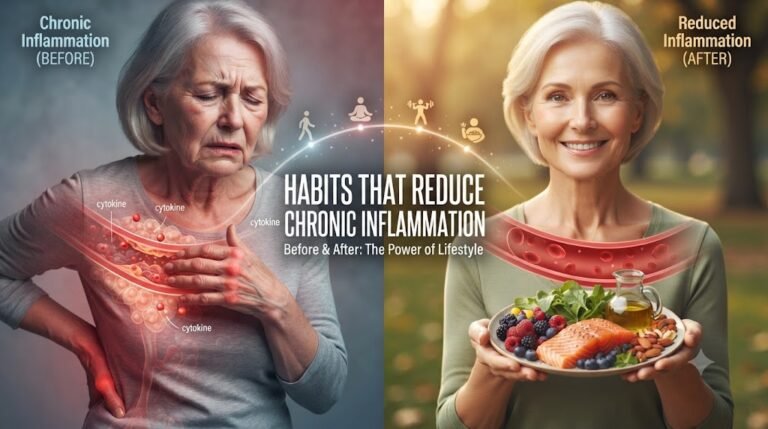
Instead of helping the body heal, the immune system remains continuously activated, releasing inflammatory molecules that slowly damage healthy tissues over months or even years. This condition, known as chronic inflammation, has become one of the defining biological characteristics of modern chronic disease.
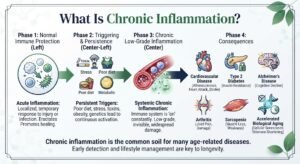
Researchers now recognize persistent low-grade inflammation as a common underlying factor in cardiovascular disease, type 2 diabetes, obesity, Alzheimer’s disease, arthritis, certain cancers, and accelerated biological aging. Unlike acute inflammation, chronic inflammation often develops silently, producing few noticeable symptoms until significant damage has already occurred.
Aging itself naturally increases inflammatory activity—a phenomenon scientists call inflammaging. However, genetics explain only part of the story. Daily lifestyle choices have a profound influence on how much inflammation develops over time.
Nutrition, physical activity, sleep quality, stress management, metabolic health, and gut microbiome diversity all play critical roles in regulating the body’s inflammatory response.
The encouraging news is that chronic inflammation is not inevitable. Scientific evidence consistently shows that sustainable lifestyle changes can significantly reduce inflammatory markers and improve long-term health outcomes.
In this comprehensive guide, you’ll learn what chronic inflammation is, why it becomes more common with age, the health risks associated with persistent inflammation, and the evidence-based strategies that can help reduce it naturally.
Chronic inflammation is a long-lasting activation of the immune system that gradually damages healthy tissues instead of protecting them. Unlike acute inflammation, which helps the body recover from injury or infection, chronic inflammation may persist for years and significantly increase the risk of heart disease, diabetes, arthritis, cognitive decline, and premature aging. Fortunately, adopting an anti-inflammatory lifestyle—including a Mediterranean-style diet, regular exercise, quality sleep, stress management, and maintaining a healthy weight—can substantially reduce inflammatory activity and support healthier aging.
Inflammation is often misunderstood.
Many people think inflammation is always harmful because it is associated with pain, swelling, or disease. In reality, inflammation is a normal biological process that allows the body to defend itself against infection, remove damaged cells, and begin tissue repair.
Without inflammation, even minor injuries could become life-threatening.
The problem is not inflammation itself.
The problem is persistent inflammation.
Chronic inflammation occurs when the immune system continues producing inflammatory chemicals long after the original threat has disappeared—or when no real threat exists at all.
Instead of repairing tissues, inflammatory molecules begin damaging healthy cells.
Over time, this continuous immune activation contributes to gradual wear and tear throughout the body, affecting blood vessels, joints, muscles, organs, and even the brain.
Scientists now consider chronic inflammation one of the central mechanisms linking aging with many chronic diseases.
Unlike infections or injuries that cause noticeable symptoms, chronic inflammation is often called a silent condition because many people experience no obvious warning signs for years.
Although both involve activation of the immune system, acute and chronic inflammation serve completely different biological purposes.
Acute inflammation develops rapidly after an injury or infection.
Its purpose is simple:
Typical signs include:
These symptoms usually disappear within a few days as healing progresses.
Examples include:
In each case, inflammation is beneficial.
Chronic inflammation is very different.
Instead of lasting hours or days, inflammatory activity continues for months or years.
Rather than protecting tissues, immune cells continuously release inflammatory compounds that gradually damage healthy organs.
This persistent immune activation accelerates biological aging and increases the likelihood of developing numerous chronic diseases.
One of the greatest challenges is that chronic inflammation often progresses without pain or noticeable symptoms during its early stages.
For this reason, many experts now consider chronic inflammation one of the most important—but least recognized—health threats associated with aging.
Researchers use the term inflammaging to describe the gradual increase in chronic low-grade inflammation that occurs as people grow older.
Inflammaging is now considered one of the biological hallmarks of aging.
It develops through the interaction of several age-related processes rather than a single cause.
As the immune system ages, it becomes less efficient at regulating inflammatory responses.
Immune cells remain activated for longer periods and become less effective at switching inflammation off after it is no longer needed.
Throughout life, damaged cells eventually stop dividing and enter a state known as cellular senescence.
Although these cells no longer function normally, they remain metabolically active and release inflammatory substances collectively known as the Senescence-Associated Secretory Phenotype (SASP).
As senescent cells accumulate with age, inflammatory signaling throughout the body gradually increases.
Abdominal fat is far more than stored energy.
Visceral fat acts as an active endocrine organ capable of producing numerous inflammatory cytokines, including TNF-α and IL-6.
Individuals with excess abdominal fat often have substantially higher levels of chronic inflammation than those with healthier body composition.
This is one reason why maintaining a healthy waist circumference is strongly associated with lower inflammatory markers.
The trillions of microorganisms living inside the digestive tract help regulate immune activity.
As people age, gut microbial diversity often declines.
This imbalance may weaken the intestinal barrier, allowing bacterial products to enter circulation and stimulate chronic inflammation.
Maintaining a healthy gut microbiome has therefore become one of the most promising strategies for reducing long-term inflammatory activity.
Every cell naturally produces reactive oxygen species during metabolism.
When antioxidant defenses cannot adequately neutralize these molecules, oxidative stress damages DNA, proteins, lipids, and mitochondria.
This cellular damage further stimulates inflammatory pathways, creating a vicious cycle between inflammation and aging.
Although aging contributes to inflammaging, lifestyle has an enormous influence on its severity.
The strongest lifestyle-related contributors include:
These are also the factors most responsive to evidence-based lifestyle interventions.
In most individuals, chronic inflammation develops through the combined effects of several risk factors rather than a single disease.
Some of the most common contributors include:
Rather than searching for one specific cause, healthcare professionals increasingly focus on reducing the body’s overall inflammatory burden through sustainable improvements in nutrition, movement, sleep, stress management, and metabolic health.
One of the greatest challenges with chronic inflammation is that it often develops without obvious symptoms.
Unlike acute inflammation—which typically causes redness, swelling, pain, and warmth—low-grade chronic inflammation may quietly persist for years before contributing to disease.
When symptoms do occur, they are often vague and easily attributed to aging, stress, or a busy lifestyle.
Common signs may include:
None of these symptoms confirms chronic inflammation on its own.
However, when several occur together—especially alongside obesity, insulin resistance, hypertension, or poor dietary habits—they may indicate that inflammatory processes are contributing to declining health.
Healthcare professionals sometimes evaluate inflammatory activity using blood biomarkers such as:
These laboratory markers should always be interpreted by a qualified healthcare professional because many conditions can temporarily increase inflammation.
Persistent inflammation doesn’t damage only one organ.
It influences nearly every system in the body.
Inflammation plays a central role in the development of atherosclerosis.
Inflammatory cells infiltrate blood vessel walls, contributing to plaque formation and increasing the risk of:
Growing evidence suggests that controlling inflammation may be just as important as controlling cholesterol for long-term cardiovascular health.
Related article: How to Lower Blood Pressure Naturally After 50
The brain is highly sensitive to inflammatory signaling.
Long-term neuroinflammation has been associated with:
Scientists increasingly believe that chronic inflammation accelerates age-related brain aging.
Related article: Brain Health After 50
Inflammation interferes with insulin signaling.
Over time, this contributes to:
These conditions, in turn, further increase inflammation, creating a vicious cycle.
Related article: How to Improve Insulin Sensitivity Naturally
Persistent inflammation accelerates:
For adults over 50, reducing inflammation becomes increasingly important for maintaining independence and mobility.
The gut and immune system constantly communicate.
When intestinal barrier function weakens, inflammatory molecules enter circulation more easily, increasing systemic inflammation.
Conversely, chronic inflammation can also alter the gut microbiome, further worsening digestive health.
Related article: Gut Health After 50
Among all dietary patterns studied, the Mediterranean diet consistently demonstrates the strongest evidence for reducing chronic inflammation.
It emphasizes:
These foods provide antioxidants, polyphenols, healthy fats, vitamins, and minerals that help regulate inflammatory pathways.
Numerous clinical studies show improvements in CRP and other inflammatory biomarkers among people who consistently follow Mediterranean-style eating habits.
Related article: Mediterranean Diet for Healthy Aging
Physical activity produces powerful anti-inflammatory effects.
Although intense exercise temporarily increases inflammation, regular training lowers chronic inflammatory activity over time.
Research consistently shows benefits from:
Current guidelines recommend:
Exercise also improves insulin sensitivity, body composition, cardiovascular health, and immune regulation.
Related articles:
The Best Strength Training Routine for Healthy Aging
Poor sleep dramatically increases inflammatory signaling.
Even a few nights of insufficient sleep can elevate inflammatory biomarkers.
Adults should generally aim for:
Sleep allows the immune system to regulate inflammatory responses and repair tissues throughout the body.
Related article: Sleep and Healthy Aging
Excess body fat—particularly visceral abdominal fat—is one of the strongest drivers of chronic inflammation.
Adipose tissue produces inflammatory cytokines continuously.
Even modest weight loss has been shown to reduce:
Importantly, improvements occur even before reaching an “ideal” body weight.
The intestinal microbiome plays an essential role in immune regulation.
Supporting beneficial gut bacteria may reduce inflammatory activity through several mechanisms.
Helpful habits include:
Healthy gut bacteria produce short-chain fatty acids that help maintain intestinal integrity and regulate immune responses.
Related article: Gut Health After 50
Fiber is one of the most underrated anti-inflammatory nutrients.
It feeds beneficial gut bacteria and improves:
Excellent sources include:
Most adults consume far less fiber than recommended.
Stress is a normal part of life, but when it becomes chronic, it can keep the body’s inflammatory response permanently activated.
Persistent psychological stress stimulates the hypothalamic-pituitary-adrenal (HPA) axis, leading to prolonged cortisol release. Over time, the body may become less responsive to cortisol’s anti-inflammatory effects, allowing inflammatory activity to increase.
Evidence-based stress management techniques include:
Even 10–15 minutes of relaxation practice each day may contribute to lower stress levels and improved immune regulation.
Smoking is one of the strongest lifestyle drivers of chronic inflammation.
Tobacco smoke exposes the body to thousands of chemicals that damage blood vessels, increase oxidative stress, and stimulate inflammatory pathways throughout the body.
Smoking is associated with increased risks of:
Quitting smoking leads to gradual reductions in inflammatory markers and substantially lowers long-term health risks.
Ultra-processed foods often contain combinations of:
While no single food “causes” chronic inflammation, diets heavily based on ultra-processed products are consistently associated with higher inflammatory biomarkers and poorer metabolic health.
Instead, focus on eating mostly minimally processed foods that retain their natural nutritional value.
The type of fat consumed matters more than the total amount.
Replacing saturated and trans fats with healthier unsaturated fats has been associated with lower inflammation.
Excellent choices include:
These foods provide monounsaturated fats and omega-3 fatty acids, which help regulate inflammatory pathways.
Related article: Omega-3 Benefits: What the Evidence Really Says
Formal exercise is important, but so is reducing prolonged sitting.
Research suggests that long periods of sedentary behavior independently contribute to inflammation, even among people who exercise regularly.
Simple habits can make a meaningful difference:
These small daily movements help improve circulation, glucose regulation, and metabolic health.
There is no single anti-inflammatory food, supplement, or exercise capable of eliminating chronic inflammation overnight.
The strongest scientific evidence supports consistency.
Healthy habits reinforce one another:
Small improvements practiced consistently for months and years have a much greater impact than occasional extreme interventions.
Although no food acts as a medicine by itself, several dietary patterns and foods are consistently associated with lower inflammatory markers.
Include more:
These foods provide fiber, antioxidants, vitamins, minerals, and polyphenols that help regulate immune function and reduce oxidative stress.
Rather than eliminating entire food groups, it is generally more beneficial to reduce foods that consistently contribute to poor metabolic health.
Examples include:
The goal is not perfection but improving overall dietary quality over time.
In many cases, inflammatory markers can be significantly reduced through improvements in diet, exercise, sleep, stress management, weight control, and smoking cessation. The earlier these changes begin, the greater the long-term health benefits.
Inflammatory activity naturally increases with age, but unhealthy lifestyle habits greatly amplify this process. Healthy aging focuses on minimizing unnecessary inflammation rather than accepting it as inevitable.
There is no instant solution. However, combining regular exercise, a Mediterranean-style eating pattern, quality sleep, and weight management produces measurable improvements in inflammatory biomarkers within weeks to months.
Not necessarily.
Most evidence suggests that improving overall lifestyle has a greater impact than relying on supplements alone. Some supplements may be appropriate for specific individuals, but they should complement—not replace—a healthy lifestyle.
Yes—but only temporarily.
Intense exercise produces a short-lived inflammatory response that stimulates tissue repair and adaptation. Over the long term, regular physical activity consistently lowers chronic inflammation.

Chronic inflammation is often called the silent driver of aging, and for good reason. It rarely causes obvious symptoms in its early stages, yet it contributes to many of the chronic conditions that reduce healthspan and quality of life.
The encouraging news is that chronic inflammation is highly responsive to lifestyle.
Rather than searching for a single “anti-inflammatory” food or supplement, focus on building a foundation of healthy habits: eat mostly whole foods, stay physically active, prioritize sleep, manage stress, support gut health, avoid smoking, and maintain a healthy body weight.
These everyday choices work together to regulate the immune system, reduce inflammatory activity, and support healthier aging for years to come.
Most evidence suggests that improving overall lifestyle has a greater impact than relying on supplements alone. Some supplements may be appropriate for specific individuals, but they should complement—not replace—a healthy lifestyle.
• National Institute on Aging. Chronic Inflammation and Aging.
Read the resource → https://www.nia.nih.gov
• Harvard T.H. Chan School of Public Health. The Nutrition Source: Inflammation and Chronic Disease.
Read the guide → https://www.hsph.harvard.edu/nutritionsource/
• World Health Organization. Ageing and Health.
Read the publication → https://www.who.int/news-room/fact-sheets/detail/ageing-and-health
• Furman D, Campisi J, Verdin E, et al. Chronic Inflammation in the Etiology of Disease Across the Life Span. Nature Medicine. 2019.
Read the study → https://pubmed.ncbi.nlm.nih.gov/29643481/
• Franceschi C, Campisi J. Chronic Inflammation (Inflammaging) and Its Potential Contribution to Age-Associated Diseases. The Journals of Gerontology: Series A.
Read the publication → https://pubmed.ncbi.nlm.nih.gov/24833586/
• Calder PC, Ahluwalia N, Brouns F, et al. Dietary Factors and Low-Grade Inflammation in Relation to Overweight and Obesity. British Journal of Nutrition.
Read the study → https://pubmed.ncbi.nlm.nih.gov/21477472/
• Libby P. The Changing Landscape of Atherosclerosis. Nature.
Read the study → https://pubmed.ncbi.nlm.nih.gov/34019924/
• Centers for Disease Control and Prevention. About Chronic Diseases.
Read the resource → https://www.cdc.gov/chronic-disease/index.html
The information provided in this article is for educational purposes only and should not be considered medical advice. Always consult a qualified healthcare professional before making changes to your diet, exercise routine, medications, or supplement use. Never disregard professional medical advice or delay seeking it because of something you have read on this website.

The Live Ever Better Editorial Team is dedicated to publishing evidence-based content that helps adults over 50 achieve healthier aging and greater longevity. Every article is carefully researched using scientific studies, clinical guidelines, and trusted health organizations to ensure accurate, practical, and reliable health information.