Physical Address
304 North Cardinal St.
Dorchester Center, MA 02124
Physical Address
304 North Cardinal St.
Dorchester Center, MA 02124

Constipation is one of the most common digestive complaints among adults over the age of 50.
Many people notice that bowel movements become less frequent, stools become harder, or it simply takes longer to empty the bowels than it did years earlier. While occasional constipation is common, persistent constipation should never be dismissed as an unavoidable part of aging.
The good news is that constipation after 50 is often linked to lifestyle factors that can be improved. Nutrition, hydration, physical activity, medication use, and changes in the gut microbiome all play important roles in maintaining healthy bowel function.
Understanding the causes of constipation after 50 allows you to choose evidence-based strategies that improve digestive comfort without relying solely on laxatives.
In this guide, you’ll learn why constipation becomes more common with age, when it may signal a more serious condition, and the most effective natural ways to restore healthy bowel regularity.
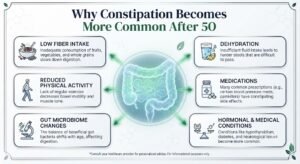
Several age-related changes contribute to slower bowel movements.
These include:
Although aging itself may slightly slow intestinal movement, lifestyle factors are usually far more influential.
For this reason, many cases of constipation after 50 respond well to simple daily habits.
Many people believe constipation simply means “not going every day.”
In reality, bowel habits vary considerably between individuals.
Constipation is generally defined as experiencing several of the following:
Occasional constipation is common.
Persistent symptoms lasting several weeks deserve medical evaluation.
Fiber increases stool bulk while helping retain water inside the colon.
Many adults consume far less fiber than recommended.
Low intake of fruits, vegetables, legumes, and whole grains is one of the leading contributors to constipation after 50.
Without enough water, the colon absorbs more fluid from stool.
The result is:
Hydration works together with dietary fiber to promote healthy bowel function.
Regular movement stimulates intestinal contractions.
Adults who spend long periods sitting often experience slower bowel transit.
Even moderate daily walking may help improve bowel regularity.
Learn more in:
Many commonly prescribed medications can contribute to constipation, including:
Never stop prescribed medication without consulting your healthcare provider.
The diversity of beneficial gut bacteria often declines with age.
An imbalanced microbiome may influence:
Supporting the microbiome is an important strategy for reducing constipation after 50.
Learn more in:
Certain medical conditions may contribute to constipation, including:
Hormonal changes can also affect digestive function, particularly in older adults.
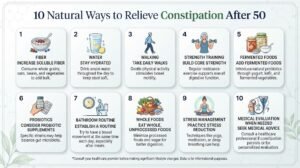
Adults over 50 should generally aim for adequate daily fiber intake from foods such as:
Increase fiber gradually to reduce bloating.
Fiber works best when combined with sufficient fluid intake.
Aim to stay consistently hydrated throughout the day rather than drinking large amounts all at once.
Walking stimulates intestinal movement.
Even 20–30 minutes daily may improve bowel regularity while supporting cardiovascular health and healthy aging.
Continue reading:
Resistance exercise improves overall muscle function—including muscles involved in posture and core stability—which may indirectly support bowel function.
It also helps maintain metabolic health.
Learn more in:
Fermented foods naturally contain beneficial microorganisms that may help support a healthier gut microbiome.
Good options include:
Regular consumption of fermented foods may improve digestive health and complement other strategies for managing constipation after 50.
Learn more in:
Some probiotic strains have shown modest benefits for bowel regularity.
Research suggests that certain Bifidobacterium and Lactobacillus strains may help:
However, probiotics work best when combined with adequate fiber and hydration.
One of the most overlooked contributors to constipation after 50 is repeatedly delaying bowel movements.
Ignoring the urge allows the colon to absorb more water from stool, making it harder and more difficult to pass later.
Whenever possible, respond promptly when you feel the need to have a bowel movement.
The digestive system responds well to consistency.
Many experts recommend attempting a bowel movement at approximately the same time each day—especially after breakfast, when the body’s natural gastrocolic reflex is strongest.
Helpful habits include:
These simple behavioral strategies often improve bowel regularity over time.
Highly processed foods tend to be:
Examples include:
Replacing these foods with minimally processed, fiber-rich options supports both digestive health and overall healthy aging.
Continue reading:
Although lifestyle changes help many people, constipation after 50 should never be ignored if it is persistent or accompanied by warning signs.
Seek medical evaluation if constipation occurs together with:
These symptoms require prompt medical assessment rather than self-treatment.
A diet that promotes healthy bowel movements typically includes foods naturally rich in fiber, water, and prebiotics.
Excellent choices include:
Combining these foods with adequate hydration is one of the most effective natural approaches to reducing constipation after 50.
Some foods may contribute to constipation when consumed in excess, especially if fiber intake is already low.
These include:
The goal isn’t necessarily to eliminate these foods completely but to maintain a dietary pattern centered on whole, fiber-rich foods.
Healthy digestion depends on much more than what you eat.
Daily habits that promote bowel regularity include:
Together, these habits not only reduce the risk of constipation after 50 but also support metabolic health, immune function, and longevity.
Continue reading:
Occasional constipation becomes more common with age, but persistent constipation after 50 should not be considered normal.
In many cases, it is related to:
Most people can significantly improve bowel regularity by addressing these factors.
General recommendations suggest:
It’s best to increase fiber gradually while also drinking enough water to avoid worsening constipation.
Some probiotic strains may improve bowel regularity in certain individuals.
Research has found benefits from selected Bifidobacterium and Lactobacillus strains, particularly when combined with:
Probiotics are supportive tools rather than stand-alone treatments.
Coffee may stimulate bowel movements in some people because it activates the gastrocolic reflex.
However, responses vary, and excessive caffeine may contribute to dehydration if fluid intake is inadequate.
Coffee should not be relied upon as a primary treatment for constipation after 50.
Seek medical attention if constipation is accompanied by:
These warning signs require prompt medical evaluation.
Some laxatives are appropriate for short-term use, while others should only be taken under medical supervision.
Long-term reliance on stimulant laxatives without addressing the underlying cause of constipation after 50 is generally discouraged.
Always consult a healthcare professional if constipation becomes chronic.
Although constipation after 50 becomes more common, it is not simply an unavoidable consequence of getting older.
Most cases are influenced by everyday habits—including what you eat, how much you move, how well you hydrate, and the health of your gut microbiome.
Simple changes such as increasing fiber intake, drinking more water, walking regularly, eating fermented foods, and establishing consistent bathroom habits can often make a meaningful difference.
These same lifestyle habits don’t just improve bowel regularity—they also support cardiovascular health, metabolic function, immune resilience, and healthy aging overall.
Persistent or severe constipation after 50, however, should never be ignored. Because bowel changes can occasionally signal underlying medical conditions, it’s important to seek professional evaluation when symptoms are prolonged or accompanied by warning signs.
Healthy digestion is one of the foundations of healthy aging.
By taking care of your gut today, you’re investing in better health, greater comfort, and a higher quality of life for years to come.
The information provided in this article is for educational purposes only and should not be considered medical advice. Always consult a qualified healthcare professional if you experience persistent constipation, blood in the stool, unexplained weight loss, severe abdominal pain, or any sudden change in bowel habits. Lifestyle changes should complement—not replace—professional medical evaluation and treatment.

The Live Ever Better Editorial Team is dedicated to publishing evidence-based content that helps adults over 50 achieve healthier aging and greater longevity. Every article is carefully researched using scientific studies, clinical guidelines, and trusted health organizations to ensure accurate, practical, and reliable health information.