Physical Address
304 North Cardinal St.
Dorchester Center, MA 02124
Physical Address
304 North Cardinal St.
Dorchester Center, MA 02124
Heart disease remains the leading cause of death worldwide, but the encouraging news is that much of this risk is preventable. Learning how to prevent heart disease after 50 is one of the most important investments you can make for a longer, healthier life.
Although aging naturally increases cardiovascular risk, research consistently shows that healthy lifestyle habits can dramatically reduce the likelihood of heart attacks, strokes, heart failure, and other cardiovascular diseases. Small daily choices—such as eating well, staying physically active, controlling blood pressure, and improving sleep—have a cumulative effect on long-term heart health.
Many people assume heart disease develops suddenly, but in reality it usually progresses silently over decades. Understanding how to prevent heart disease after 50 allows you to address risk factors before permanent damage occurs.
In this evidence-based guide, you’ll discover 12 science-backed habits to prevent heart disease after 50, improve cardiovascular health, and support healthy aging.
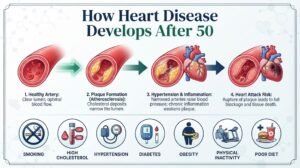
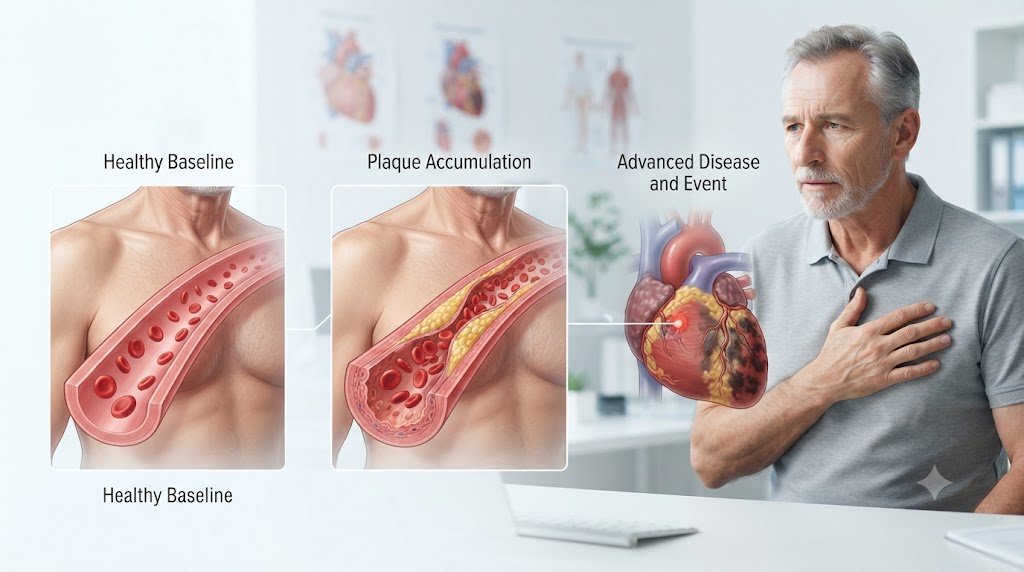
Cardiovascular disease rarely develops overnight.
Over many years, arteries gradually become less flexible, cholesterol plaques may accumulate, blood pressure often rises, and chronic inflammation can damage blood vessels.
These changes increase the risk of:
The encouraging reality is that many of these processes can be slowed—or even partially reversed—through consistent lifestyle improvements.
Understanding how to prevent heart disease after 50 is therefore one of the most effective strategies for extending both lifespan and healthspan.
High blood pressure is often called the “silent killer” because it rarely causes symptoms while gradually damaging arteries, the heart, kidneys, and brain.
Hypertension is one of the strongest predictors of:
Regular blood pressure monitoring allows early treatment before complications develop.
Research consistently recommends:
For a complete evidence-based guide, read How to Lower Blood Pressure Naturally After 50.
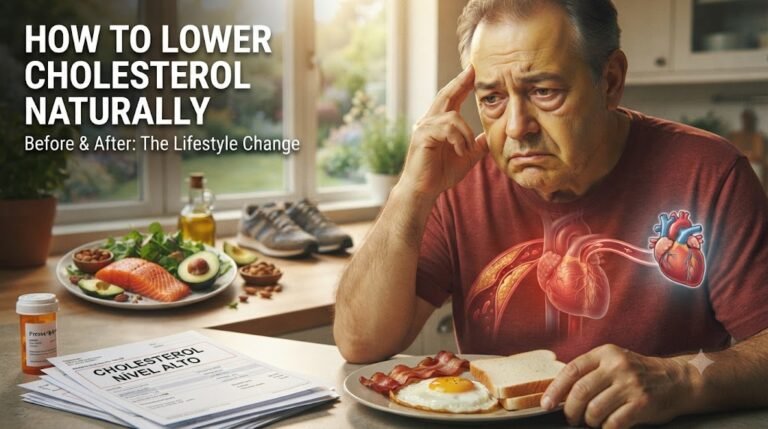
High LDL cholesterol contributes to plaque formation inside arteries, increasing cardiovascular risk over time.
Fortunately, cholesterol responds remarkably well to lifestyle changes.
These strategies help reduce LDL while supporting healthy HDL cholesterol.
Learn more in How to Lower Cholesterol Naturally After 50.
Walking remains one of the simplest—and most effective—forms of cardiovascular exercise.
Numerous studies show that regular walking helps:
Even brisk walking for 30 minutes most days of the week provides substantial benefits.
Walking is particularly attractive because it is accessible to nearly everyone and carries a very low injury risk.
Discover practical recommendations in Walking and Longevity.
Many people associate resistance exercise only with muscle building.
However, strength training also provides impressive cardiovascular benefits.
Studies demonstrate improvements in:
Increasing muscle mass also improves metabolic health, reducing several major cardiovascular risk factors.
Experts generally recommend resistance training at least twice weekly.
Our complete guide Strength Training After 50 explains how to begin safely.
Excess body fat—particularly visceral fat surrounding abdominal organs—is strongly associated with cardiovascular disease.
Visceral fat contributes to:
Reducing abdominal fat improves nearly every marker of cardiovascular health.
Evidence suggests that even modest weight loss can significantly lower heart disease risk.
For practical guidance, read How to Lose Visceral Fat After 50 Naturally.
Among all dietary patterns studied, the Mediterranean diet consistently ranks as one of the most effective approaches for reducing cardiovascular disease risk.
Large clinical studies have shown that this eating pattern lowers the incidence of heart attacks, strokes, and cardiovascular mortality.
Rather than focusing on restrictive dieting, the Mediterranean diet emphasizes whole, minimally processed foods that naturally support heart health.
Meanwhile, processed foods, refined sugars, sugary beverages, and processed meats should be limited whenever possible.
The anti-inflammatory properties of this dietary pattern also help improve blood vessel function and reduce oxidative stress.
For a complete guide, read Mediterranean Diet for Healthy Aging.
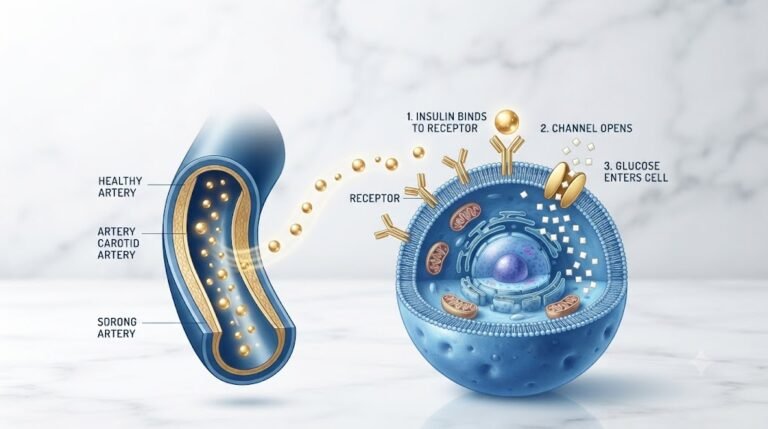
Even people without diabetes can benefit from maintaining stable blood glucose levels.
Persistently elevated blood sugar damages blood vessels, increases inflammation, and accelerates atherosclerosis.
Improving insulin sensitivity is one of the most effective ways to lower long-term cardiovascular risk.
Improving metabolic health benefits both the heart and the entire cardiovascular system.
Learn more in How to Improve Insulin Sensitivity After 50 Naturally.
Sleep is one of the most overlooked pillars of cardiovascular health.
Poor sleep has been associated with:
Adults who consistently sleep between seven and nine hours each night generally demonstrate better cardiovascular outcomes than those who regularly sleep too little.
Quality sleep allows blood pressure to fall naturally overnight while supporting hormonal balance and cardiovascular recovery.
Read Sleep and Healthy Aging and How to Sleep Better After 50 Naturally for practical strategies.
Cardiovascular disease is increasingly recognized as an inflammatory condition.
Low-grade chronic inflammation contributes to plaque instability, arterial stiffness, and endothelial dysfunction, increasing the likelihood of heart attacks and strokes.
Fortunately, lifestyle choices strongly influence inflammation levels.
Reducing inflammation supports healthier arteries and better long-term cardiovascular function.
Read Chronic Inflammation: Causes, Symptoms & How to Reduce It Naturally to learn more.
Stress affects far more than emotional well-being.
Persistent psychological stress increases cortisol and adrenaline production, raises blood pressure, promotes inflammation, and may contribute to unhealthy behaviors such as emotional eating, smoking, and physical inactivity.
Over time, chronic stress becomes an independent cardiovascular risk factor.
Even a few minutes of intentional relaxation each day can positively influence cardiovascular health.
Smoking remains one of the strongest modifiable risk factors for cardiovascular disease.
Tobacco damages blood vessels, accelerates plaque formation, raises blood pressure, and dramatically increases the risk of heart attack and stroke.
Excessive alcohol consumption may also contribute to:
The cardiovascular benefits of smoking cessation begin almost immediately and continue to improve over time.
Many cardiovascular diseases develop silently for years before symptoms appear.
Routine medical checkups allow early detection of conditions that significantly increase cardiovascular risk, including hypertension, high cholesterol, diabetes, and kidney disease.
Most adults should discuss the following with their healthcare provider:
Depending on your personal and family history, your physician may also recommend an electrocardiogram (ECG), coronary calcium score, or additional imaging studies.
Early detection remains one of the most effective strategies to prevent heart disease after 50.
Protecting your heart isn’t about following a strict diet for a few weeks or exercising intensely for a month.
It’s about creating sustainable habits that become part of your daily routine.
The most successful people focus on consistency rather than perfection.
Start with one or two realistic improvements, then gradually build upon them.
For example:
Over months and years, these small habits compound into meaningful reductions in cardiovascular risk.
For additional practical strategies, read Daily Habits to Stay Healthy After 50.
High blood pressure remains one of the strongest risk factors because it damages arteries over many years without causing noticeable symptoms. Other major contributors include high LDL cholesterol, diabetes, smoking, obesity, and physical inactivity.
Many cases can be substantially prevented—or delayed—through healthy lifestyle habits. While genetics cannot be changed, controlling blood pressure, cholesterol, blood sugar, body weight, diet, exercise, and smoking status dramatically reduces cardiovascular risk.
Walking is one of the best cardiovascular exercises, especially when performed regularly at a brisk pace. However, combining walking with strength training, healthy nutrition, quality sleep, and routine medical care provides even greater protection.
Yes. Research shows that resistance exercise improves blood pressure, insulin sensitivity, body composition, cholesterol levels, and overall cardiovascular fitness.
The Mediterranean diet consistently receives the strongest scientific support for reducing cardiovascular disease, improving cholesterol, lowering inflammation, and supporting healthy aging.
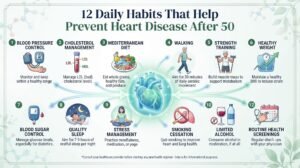
Learning how to prevent heart disease after 50 is one of the most valuable steps you can take for your long-term health.
Cardiovascular disease often develops gradually, but it is also one of the most preventable chronic conditions. Consistently following healthy habits—such as controlling blood pressure, improving cholesterol, exercising regularly, maintaining a healthy weight, eating a Mediterranean-style diet, sleeping well, and attending routine medical screenings—can dramatically reduce your lifetime risk.
Remember that you don’t need to change everything overnight. Small improvements practiced consistently over time have a powerful cumulative effect.
By taking action today, you greatly increase your chances of enjoying a longer, healthier, and more active life.
• American Heart Association. Life’s Essential 8™ for Heart Health.
Read the resource → https://www.heart.org/en/healthy-living/healthy-lifestyle/lifes-essential-8
• Centers for Disease Control and Prevention. Heart Disease Facts.
Read the publication → https://www.cdc.gov/heart-disease/
• National Heart, Lung, and Blood Institute. Coronary Heart Disease.
Read the guide → https://www.nhlbi.nih.gov/health/coronary-heart-disease
• World Health Organization. Cardiovascular Diseases (CVDs).
Read the publication → https://www.who.int/news-room/fact-sheets/detail/cardiovascular-diseases-(cvds)
• Estruch R, et al. Primary Prevention of Cardiovascular Disease with a Mediterranean Diet. New England Journal of Medicine.
Read the study → https://www.nejm.org/doi/full/10.1056/NEJMoa1800389
• U.S. Preventive Services Task Force. Cardiovascular Disease Prevention Recommendations.
Read the recommendations → https://www.uspreventiveservicestaskforce.org/
The information provided in this article is for educational purposes only and should not be considered medical advice. Always consult a qualified healthcare professional before making changes to your diet, exercise routine, medications, or supplement use. Never disregard professional medical advice or delay seeking it because of something you have read on this website.

The Live Ever Better Editorial Team is dedicated to publishing evidence-based content that helps adults over 50 achieve healthier aging and greater longevity. Every article is carefully researched using scientific studies, clinical guidelines, and trusted health organizations to ensure accurate, practical, and reliable health information.