Physical Address
304 North Cardinal St.
Dorchester Center, MA 02124
Physical Address
304 North Cardinal St.
Dorchester Center, MA 02124
Prediabetes affects millions of adults over 50, yet most people don’t realize they have it. Because it usually develops without obvious symptoms, blood sugar levels can remain elevated for years before progressing to type 2 diabetes.
The encouraging news is that reverse prediabetes after 50 is not only possible but well supported by scientific evidence. Large clinical trials have shown that healthy lifestyle changes can reduce the risk of developing diabetes by more than 50%—often outperforming medication in the early stages.
Prediabetes is best viewed as an early warning sign rather than a permanent diagnosis. It signals that your body is becoming less responsive to insulin, but this process can often be slowed, stopped, or even reversed before permanent damage occurs.
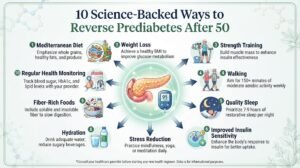
Learning how to reverse prediabetes after 50 naturally involves improving nutrition, increasing physical activity, reducing visceral fat, building muscle, sleeping better, and creating sustainable daily habits that restore metabolic health.
In this comprehensive evidence-based guide, you’ll discover what prediabetes is, why it becomes more common after 50, how it’s diagnosed, and the most effective science-backed strategies to lower blood sugar naturally and reduce your long-term risk of diabetes.
Reverse prediabetes after 50 begins with understanding what prediabetes actually means.
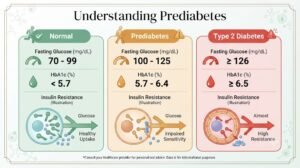
Prediabetes is a metabolic condition in which blood glucose levels are higher than normal but not yet high enough for a diagnosis of type 2 diabetes.
Most healthcare providers diagnose prediabetes using one or more of the following laboratory tests:
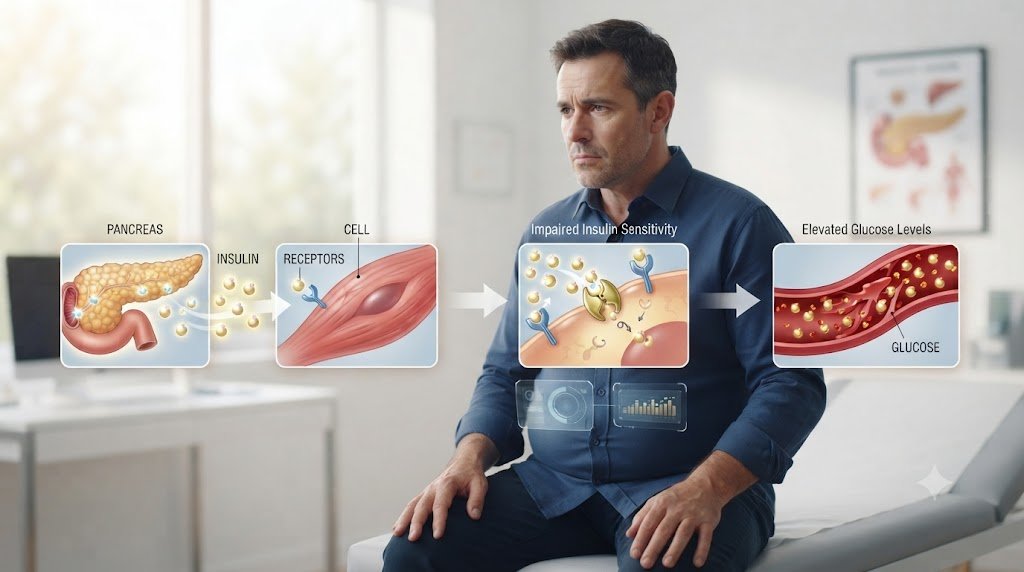
At this stage, the pancreas still produces insulin, but the body’s cells respond less efficiently—a condition known as insulin resistance.
Without intervention, many people progress from prediabetes to type 2 diabetes within several years.
Fortunately, this progression is often preventable.
Many people assume prediabetes is harmless because it isn’t “full diabetes.”
Scientific evidence tells a different story.
Even before diabetes develops, elevated blood sugar can begin damaging blood vessels, nerves, kidneys, and the cardiovascular system.
Prediabetes has been associated with an increased risk of:
The earlier you work to reverse prediabetes after 50, the greater your chances of avoiding these complications entirely.
Several age-related changes make blood sugar regulation more difficult.
As people age, muscle and liver cells gradually become less responsive to insulin.
The pancreas compensates by producing larger amounts of insulin, but this compensation eventually becomes less effective.
Muscle tissue is one of the body’s largest consumers of glucose.
Age-related sarcopenia reduces glucose uptake, allowing more sugar to remain in the bloodstream after meals.
Building and maintaining muscle therefore plays a major role in helping reverse prediabetes after 50.
Visceral fat surrounding internal organs releases inflammatory compounds that interfere with insulin signaling.
This explains why waist circumference often predicts diabetes risk better than body weight alone.
For more information, read How to Lose Visceral Fat After 50 Naturally.
Persistent low-grade inflammation contributes directly to insulin resistance.
Inflammatory cytokines interfere with normal glucose metabolism and accelerate metabolic dysfunction.
Learn more in Chronic Inflammation: Causes, Symptoms & How to Reduce It Naturally.
Sedentary lifestyles reduce glucose utilization.
Even moderate daily movement dramatically improves insulin sensitivity.
Regular walking and strength training remain among the most effective interventions to reverse prediabetes after 50.
One of the biggest challenges is that most individuals experience no symptoms.
When symptoms do occur, they may include:
However, many adults discover prediabetes only during routine blood testing.
For this reason, regular preventive health screenings become increasingly important after age 50.
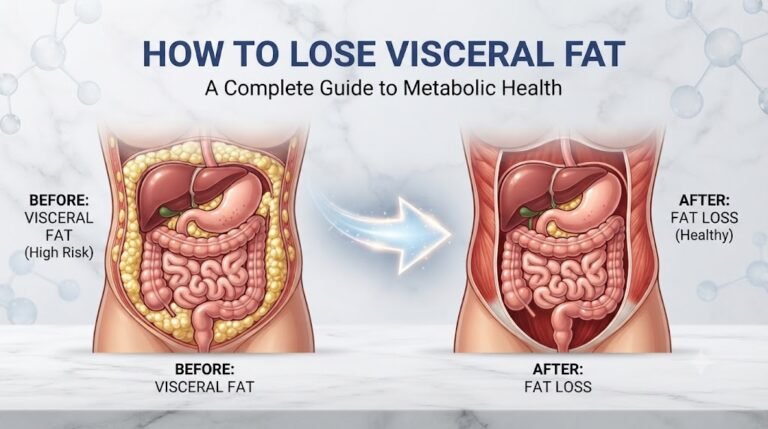
One of the most effective ways to reverse prediabetes after 50 is by reducing excess body fat—particularly visceral fat around the abdomen.
Research from the Diabetes Prevention Program (DPP) demonstrated that losing just 5–7% of body weight dramatically reduced the risk of developing type 2 diabetes.
This relatively modest amount of weight loss improves:
Even small reductions in waist circumference are associated with meaningful metabolic improvements.
For practical guidance, read How to Lose Visceral Fat After 50 Naturally.
Nutrition is one of the strongest tools available to reverse prediabetes after 50.
Among all dietary patterns studied, the Mediterranean diet consistently demonstrates the greatest benefits for improving insulin sensitivity and lowering diabetes risk.
A Mediterranean-style eating pattern emphasizes:
It naturally limits:
These dietary changes help stabilize blood sugar while reducing inflammation and supporting cardiovascular health.
Read Mediterranean Diet for Healthy Aging.
Resistance exercise plays a unique role in improving blood sugar control.
Unlike aerobic exercise alone, strength training increases lean muscle mass—the body’s largest site for glucose storage and utilization.
Building muscle helps:
Experts generally recommend strength training at least two to three times per week.
Learn more in Strength Training After 50.
Walking remains one of the safest, simplest, and most effective activities for improving metabolic health.
Even a brisk 30-minute walk most days of the week can:
Walking after meals appears particularly beneficial because muscles immediately use circulating glucose for energy.
Read Walking and Longevity.
Sleep quality has a profound influence on blood sugar regulation.
Poor sleep increases:
Adults who consistently obtain seven to nine hours of quality sleep generally demonstrate healthier glucose metabolism.
Creating a consistent sleep schedule is therefore an important strategy to reverse prediabetes after 50.
Read Sleep and Healthy Aging and How to Sleep Better After 50 Naturally.
Insulin resistance is the central metabolic problem in prediabetes.
Improving insulin sensitivity allows the body’s cells to respond more effectively to insulin, helping glucose move from the bloodstream into muscle and other tissues.
Evidence-based strategies include:
Together, these changes can substantially improve metabolic health.
Read How to Improve Insulin Sensitivity After 50 Naturally.
Prediabetes is rarely caused by one isolated behavior.
Instead, it reflects the cumulative effect of daily lifestyle choices over many years.
Small, consistent habits often produce larger long-term benefits than extreme short-term changes.
Examples include:
These habits work together to improve nearly every aspect of metabolic health.
Read Daily Habits to Stay Healthy After 50.
In many cases, yes.
Lifestyle intervention remains the first-line treatment recommended by major diabetes organizations.
Medication such as metformin may be appropriate for some individuals—particularly those at very high risk—but healthy lifestyle changes remain the foundation of treatment whether medication is prescribed or not.
The goal is not simply lowering blood sugar but improving the body’s overall metabolic function.
Yes. Numerous clinical studies demonstrate that many adults can reverse prediabetes after 50 through sustained lifestyle changes. Weight loss, regular physical activity, healthier eating patterns, improved sleep, and better insulin sensitivity often return blood glucose to the normal range before diabetes develops.
The timeline varies depending on the individual and the degree of metabolic dysfunction.
Many people begin seeing measurable improvements in fasting blood glucose and HbA1c within three to six months after consistently adopting healthier habits. Others may require more time, especially if multiple metabolic risk factors are present.
The most effective approach combines:
Aerobic exercise helps lower blood sugar immediately, while strength training improves long-term insulin sensitivity by increasing muscle mass.
Yes—but losing excess visceral fat significantly increases the likelihood of success.
Even individuals who lose only a modest amount of weight often experience substantial improvements in insulin sensitivity and blood glucose regulation.
No.
The goal is to choose higher-quality carbohydrates rather than eliminating them entirely.
Whole grains, legumes, vegetables, fruits, and fiber-rich foods provide important nutrients while producing a slower rise in blood glucose than refined carbohydrates and sugary foods.
Receiving a diagnosis of prediabetes can feel concerning, but it should also be viewed as an opportunity.
Unlike type 2 diabetes, prediabetes after 50 is often reversible when addressed early. By acting now, you can restore healthier blood sugar levels, improve insulin sensitivity, reduce visceral fat, and significantly lower your risk of future complications.
The most effective strategy is not a temporary diet or an extreme exercise program. Instead, it is the consistent practice of evidence-based habits: eating nutritious foods, building muscle, walking regularly, sleeping well, managing stress, and maintaining a healthy body weight.
Every positive lifestyle change supports your metabolism. Together, these improvements can dramatically reduce your likelihood of developing diabetes while also protecting your heart, brain, kidneys, and overall health.
Remember that progress is measured over months and years—not days. Small daily choices accumulate into lasting improvements that help you enjoy a longer, healthier, and more active life.
• American Diabetes Association. Prediabetes.
Read the resource → https://diabetes.org/about-diabetes/prediabetes
• Centers for Disease Control and Prevention. Prediabetes – Your Chance to Prevent Type 2 Diabetes.
Read the guide → https://www.cdc.gov/diabetes/basics/prediabetes.html
• National Institute of Diabetes and Digestive and Kidney Diseases (NIDDK). Insulin Resistance & Prediabetes.
Read the publication → https://www.niddk.nih.gov/health-information/diabetes/overview/what-is-diabetes/prediabetes-insulin-resistance
• Diabetes Prevention Program Research Group. Reduction in the Incidence of Type 2 Diabetes with Lifestyle Intervention or Metformin. New England Journal of Medicine.
Read the study → https://www.nejm.org/doi/full/10.1056/NEJMoa012512
• Knowler WC, et al. 10-Year Follow-up of Diabetes Prevention Program Outcomes Study.
Read the publication → https://pubmed.ncbi.nlm.nih.gov/19878986/
• World Health Organization. Diabetes.
Read the resource → https://www.who.int/news-room/fact-sheets/detail/diabetes
The information provided in this article is for educational purposes only and should not be considered medical advice. Always consult a qualified healthcare professional before making changes to your diet, exercise routine, medications, or supplement use. Never disregard professional medical advice or delay seeking it because of something you have read on this website.

The Live Ever Better Editorial Team is dedicated to publishing evidence-based content that helps adults over 50 achieve healthier aging and greater longevity. Every article is carefully researched using scientific studies, clinical guidelines, and trusted health organizations to ensure accurate, practical, and reliable health information.