Physical Address
304 North Cardinal St.
Dorchester Center, MA 02124
Physical Address
304 North Cardinal St.
Dorchester Center, MA 02124
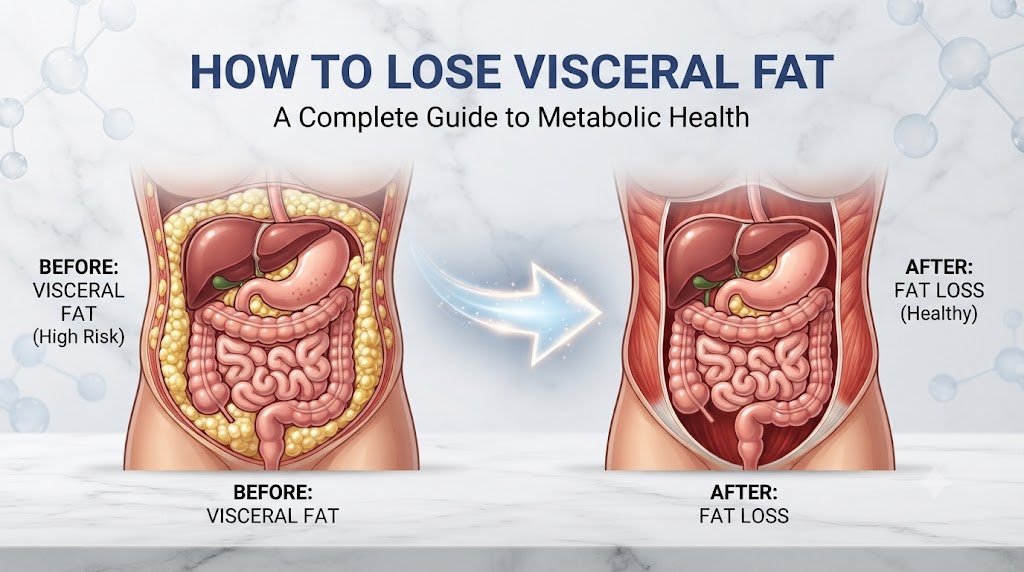
If you’re wondering how to lose visceral fat after 50 naturally, you’re asking one of the most important questions for your long-term health. Unlike the fat you can pinch beneath your skin, visceral fat is stored deep inside the abdomen, surrounding vital organs such as the liver, pancreas, and intestines.
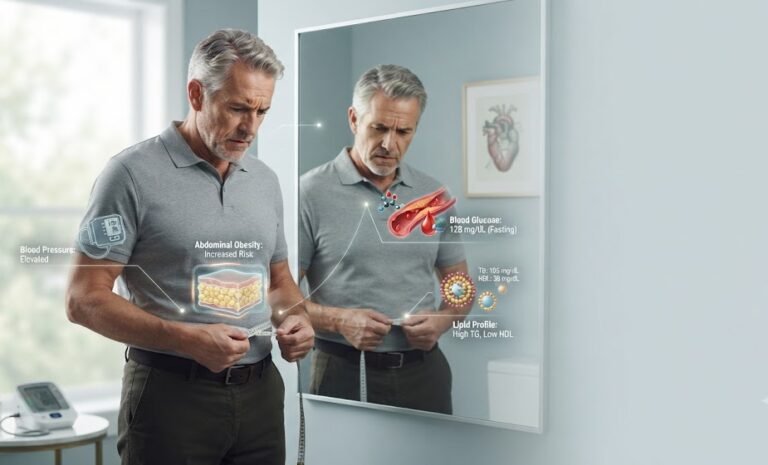
This type of fat is metabolically active and is strongly associated with insulin resistance, type 2 diabetes, high blood pressure, elevated cholesterol, fatty liver disease, cardiovascular disease, and even cognitive decline.
The good news is that visceral fat responds remarkably well to lifestyle changes. Research consistently shows that healthy nutrition, regular physical activity, quality sleep, stress management, and strength training can significantly reduce visceral fat—even after age 50.
Learning how to lose visceral fat after 50 naturally isn’t about chasing rapid weight loss or following restrictive diets. It’s about improving metabolic health and reducing chronic inflammation so your body functions more efficiently as you age.
In this evidence-based guide, you’ll discover the most effective strategies for how to lose visceral fat after 50 naturally, helping you build a healthier body and reduce your risk of chronic disease.
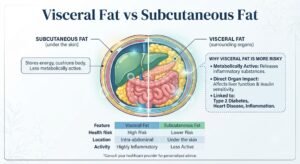
Visceral fat is fat stored deep within the abdominal cavity.
Unlike subcutaneous fat, which lies beneath the skin, visceral fat wraps around organs including:
While some visceral fat is normal and necessary, excessive amounts increase inflammation and interfere with hormone regulation.
Understanding how to lose visceral fat after 50 naturally begins with recognizing that this isn’t simply a cosmetic issue—it’s one of the strongest indicators of metabolic health.
Several biological changes contribute to increased abdominal fat with age.
These include:
Women often experience accelerated visceral fat accumulation after menopause due to declining estrogen levels.
Men also experience gradual hormonal shifts and muscle loss that favor fat storage around the abdomen.
Fortunately, these factors can all be influenced through healthy lifestyle choices.
Learning how to lose visceral fat after 50 naturally means addressing these underlying causes rather than simply reducing calories.
Visceral fat releases inflammatory compounds and hormones directly into the bloodstream.
Excess visceral fat has been associated with:
Reducing visceral fat doesn’t just improve your appearance—it significantly improves your future health.
To understand how healthy aging is influenced by metabolic health, read How to Reduce Your Biological Age Naturally.
Protein helps preserve muscle mass while promoting satiety.
After age 50, maintaining muscle becomes essential for metabolic health because muscle tissue burns more energy than fat—even at rest.
Aim to include quality protein at each meal, such as:
Increasing protein intake is one of the most effective strategies for how to lose visceral fat after 50 naturally because it supports both fat loss and healthy aging.
Strength training is one of the most powerful tools for reducing visceral fat.
It helps:
Resistance training becomes even more important after age 50 because it combats age-related muscle loss.
Learn more in Strength Training After 50.
Walking remains one of the safest and most sustainable exercises for adults over 50.
Daily walking helps:
Aim for 7,000–10,000 daily steps whenever possible.
Walking consistently reinforces every strategy for how to lose visceral fat after 50 naturally.
Continue reading Walking and Longevity.
Excess added sugar—particularly from sweetened beverages—is strongly linked to visceral fat accumulation.
Focus on reducing:
Instead, choose whole foods that stabilize blood sugar and reduce insulin spikes.
Reducing added sugar is one of the quickest nutritional improvements for how to lose visceral fat after 50 naturally.
The Mediterranean diet consistently ranks among the healthiest dietary patterns for reducing inflammation and improving metabolic health.
It emphasizes:
This eating pattern naturally supports how to lose visceral fat after 50 naturally while lowering cardiovascular risk.
Learn more in Mediterranean Diet for Healthy Aging.
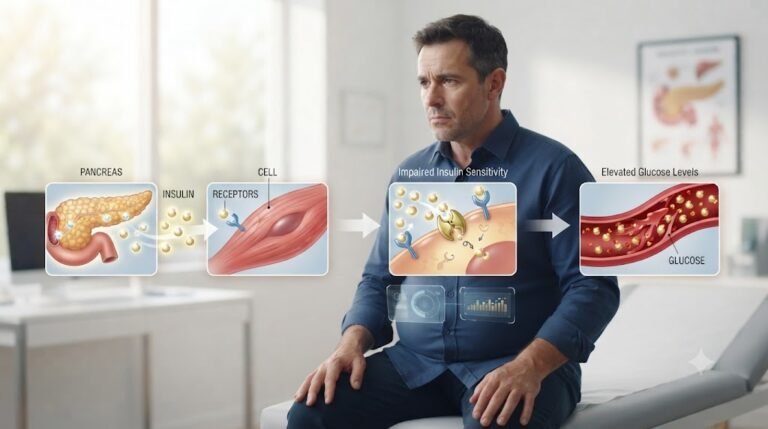
Insulin resistance is one of the primary drivers of visceral fat accumulation.
When your cells become less responsive to insulin, your body stores more energy as abdominal fat, particularly around internal organs.
Improving insulin sensitivity helps your body use glucose more efficiently instead of storing it as fat.
Effective habits include:
Improving insulin sensitivity is one of the foundational strategies for how to lose visceral fat after 50 naturally, especially because it addresses one of the root causes rather than just the symptoms.
Learn more in How to Improve Insulin Sensitivity After 50 Naturally.
Poor sleep alters several hormones involved in appetite and fat storage.
Sleeping too little can:
Adults who consistently sleep well are generally more successful at reducing visceral fat than those with chronic sleep deprivation.
Quality sleep is therefore one of the most underestimated strategies for how to lose visceral fat after 50 naturally.
For practical guidance, read:
Stress doesn’t just affect your mood—it also affects where your body stores fat.
Long-term elevations in cortisol are associated with greater visceral fat accumulation.
Healthy stress-management habits include:
Managing stress supports how to lose visceral fat after 50 naturally because healthier cortisol patterns favor healthier metabolism.
Fiber improves satiety, stabilizes blood sugar, and supports a healthier gut microbiome.
Excellent sources include:
Higher fiber intake has consistently been associated with lower visceral fat and improved metabolic health.
Adding more fiber is one of the easiest nutritional changes for how to lose visceral fat after 50 naturally.
Learn more in Gut Health After 50.
One of the biggest mistakes people make is evaluating progress only by body weight.
Visceral fat can decrease even when body weight changes very little.
Instead, monitor:
Reducing visceral fat improves health long before dramatic changes appear on the scale.
This mindset makes how to lose visceral fat after 50 naturally far more sustainable.
Ultra-processed foods are often high in:
These foods are associated with increased calorie intake, insulin resistance, and visceral fat accumulation.
Build meals around foods that require little or no processing:
Choosing whole foods consistently is another powerful strategy for how to lose visceral fat after 50 naturally.
Visceral fat develops gradually over many years.
It also decreases gradually.
Trying to lose it through crash diets often results in muscle loss and rapid weight regain.
Instead, aim for habits you can maintain for years rather than weeks.
Small improvements practiced consistently almost always outperform extreme short-term efforts.
This long-term approach is ultimately the secret to how to lose visceral fat after 50 naturally.
The timeline varies depending on:
Many people begin reducing visceral fat within 8–12 weeks of consistently following healthier habits.
The goal isn’t rapid weight loss—it’s sustainable metabolic improvement.
Unlike subcutaneous fat, visceral fat isn’t directly visible.
However, common indicators include:
These improvements often appear before dramatic changes in body weight.
Avoid these common pitfalls:
Avoiding these mistakes makes how to lose visceral fat after 50 naturally significantly more achievable.
Hormonal and metabolic changes can make fat loss slower, but visceral fat often responds very well to consistent improvements in diet, exercise, sleep, and stress management. Learning how to lose visceral fat after 50 naturally focuses on these sustainable lifestyle changes rather than quick fixes.
No exercise targets visceral fat specifically, but combining strength training with regular walking or moderate aerobic exercise consistently produces excellent results. Resistance training preserves muscle while aerobic activity increases overall calorie expenditure.
Foods that support visceral fat reduction include:
These foods improve satiety, insulin sensitivity, and overall metabolic health.
Not necessarily.
Some abdominal fat is stored beneath the skin (subcutaneous fat), while visceral fat surrounds internal organs. A growing waistline increases the likelihood of excess visceral fat, especially after age 50.
Yes.
Daily walking is strongly associated with lower visceral fat, especially when combined with healthy eating, adequate sleep, and strength training. It remains one of the safest and most sustainable strategies for how to lose visceral fat after 50 naturally.
Learning how to lose visceral fat after 50 naturally is one of the most powerful steps you can take to improve your long-term health. Unlike subcutaneous fat, visceral fat isn’t simply a cosmetic concern—it actively influences inflammation, hormone balance, blood sugar regulation, cardiovascular health, and the aging process itself.
The encouraging news is that visceral fat is highly responsive to lifestyle changes. Even modest improvements in nutrition, physical activity, sleep quality, and stress management can produce meaningful reductions in abdominal fat while lowering your risk of chronic disease.
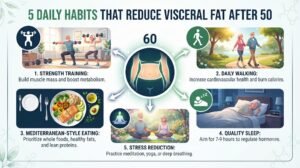
The most effective approach to how to lose visceral fat after 50 naturally isn’t based on restrictive diets, detoxes, or miracle supplements. Instead, it comes from consistently practicing habits that support a healthier metabolism every day:
Remember that your goal isn’t simply to lose weight—it’s to improve metabolic health. As visceral fat decreases, you’ll likely notice improvements in blood pressure, cholesterol, insulin sensitivity, energy levels, physical performance, and overall well-being.
Ultimately, mastering how to lose visceral fat after 50 naturally means investing in a healthier future. Every healthy choice you make today contributes to a stronger heart, sharper brain, healthier metabolism, and more years of active, independent living.
• Harvard T.H. Chan School of Public Health. Abdominal Fat and Your Health.
Read the resource → https://www.hsph.harvard.edu
• National Institute on Aging. Maintaining a Healthy Weight.
Read the guide → https://www.nia.nih.gov/health
• American Heart Association. Why Belly Fat Matters.
Read the article → https://www.heart.org
• Després JP. Body Fat Distribution and Risk of Cardiovascular Disease. Circulation.
Read the publication → https://pubmed.ncbi.nlm.nih.gov/19332472/
• Ross R, et al. Reduction in Obesity and Related Comorbid Conditions after Diet and Exercise Interventions. The Lancet.
Read the study → https://pubmed.ncbi.nlm.nih.gov/
• World Health Organization. Obesity and Overweight.
Read the resource → https://www.who.int/news-room/fact-sheets/detail/obesity-and-overweight
The information provided in this article is for educational purposes only and should not be considered medical advice. Always consult a qualified healthcare professional before making changes to your diet, exercise routine, medications, or supplement use. Never disregard professional medical advice or delay seeking it because of something you have read on this website.

The Live Ever Better Editorial Team is dedicated to publishing evidence-based content that helps adults over 50 achieve healthier aging and greater longevity. Every article is carefully researched using scientific studies, clinical guidelines, and trusted health organizations to ensure accurate, practical, and reliable health information.