Physical Address
304 North Cardinal St.
Dorchester Center, MA 02124
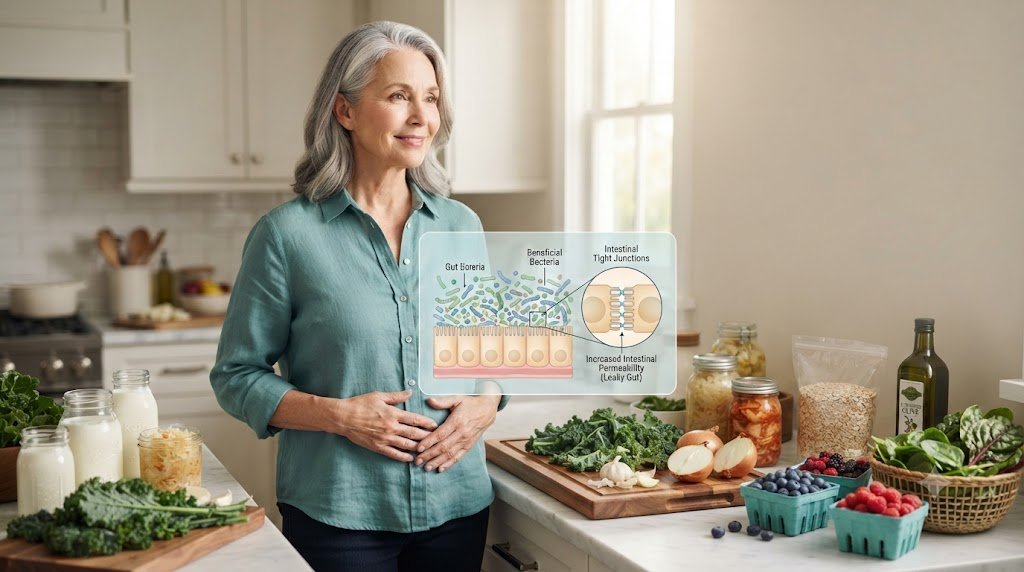
Many adults begin experiencing digestive discomfort, food sensitivities, unexplained fatigue, or chronic inflammation after the age of 50 without realizing that changes in the intestinal barrier may play a role. While the term “leaky gut” has become popular online, the underlying medical condition—known as increased intestinal permeability—is a real physiological phenomenon supported by scientific research.
The intestinal lining serves as one of the body’s most important protective barriers. It allows nutrients to enter the bloodstream while preventing harmful bacteria, toxins, and partially digested food particles from passing into circulation. When this barrier becomes compromised, intestinal permeability may increase, potentially contributing to chronic inflammation and several health conditions.
Fortunately, leaky gut after 50 is not considered an inevitable consequence of aging. Research suggests that nutrition, lifestyle, physical activity, sleep quality, and a healthy gut microbiome all play important roles in maintaining intestinal barrier integrity throughout life.
In this evidence-based guide, you’ll learn what leaky gut after 50 really means, why intestinal permeability may increase with age, what symptoms are associated with it, and the most effective science-backed strategies to support a healthier gut naturally.
In this article
Toggle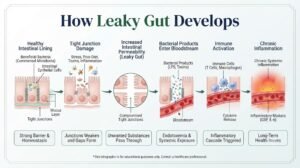
Understanding leaky gut after 50 begins with understanding how the intestinal barrier works.
The inside of your intestines is lined with a single layer of tightly connected cells known as the intestinal epithelium. These cells are held together by specialized proteins called tight junctions, which carefully regulate what passes from the digestive tract into the bloodstream.
Under normal conditions, this barrier allows the absorption of:
At the same time, it blocks:
When these tight junctions become less effective, intestinal permeability increases. This condition is commonly referred to as leaky gut after 50, although healthcare professionals usually describe it as increased intestinal permeability.
Importantly, intestinal permeability itself is not considered a disease, but rather a physiological process that may contribute to or accompany several chronic health conditions.
Several biological changes that occur during aging can influence gut barrier function.
The trillions of microorganisms living inside the digestive tract—collectively known as the gut microbiome—change throughout life.
After age 50, microbial diversity often declines, while beneficial bacteria may become less abundant.
This shift can reduce the production of short-chain fatty acids that help maintain the integrity of the intestinal lining.
Persistent inflammation associated with aging—often called inflammaging—can weaken the intestinal barrier over time.
Inflammatory cytokines may alter tight junction proteins, allowing greater intestinal permeability.
Learn more in Chronic Inflammation: Causes, Symptoms & How to Reduce It Naturally.
Highly processed foods, excess added sugar, low fiber intake, and insufficient consumption of plant-based foods may negatively influence both the microbiome and intestinal barrier.
Certain medications, repeated antibiotic use, limited dietary variety, and sedentary lifestyles can decrease bacterial diversity.
A less diverse microbiome is generally associated with poorer gut resilience.
Long-term psychological stress influences both the nervous system and the digestive tract.
Elevated cortisol levels may alter intestinal permeability while also changing the composition of gut bacteria.
Several factors may contribute to increased intestinal permeability.
The most common include:
Diets rich in refined carbohydrates, sugar, and ultra-processed foods are associated with reduced microbial diversity and increased inflammation.
Dietary fiber feeds beneficial gut bacteria.
Without adequate fiber, production of protective short-chain fatty acids—particularly butyrate—declines.
Heavy alcohol consumption may damage the intestinal lining and increase permeability.
Long-term use of some medications, including certain NSAIDs (nonsteroidal anti-inflammatory drugs), may affect intestinal barrier integrity.
Medication changes should always be discussed with a healthcare professional.
The gut and brain communicate continuously through the gut-brain axis.
Persistent stress can influence digestion, microbial composition, and intestinal barrier function.
Poor sleep is increasingly recognized as an important contributor to chronic inflammation and alterations in the gut microbiome.
Read Sleep and Healthy Aging and How to Sleep Better After 50 Naturally.
Unlike many digestive disorders, leaky gut after 50 does not produce one single characteristic symptom.
Instead, people may experience a combination of digestive and systemic complaints, although these symptoms are not specific to intestinal permeability alone and can occur in many other medical conditions.
Commonly reported symptoms include:
Because these symptoms overlap with many gastrointestinal disorders, proper medical evaluation is important rather than assuming intestinal permeability is the cause.
This is one of the most frequently discussed questions in gut health research.
Current scientific evidence suggests that leaky gut after 50 is associated with several chronic diseases, but researchers are still investigating whether increased intestinal permeability is a direct cause, a contributing factor, or a consequence of these conditions.
Rather than viewing intestinal permeability as an isolated disease, experts increasingly consider it one component of a much larger network involving immunity, metabolism, inflammation, and the gut microbiome.
One of the strongest links identified is between intestinal permeability and chronic low-grade inflammation.
When the intestinal barrier becomes less effective, bacterial products such as lipopolysaccharides (LPS) may enter the bloodstream in greater amounts.
This process can activate the immune system and promote persistent inflammation throughout the body.
Learn more in Chronic Inflammation: Causes, Symptoms & How to Reduce It Naturally.
Research also suggests that intestinal permeability may contribute to metabolic dysfunction.
Higher intestinal permeability has been associated with:
Although these relationships are complex, improving gut health may support better metabolic regulation.
Read:
Scientists increasingly recognize the importance of the gut-brain axis.
The gut and brain communicate continuously through immune pathways, hormones, metabolites, and the nervous system.
An unhealthy gut microbiome and chronic inflammation may influence:
Although research continues, maintaining a healthy gut appears beneficial for long-term brain health.
Nearly 70% of immune cells are located within the gastrointestinal tract.
A healthy intestinal barrier helps the immune system distinguish between harmless dietary components and harmful microorganisms.
When this barrier is disrupted, immune activation may become excessive or poorly regulated.
Although there is no single treatment specifically designed to “heal leaky gut,” scientific evidence strongly supports lifestyle strategies that improve intestinal barrier function and microbiome diversity.
Fiber is one of the most important nutrients for gut health.
Beneficial gut bacteria ferment dietary fiber into short-chain fatty acids, particularly butyrate.
Butyrate helps:
Excellent fiber sources include:
The Mediterranean diet consistently supports healthier gut bacteria.
Its emphasis on plant foods provides both fiber and polyphenols that nourish beneficial microbes.
Read Mediterranean Diet for Healthy Aging.
Fermented foods naturally contain beneficial microorganisms that may support microbial diversity.
Examples include:
While not every fermented food acts as a probiotic, regularly including these foods may benefit digestive health.
Exercise influences far more than muscles and the cardiovascular system.
Research demonstrates that regular physical activity increases microbial diversity while reducing chronic inflammation.
Walking and strength training appear particularly beneficial for healthy aging.
Read:
Sleep directly affects the gut microbiome.
Poor sleep has been associated with:
Adults over 50 should prioritize consistent, high-quality sleep as part of an overall gut health strategy.
Read:
Long-term psychological stress alters both the gut microbiome and intestinal barrier.
Helpful stress-management techniques include:
Reducing chronic stress benefits both digestive and overall health.
Highly processed foods may encourage microbial imbalance while increasing inflammation.
Replacing processed foods with whole foods creates a healthier environment for beneficial bacteria.
Visceral fat contributes to chronic inflammation, which may negatively affect gut barrier function.
Losing excess abdominal fat supports both gut health and metabolic health.
Read How to Lose Visceral Fat After 50 Naturally.
Gut health depends on long-term consistency rather than short-term “gut cleanses.”
Small habits practiced every day have a much greater impact than restrictive diets or expensive supplements.
Read Daily Habits to Stay Healthy After 50.
Research on probiotics continues to evolve.
Some probiotic strains appear capable of improving certain markers of intestinal barrier function, while others show little effect.
Current evidence suggests probiotics may be most effective when combined with:
Rather than relying on supplements alone, experts generally recommend building a healthy gut environment through an overall healthy lifestyle.
Yes—but with an important distinction.
The phrase “leaky gut after 50” is commonly used by the public, while healthcare professionals typically use the term increased intestinal permeability.
Scientific research confirms that intestinal permeability exists and can be measured in clinical studies. However, there is ongoing research regarding its precise role in many chronic diseases.
For many people, intestinal barrier function can improve through healthy lifestyle changes.
A diet rich in fiber, regular physical activity, adequate sleep, stress management, and maintaining a diverse gut microbiome all support intestinal health.
Rather than looking for a quick cure, experts recommend focusing on sustainable habits that promote long-term gut resilience.
Foods that support gut health include:
These foods provide fiber, healthy fats, vitamins, minerals, and compounds that nourish beneficial gut bacteria.
Not necessarily.
Although certain probiotic strains may benefit some individuals, probiotics are not universally recommended for everyone.
Building a healthy microbiome through a diverse, fiber-rich diet generally provides greater long-term benefits than relying on supplements alone.
Anyone considering probiotic supplementation should discuss it with a qualified healthcare professional, particularly if they have significant medical conditions or a weakened immune system.
Absolutely.
Chronic psychological stress influences:
Managing stress is therefore an important component of maintaining a healthy gut after age 50.
Interest in leaky gut after 50 has grown rapidly over the past decade, but it’s important to separate scientific evidence from popular myths.
Current research supports the existence of increased intestinal permeability and highlights the important role of the intestinal barrier in immune regulation, inflammation, and overall health. However, intestinal permeability should not be viewed as the sole explanation for every chronic symptom or disease.
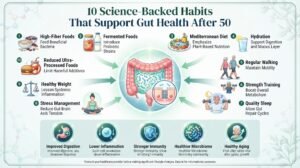
The encouraging news is that many of the same habits known to support healthy aging also promote a healthier gut. Eating a Mediterranean-style diet, consuming more dietary fiber, staying physically active, sleeping well, managing stress, maintaining a healthy body weight, and limiting ultra-processed foods all contribute to a stronger intestinal barrier and a more diverse microbiome.
Rather than searching for a single product or “gut cleanse,” focus on building sustainable daily habits that nourish your digestive system over time. Supporting your gut health is one of the most effective ways to promote healthier aging, reduce chronic inflammation, strengthen immune function, and improve overall well-being.
• Harvard T.H. Chan School of Public Health. The Nutrition Source: The Microbiome.
Read the resource → https://www.hsph.harvard.edu/nutritionsource/microbiome/
• National Institute on Aging. Gut Health and Aging.
Read the resource → https://www.nia.nih.gov
• Cleveland Clinic. Leaky Gut Syndrome: What Is It?
Read the guide → https://health.clevelandclinic.org/leaky-gut
• Camilleri M. Leaky Gut: Mechanisms, Measurement and Clinical Implications in Humans. Gut.
Read the study → https://pubmed.ncbi.nlm.nih.gov/30563870/
• Fasano A. Zonulin and Its Regulation of Intestinal Barrier Function: The Biological Door to Inflammation, Autoimmunity, and Cancer. Physiological Reviews.
Read the publication → https://pubmed.ncbi.nlm.nih.gov/19460866/
• World Gastroenterology Organisation. Probiotics and Prebiotics Guidelines.
Read the publication → https://www.worldgastroenterology.org/guidelines
The information provided in this article is for educational purposes only and should not be considered medical advice. Always consult a qualified healthcare professional before making changes to your diet, exercise routine, medications, or supplement use. Never disregard professional medical advice or delay seeking it because of something you have read on this website.

The Live Ever Better Editorial Team is dedicated to publishing evidence-based content that helps adults over 50 achieve healthier aging and greater longevity. Every article is carefully researched using scientific studies, clinical guidelines, and trusted health organizations to ensure accurate, practical, and reliable health information.